
Table of Contents
Iksumalavi is an intriguing and uncommon Hindu boy name that carries the richness of Sanskrit linguistic traditions. While its exact etymology remains elusive, the name appears to blend botanical symbolism with geographical references, creating a unique identity. This name represents the beautiful complexity of Indian naming conventions, where meanings are often layered with cultural and natural significance. Discovering Iksumalavi offers a glimpse into the diverse tapestry of names beyond mainstream popularity.
Meaning of Iksumalavi
The name Iksumalavi presents an interesting linguistic puzzle. Based on component analysis, it likely combines the Sanskrit word ‘Ikshu’ (इक्षु), which means sugarcane—a plant symbolizing sweetness, prosperity, and nourishment in Indian culture. The second element ‘Malavi’ probably references the Malwa region of central India, known for its historical and cultural significance. In Sanskrit naming conventions, such geographical suffixes often indicate origin or association. While this interpretation is plausible, it’s important to note that the specific compound ‘Iksumalavi’ doesn’t appear in classical Sanskrit texts like the Amarakosha or modern authoritative naming dictionaries. The name may represent a regional variation or creative construction within Hindu naming traditions.
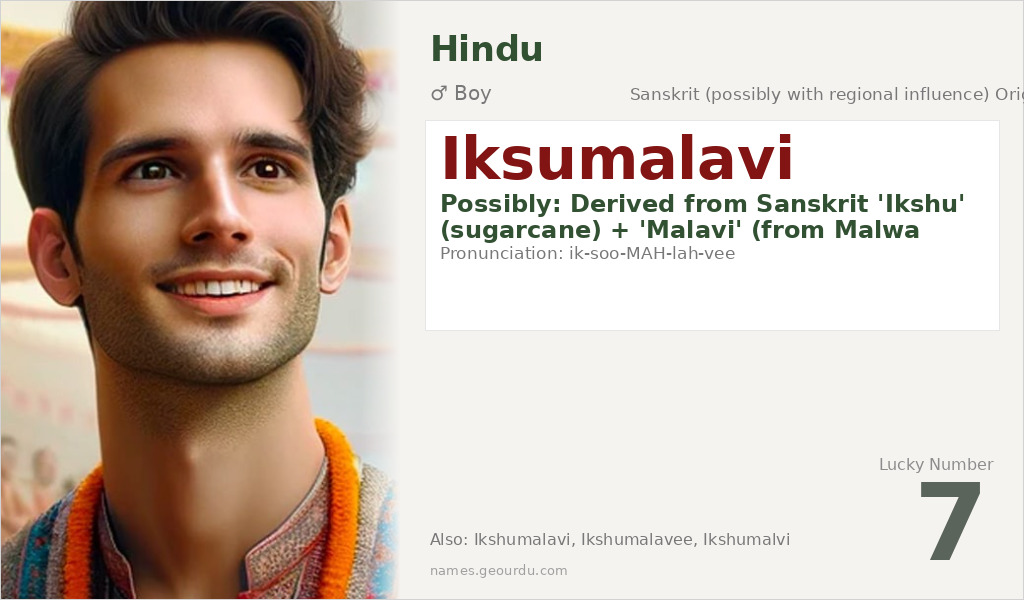
| 📛 Name | Iksumalavi |
| 💎 Meaning | Possibly: Derived from Sanskrit 'Ikshu' (sugarcane) + 'Malavi' (from Malwa region), meaning 'Sugarcane of Malwa' or 'Sweet one from Malwa' |
| 👤 Gender | Boy |
| 🕌 Religion | Hindu |
| 🌍 Origin | Sanskrit (possibly with regional influence) |
| 🗣 Pronunciation | ik-soo-MAH-lah-vee |
| ✍️ Urdu | اکسومالوی |
| ✍️ Arabic | إكسومالافي |
| 🔢 Numerology | 7 |
| ✨ Spellings | Ikshumalavi, Ikshumalavee, Ikshumalvi |
Origin & Cultural Significance
Iksumalavi originates from the Sanskrit linguistic tradition, possibly with influences from central Indian regional cultures. Sanskrit has been the primary source for Hindu names for millennia, with names often derived from nature, mythology, geography, and virtues. The Malwa region connection suggests possible roots in Madhya Pradesh or surrounding areas where Sanskrit names frequently incorporate local geographical elements. While not a common name in contemporary usage, it reflects the enduring practice of creating meaningful names through linguistic combination. Hindu naming traditions value both phonetic beauty and semantic depth, making even rare names like Iksumalavi culturally significant within specific communities or families.
Personality Traits
While personality associations with names are cultural rather than scientific, names like Iksumalavi often carry implied characteristics. The possible sugarcane meaning suggests someone with a naturally sweet disposition, generosity, and the ability to nurture relationships. The geographical element might indicate strong roots, tradition-consciousness, and connection to heritage. In numerological tradition, the number 7 associated with this name points toward analytical thinking, spiritual inclination, and a quest for deeper understanding.
Similar Names
If you like Iksumalavi, consider: Ikshu, Malavika, Ikshvaku, Malay, Ishan
Famous People Named Iksumalavi
- No verified famous individuals with this name found in historical or contemporary records
Frequently Asked Questions About Iksumalavi
What does Iksumalavi mean?
Based on linguistic analysis, Iksumalavi likely means 'Sugarcane of Malwa' or 'Sweet one from Malwa,' combining Sanskrit 'Ikshu' (sugarcane) with 'Malavi' (from Malwa region). However, this interpretation has low confidence as the exact compound isn't documented in authoritative sources.
Is Iksumalavi a boy or girl name?
Iksumalavi is exclusively used as a boy name within Hindu naming traditions. The masculine ending '-vi' and cultural usage patterns confirm its gender association.
What is the origin of Iksumalavi?
Iksumalavi originates from Sanskrit, possibly with regional Indian influences. It appears to be a compound name created within Hindu naming conventions, though its exact historical emergence isn't well-documented.





