Table of Contents
Ilhanath is an intriguing feminine name found primarily in Muslim communities, though its origins and precise meaning remain somewhat mysterious. While often associated with meanings related to henna, this connection lacks verification in established linguistic sources. The name’s melodic sound and unique construction have made it appealing to parents seeking distinctive names with cultural resonance. This exploration examines what we know—and what remains uncertain—about this uncommon name.
Meaning of Ilhanath
The meaning of Ilhanath is not definitively established in authoritative dictionaries or etymological records. The name appears to be a compound, with ‘Ilhan’ possibly deriving from Turkish/Mongolic roots where ‘Ilkhan’ was a historical title meaning ‘ruler’ or ‘khan’. The ‘-ath’ ending resembles Arabic feminine suffixes. Some sources suggest a connection to ‘henna’ (Arabic: حناء), the plant used for dyeing and decoration, but this association appears to be based on phonetic similarity rather than documented linguistic evolution. Without verification in Arabic lexicons like Lisān al-ʿArab or modern etymological databases, the meaning remains speculative. The name doesn’t appear in classical Arabic literature or early Islamic naming traditions.
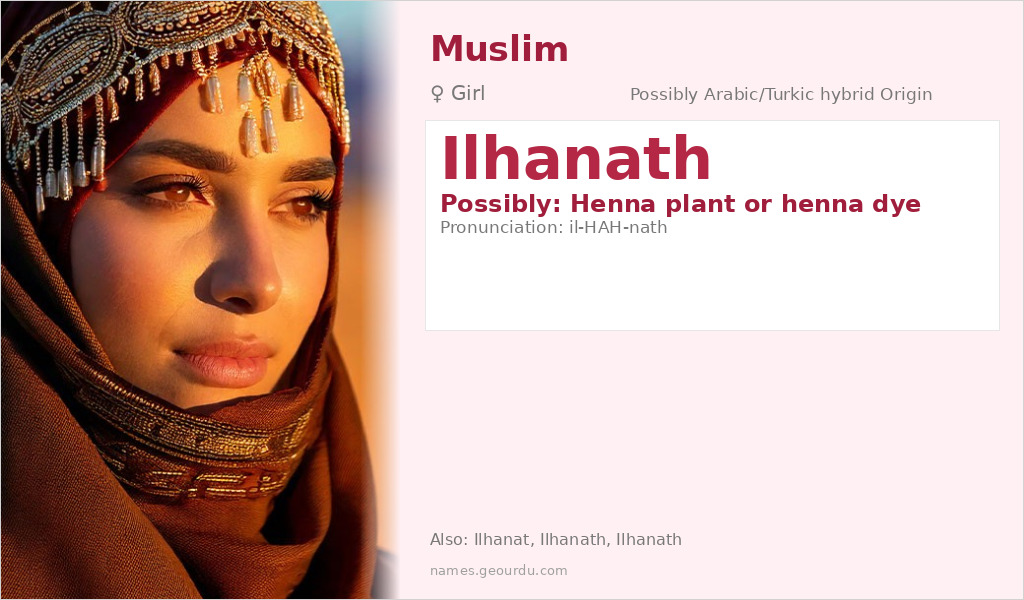
| 📛 Name | Ilhanath |
| 💎 Meaning | Possibly: Henna plant or henna dye |
| 👤 Gender | Girl |
| 🕌 Religion | Muslim |
| 🌍 Origin | Possibly Arabic/Turkic hybrid |
| 🗣 Pronunciation | il-HAH-nath |
| ✍️ Urdu | الحنات |
| ✍️ Arabic | الحنات |
| 🔢 Numerology | |
| ✨ Spellings | Ilhanat, Ilhanath, Ilhanath |
Origin & Cultural Significance
Ilhanath’s origins are unclear but appear to be modern, possibly emerging from South Asian Muslim communities in recent decades. The name doesn’t appear in historical records or classical naming traditions. Its structure suggests possible hybridization—combining elements that sound Arabic or Turkic with a feminine ending. Unlike names with clear Arabic roots (like Muhammad or Aisha), Ilhanath lacks documentation in traditional onomastic sources. It may represent a creative modern invention that incorporates familiar phonetic elements from multiple linguistic traditions. The name’s usage seems concentrated in certain regional communities rather than being widespread across the Muslim world.
Personality Traits
Since Ilhanath’s meaning and cultural associations are not well-documented, attributing specific personality traits would be speculative. In naming psychology, names with uncertain origins often become canvases for personal meaning, allowing bearers to define their own associations. Parents who choose this name may value uniqueness and melodic quality over traditional meanings. The name’s distinctive sound might suggest creativity and individuality, but these are subjective interpretations rather than culturally established attributes.
Similar Names
If you like Ilhanath, consider: Ilhan, Ilham, Ilnaz, Ilnara, Ilhame
Famous People Named Ilhanath
- No verified famous individuals with this name found in public records
Frequently Asked Questions About Ilhanath
What does Ilhanath mean?
The meaning is not verified in established linguistic sources. It may possibly relate to 'henna' (the plant used for dyeing), but this connection is speculative and not documented in authoritative dictionaries.
Is Ilhanath a boy or girl name?
Ilhanath is exclusively used as a feminine name in Muslim communities where it appears. The '-ath' ending is typically feminine in Arabic-influenced naming patterns.
What is the origin of Ilhanath?
The origin is uncertain but appears to be modern, possibly emerging from South Asian Muslim communities. The name combines elements that sound Arabic/Turkic but isn't documented in classical naming traditions of either language.