
Table of Contents
Immogene is an elegant and literary name with a fascinating history that traces back to the pen of William Shakespeare. This melodic name carries meanings of innocence and maidenhood, making it a beautiful choice for parents seeking a name with artistic heritage. While often considered a variant of Imogen, Immogene has developed its own distinct identity over centuries of use.
Meaning of Immogene
The name Immogene derives from Imogen, which was created by William Shakespeare for his play ‘Cymbeline’ in 1609. Scholars believe Shakespeare may have intended ‘Innogen’ (from Latin ‘innocens’ meaning innocent) but wrote ‘Imogen’ instead. The name has been connected to Celtic roots, particularly the Old Irish ‘ingen’ meaning ‘daughter’ or ‘maiden’, and Welsh elements suggesting ‘beloved child’. This blend of Latin innocence and Celtic familial connection gives Immogene its layered meaning of purity and cherished offspring. The name’s evolution reflects both Shakespeare’s creative license and the natural development of names across cultures.
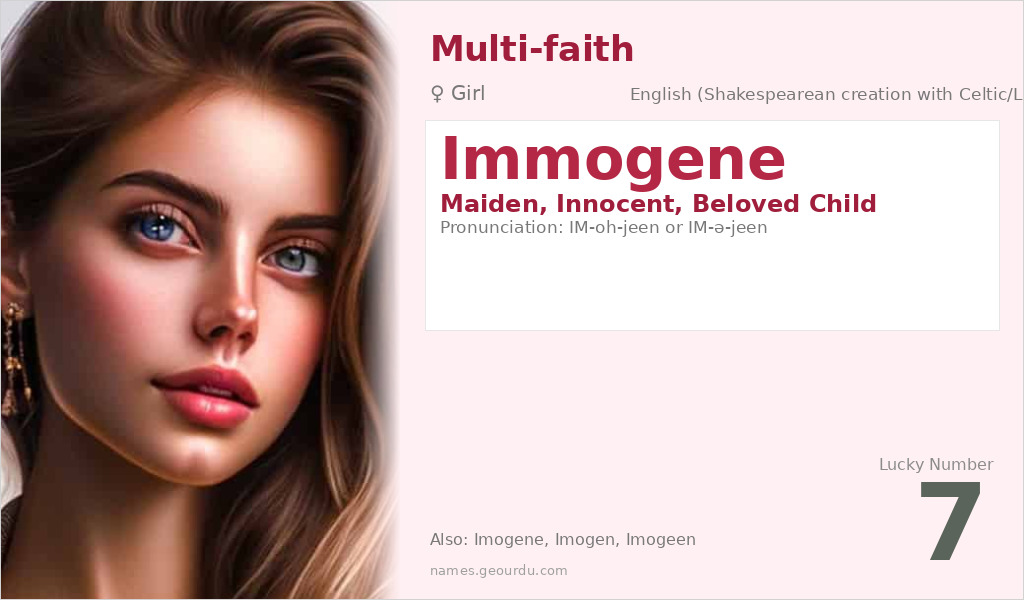
| 📛 Name | Immogene |
| 💎 Meaning | Maiden, Innocent, Beloved Child |
| 👤 Gender | Girl |
| 🕌 Religion | Multi-faith |
| 🌍 Origin | English (Shakespearean creation with Celtic/Latin roots) |
| 🗣 Pronunciation | IM-oh-jeen or IM-ə-jeen |
| ✍️ Urdu | اموجین |
| ✍️ Arabic | إيموجين |
| 🔢 Numerology | 7 |
| ✨ Spellings | Imogene, Imogen, Imogeen, Imogène |
Origin & Cultural Significance
Immogene originated as a variant spelling of Imogen, which first appeared in Shakespeare’s late romance ‘Cymbeline’. The character Imogen is a British princess celebrated for her faithfulness and virtue, establishing the name’s association with noble femininity. While Shakespeare likely adapted the name from existing sources or created it through creative spelling, it gained popularity in the 19th century during the Victorian fascination with Shakespearean names. The name spread through English-speaking countries and has maintained a consistent, though never overwhelmingly popular, presence. Its literary origins make it particularly appealing to families with artistic or academic interests.
Personality Traits
Those named Immogene often embody the creative and virtuous qualities of their Shakespearean namesake. They tend to be perceptive individuals with strong intuitive abilities and a natural elegance. The name’s connection to innocence and maidenhood suggests purity of intention and sincerity in relationships. Immogenes frequently demonstrate artistic talents or appreciation for literature and culture, reflecting their name’s distinguished origins.
Similar Names
If you like Immogene, consider: Imogen, Genevieve, Iona, Megan, Morgan
Famous People Named Immogene
- Imogene Coca — American comedian and actress known for 'Your Show of Shows'
- Imogen Heap — British singer-songwriter and music producer
Frequently Asked Questions About Immogene
What does Immogene mean?
Immogene means 'maiden', 'innocent', or 'beloved child'. It derives from Shakespeare's creation Imogen, which has connections to Latin 'innocens' (innocent) and Celtic 'ingen' (daughter, maiden).
Is Immogene a boy or girl name?
Immogene is exclusively a girl's name. It was created by Shakespeare for a female character (Princess Imogen in 'Cymbeline') and has only been used for girls throughout its history.
What is the origin of Immogene?
Immogene originated as a variant of Imogen, created by William Shakespeare in 1609 for his play 'Cymbeline'. The name has roots in both Latin ('innocens' meaning innocent) and Celtic languages (Old Irish 'ingen' meaning daughter/maiden).





