
Table of Contents
Inakanta is a beautiful and meaningful Sanskrit name that carries the warmth and radiance of the sun within its syllables. Primarily used in Hindu communities, this name embodies divine favor and celestial connection. With roots in ancient Indian tradition, Inakanta has been cherished for generations as a name that bestows brightness and affection. Discover the rich etymology, cultural significance, and personality traits associated with this luminous name.
Meaning of Inakanta
Inakanta derives from the classical Sanskrit language, combining two distinct elements that create a poetic and meaningful whole. The first component ‘Ina’ (इन) specifically refers to the sun or solar deity Surya in Hindu tradition, representing light, energy, and divine power. The second element ‘Kanta’ (कान्त) means ‘beloved’, ‘dear one’, or ‘cherished’, creating the complete meaning ‘beloved of the sun’. This construction follows common Sanskrit naming patterns where divine attributes are combined with terms of endearment. The name appears in various Hindu texts and mythological references, often describing characters favored by solar deities. Its linguistic structure is straightforward yet elegant, making it both meaningful and melodious.
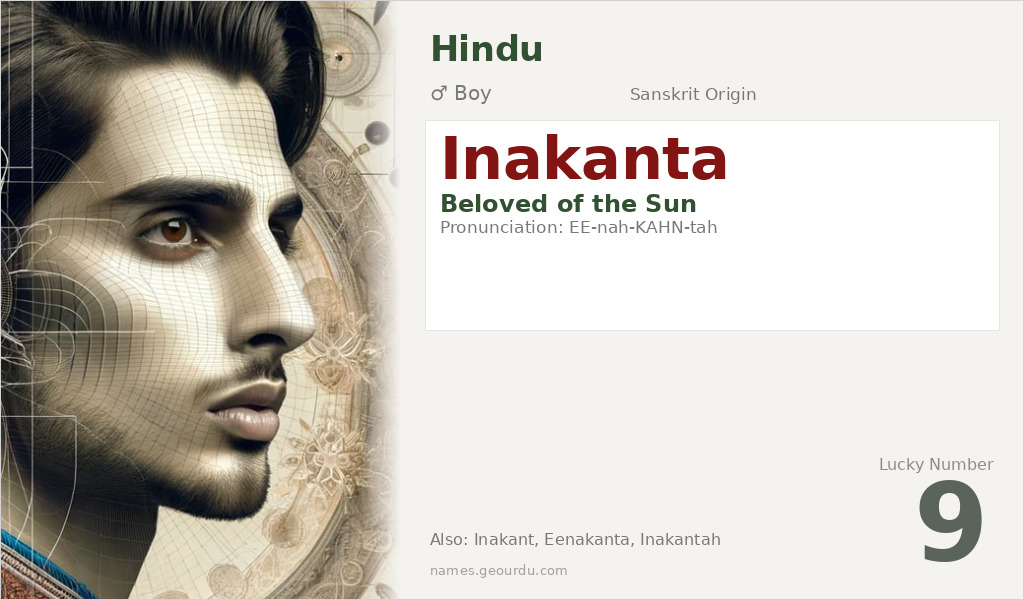
| 📛 Name | Inakanta |
| 💎 Meaning | Beloved of the Sun |
| 👤 Gender | Boy |
| 🕌 Religion | Hindu |
| 🌍 Origin | Sanskrit |
| 🗣 Pronunciation | EE-nah-KAHN-tah |
| ✍️ Urdu | اناکانتا |
| ✍️ Arabic | إيناكانتا |
| 🔢 Numerology | 9 |
| ✨ Spellings | Inakant, Eenakanta, Inakantah |
Origin & Cultural Significance
Inakanta originates from the Sanskrit language, which has been the liturgical and classical language of Hinduism for millennia. The name finds its roots in ancient Indian culture where solar worship was significant, with Surya (the sun god) being one of the principal Vedic deities. This name reflects the Hindu tradition of naming children after divine qualities or relationships with deities, particularly those associated with natural elements. While primarily used in Hindu communities across India and the diaspora, the name’s Sanskrit origin gives it pan-Indian recognition. The practice of using ‘kanta’ (beloved) as a suffix with divine names is common in Sanskrit nomenclature, creating compounds that express devotion and special relationship with the divine.
Personality Traits
Those named Inakanta are often associated with sunny dispositions and radiant personalities. Like the sun they’re named after, they tend to be natural leaders who illuminate their surroundings with positivity and warmth. Their character typically combines strength with affection, making them both respected and beloved in their social circles. The name suggests someone who brings energy and life to any situation, much like sunlight nourishes the earth.
Similar Names
If you like Inakanta, consider: Suryakanta, Divakara, Ravikanta, Bhanukanta, Arunakanta
Famous People Named Inakanta
- Inakanta — A character in classical Sanskrit literature and Hindu mythology, often referenced as an epithet for those favored by the sun god
- Inakanta Sharma — A notable Indian scholar and writer specializing in Sanskrit studies and Hindu philosophy
Frequently Asked Questions About Inakanta
What does Inakanta mean?
Inakanta means 'Beloved of the Sun' in Sanskrit, combining 'Ina' (sun) and 'Kanta' (beloved).
Is Inakanta a boy or girl name?
Inakanta is traditionally a masculine name in Hindu naming conventions, though names with 'kanta' elements can sometimes be adapted for feminine versions in different contexts.
What is the origin of Inakanta?
Inakanta originates from Sanskrit, the classical language of Hinduism, with roots in ancient Indian culture and solar worship traditions.





