
Table of Contents
Inayatur Rahman is a meaningful Arabic name that carries deep spiritual significance in Islamic tradition. Combining the concepts of divine care and Allah’s attribute of supreme grace, this name represents a beautiful expression of faith and devotion. Popular among Muslim communities worldwide, it reflects the rich linguistic and theological heritage of Arabic naming conventions. Parents choosing this name often seek to imbue their child’s identity with reminders of divine protection and mercy.
Meaning of Inayatur Rahman
Inayatur Rahman is a compound Arabic name with precise theological meaning. The first component, ‘Inayat’ (عناية), derives from the Arabic root ‘ayn-nun-ya’ (ع ن ي) meaning ‘to care for, protect, or show favor.’ This root appears in various Quranic contexts describing divine care and attention. The second component, ‘Ar-Rahman’ (الرحمن), is one of the most important names of Allah in Islam, meaning ‘The Most Gracious’ or ‘The All-Merciful.’ It appears at the beginning of every Quranic chapter except one. When combined, the name literally means ‘Care of the Most Gracious’ or ‘Protection of the Most Gracious,’ indicating that the bearer is under Allah’s special grace and mercy. This construction follows the common Islamic practice of combining human attributes with divine names to express devotion.
| 📛 Name | Inayatur Rahman |
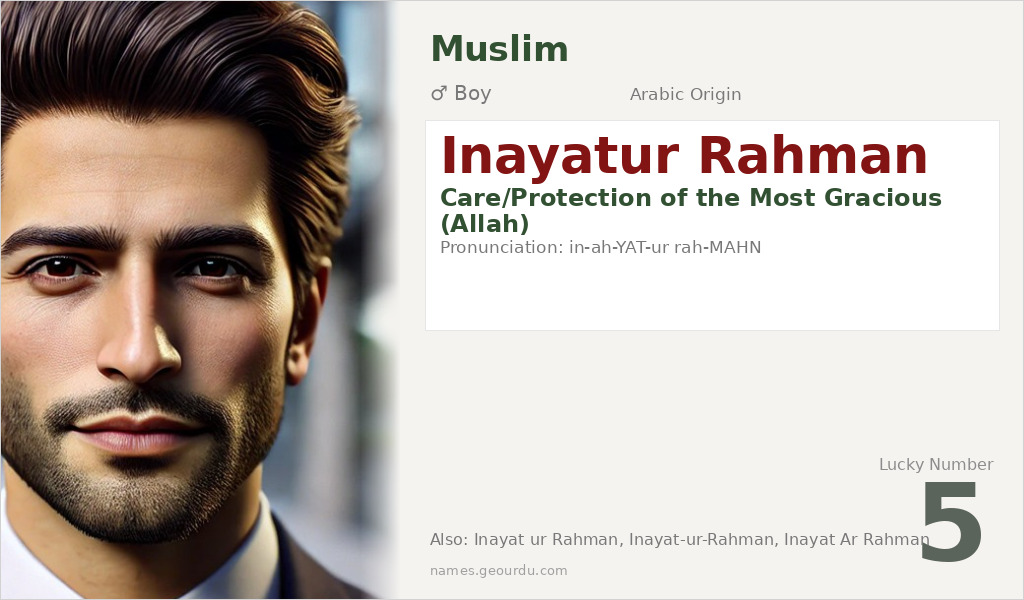
| 💎 Meaning | Care/Protection of the Most Gracious (Allah) |
| 👤 Gender | Boy |
| 🕌 Religion | Muslim |
| 🌍 Origin | Arabic |
| 🗣 Pronunciation | in-ah-YAT-ur rah-MAHN |
| ✍️ Urdu | عنایت الرحمن |
| ✍️ Arabic | عناية الرحمن |
| 🔢 Numerology | 5 |
| ✨ Spellings | Inayat ur Rahman, Inayat-ur-Rahman, Inayat Ar Rahman, Enayatur Rahman |
Origin & Cultural Significance
Inayatur Rahman originates from classical Arabic and Islamic naming traditions that developed in the 7th century CE with the advent of Islam. The name reflects the theological emphasis on Allah’s attributes (Asma ul-Husna) in Muslim culture. While the components are purely Arabic, the name gained popularity across the Muslim world through Arabic’s role as the language of the Quran and Islamic scholarship. It is particularly common in South Asian Muslim communities (Pakistan, India, Bangladesh) where Arabic names are widely adopted despite local languages. The name represents a specific type of Islamic compound name where ‘Inayat’ is paired with one of Allah’s names, similar to constructions like ‘Inayatullah’ (Care of Allah) or ‘Abdur Rahman’ (Servant of the Most Gracious).
Personality Traits
The name Inayatur Rahman suggests personality traits aligned with its meaning of divine care and protection. Those bearing this name are often expected to exhibit compassionate, nurturing, and spiritually aware characteristics. They may demonstrate a natural inclination toward helping others and providing emotional support. The name’s association with Allah’s attribute of mercy might inspire bearers to develop patience, forgiveness, and a generous spirit in their interactions with others.
Similar Names
If you like Inayatur Rahman, consider: Inayatullah, Abdur Rahman, Rahman, Inamur Rahman, Inayat Ali
Famous People Named Inayatur Rahman
- Inayat-ur-Rahman — Pakistani Islamic scholar and former Vice Chancellor of Jamia Ashrafia Lahore
- Inayat ur Rahman Khan — 19th century Indian nobleman and administrator in Hyderabad State
Frequently Asked Questions About Inayatur Rahman
What does Inayatur Rahman mean?
Inayatur Rahman means 'Care/Protection of the Most Gracious' in Arabic. It combines 'Inayat' (care/protection) with 'Ar-Rahman' (The Most Gracious), one of Allah's 99 names in Islam.
Is Inayatur Rahman a boy or girl name?
Inayatur Rahman is exclusively a boy's name in Islamic naming tradition. Arabic compound names with this structure are typically masculine, though 'Inayat' alone can sometimes be used for girls in some cultures.
What is the origin of Inayatur Rahman?
Inayatur Rahman originates from classical Arabic and Islamic theology. It follows Arabic grammatical construction and combines two Arabic words with specific Islamic significance, reflecting the naming practices that developed in early Muslim communities.





