Table of Contents
Inbar is a beautiful Hebrew name that carries the golden warmth of nature within its two syllables. Meaning ‘amber,’ this name evokes images of fossilized tree resin that has captivated humans for millennia with its warm glow and organic beauty. While relatively modern in usage, Inbar has become a cherished name in Israeli culture, representing both natural elegance and contemporary style. Let’s explore the rich meaning and cultural context behind this luminous name.
Meaning of Inbar
Inbar (עִנְבָּר) is a Hebrew name that literally translates to ‘amber,’ specifically referring to the fossilized tree resin that has been valued since ancient times for its warm golden color and use in jewelry. The word appears in modern Hebrew as the standard term for amber, derived from the same linguistic root. Unlike mineral gemstones, amber is organic in origin—formed from the resin of ancient trees over millions of years—which gives the name a particularly natural, earthy quality. In naming contexts, Inbar represents not just the material itself but the qualities associated with amber: warmth, preservation, natural beauty, and a connection to ancient history. The name gained popularity in Israel during the 20th century as part of a trend toward nature-inspired Hebrew names.
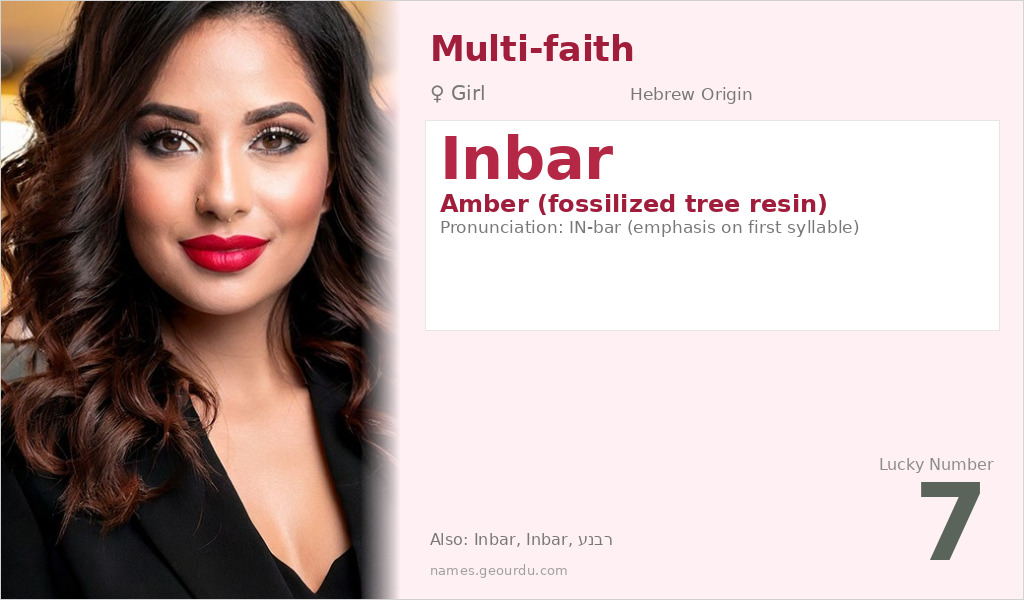
| 📛 Name | Inbar |
| 💎 Meaning | Amber (fossilized tree resin) |
| 👤 Gender | Girl |
| 🕌 Religion | Multi-faith |
| 🌍 Origin | Hebrew |
| 🗣 Pronunciation | IN-bar (emphasis on first syllable) |
| ✍️ Urdu | عنبر |
| ✍️ Arabic | عنبر |
| 🔢 Numerology | 7 |
| ✨ Spellings | Inbar, Inbar, ענבר |
Origin & Cultural Significance
Inbar originates from Hebrew language and culture, specifically modern Israeli naming traditions. While Hebrew has ancient roots, Inbar as a given name is relatively contemporary, emerging in the 20th century alongside other nature-inspired Hebrew names like Oren (pine), Tal (dew), and Alon (oak). The name reflects the Israeli cultural movement to revive and modernize Hebrew language and create distinctly Jewish/Israeli names. Unlike many Hebrew names with biblical origins, Inbar comes from the modern Hebrew vocabulary word for amber, making it part of the neologistic naming tradition. The name is primarily used in Jewish communities, particularly in Israel, and has gained some international recognition through Israeli cultural exports and diaspora communities.
Personality Traits
Those named Inbar often embody the warm, radiant qualities of their namesake. Like amber that captures and preserves moments from ancient forests, Inbars tend to have a timeless quality and value tradition while embracing modernity. Their personality often shines with a natural, organic charm that attracts others, much like amber’s warm glow. The name suggests someone who is both grounded in reality and capable of preserving what’s precious, whether memories, relationships, or values.
Similar Names
If you like Inbar, consider: Amber, Ophir, Topaz, Coral, Pearl
Famous People Named Inbar
- Inbar Lavi — Israeli actress known for roles in 'Imposters' and 'Lucifer'
- Inbar Azrad — Israeli singer and songwriter
Frequently Asked Questions About Inbar
What does Inbar mean?
Inbar is a Hebrew name that means 'amber' – specifically referring to the fossilized tree resin known for its warm golden color and use in jewelry since ancient times.
Is Inbar a boy or girl name?
Inbar is almost exclusively used as a girl's name in Hebrew and Israeli naming traditions, though names can sometimes cross gender boundaries in different cultural contexts.
What is the origin of Inbar?
Inbar originates from modern Hebrew language and Israeli culture, where it emerged in the 20th century as part of a trend toward nature-inspired Hebrew names. It comes directly from the Hebrew word for amber (ענבר).