
Table of Contents
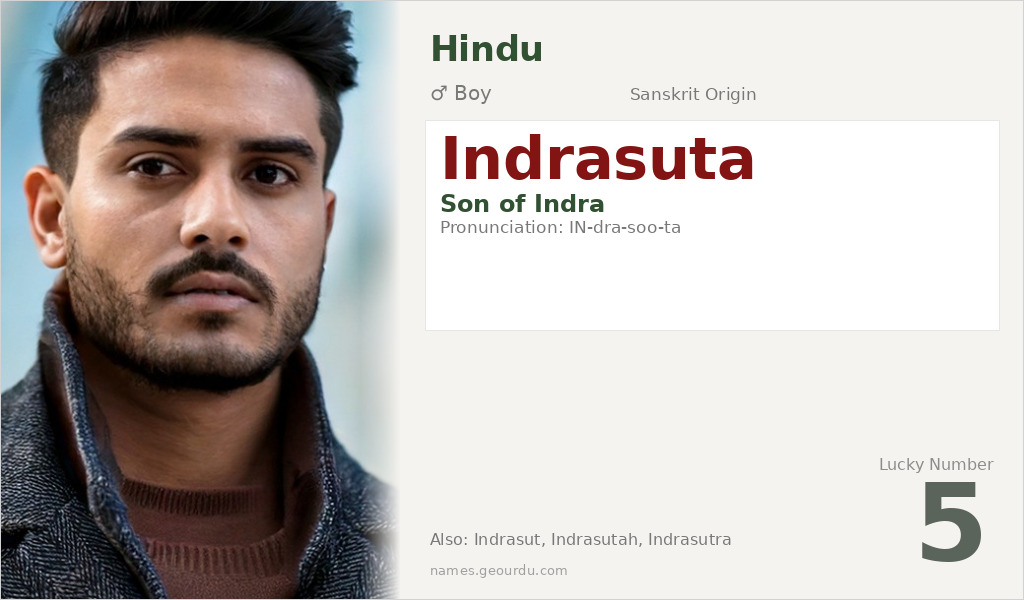
Indrasuta is a powerful Sanskrit name steeped in Hindu mythology, carrying the majestic meaning ‘Son of Indra’. As the king of gods in ancient Vedic tradition, Indra represents strength, sovereignty, and divine protection. This name connects its bearer to celestial heritage and warrior virtues. Choosing Indrasuta for a child invokes blessings of leadership and courage from one of Hinduism’s most revered deities.
Meaning of Indrasuta
Indrasuta derives from classical Sanskrit, combining ‘Indra’ (इन्द्र), the name of the principal Vedic deity, with ‘suta’ (सुत), meaning ‘son’ or ‘progeny’. Indra is celebrated in the Rigveda as the god of thunder, rain, and warfare, often depicted wielding the vajra (thunderbolt). The component ‘suta’ appears in numerous Sanskrit names indicating filial relationship, such as in the epic Mahabharata where characters are identified by their paternal lineage. Thus, Indrasuta literally signifies ‘offspring of Indra’, suggesting divine ancestry and heroic qualities. This construction follows common Sanskrit naming patterns where theophoric elements combine with kinship terms.
| 📛 Name | Indrasuta |
| 💎 Meaning | Son of Indra |
| 👤 Gender | Boy |
| 🕌 Religion | Hindu |
| 🌍 Origin | Sanskrit |
| 🗣 Pronunciation | IN-dra-soo-ta |
| ✍️ Urdu | اندرسوت |
| ✍️ Arabic | إندراسوتا |
| 🔢 Numerology | 5 |
| ✨ Spellings | Indrasut, Indrasutah, Indrasutra |
Origin & Cultural Significance
The name originates from ancient Sanskrit literature and Hindu religious texts, particularly the Vedas and Puranas where Indra features prominently. In Vedic tradition, Indra was the supreme deity before later developments in Hinduism, worshipped as the bringer of rains and protector of cosmic order. Names containing ‘Indra’ have been used for millennia across the Indian subcontinent, reflecting the god’s enduring cultural significance. While primarily associated with Hindu tradition, the name appears in some Buddhist and Jain contexts where Indra appears as a celestial being. The specific compound ‘Indrasuta’ appears in classical Sanskrit works as an epithet for heroes and demigods.
Personality Traits
Those named Indrasuta are often perceived as natural leaders with strong willpower and protective instincts. The connection to Indra suggests qualities of bravery, resilience, and the ability to inspire others. They may exhibit a dynamic personality with a tendency toward action and achievement. The name carries expectations of honor, responsibility, and the capacity to overcome obstacles through determination and strategic thinking.
Similar Names
If you like Indrasuta, consider: Arjuna, Karna, Indrajit, Indraneel, Indrajeet
Famous People Named Indrasuta
- No widely known contemporary figures with this exact name, but in Hindu mythology, Arjuna is sometimes referred to as 'Indrasuta' as he was considered a spiritual son of Indra
- Historical references to 'Indrasuta' appear in Sanskrit literature as epithets for heroes and warriors descended from or favored by Indra
Frequently Asked Questions About Indrasuta
What does Indrasuta mean?
Indrasuta means 'Son of Indra' in Sanskrit, referring to the Hindu god of thunder, rain, and kingship.
Is Indrasuta a boy or girl name?
Indrasuta is exclusively a boy's name in Hindu naming tradition, as the '-suta' suffix specifically denotes male offspring.
What is the origin of Indrasuta?
The name originates from Sanskrit, the classical language of ancient India, and is deeply rooted in Hindu mythology and Vedic tradition.





