
Table of Contents
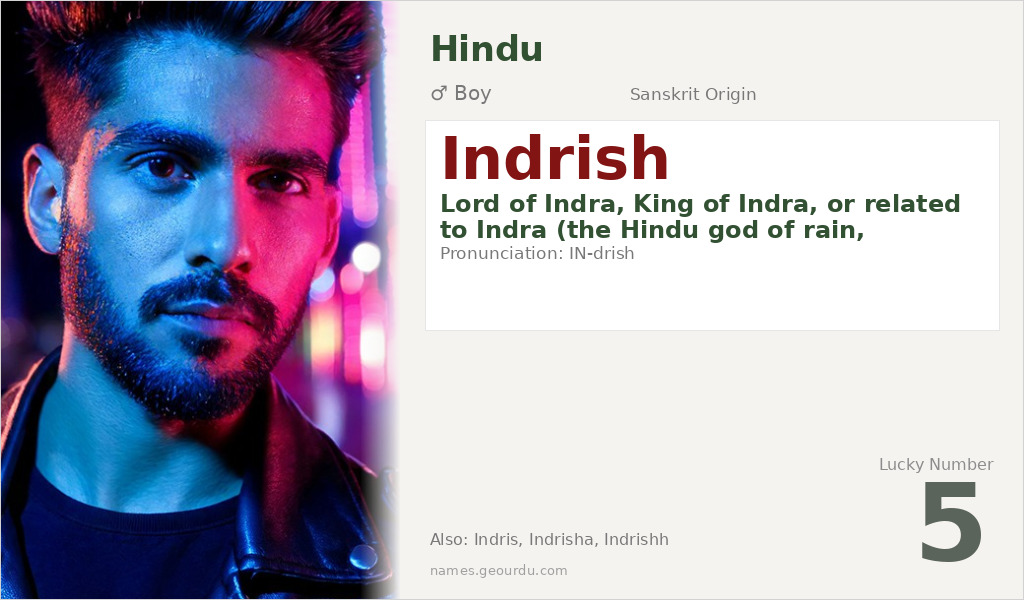
Indrish is a distinctive and powerful name rooted in ancient Hindu tradition, evoking the majesty of Indra, the king of gods. Often chosen for boys, it carries connotations of leadership, strength, and divine blessing. This name resonates deeply in Sanskrit-speaking cultures, symbolizing a connection to mythological heritage and spiritual values. Explore the rich etymology and cultural context of Indrish in this comprehensive analysis.
Meaning of Indrish
Indrish derives from Sanskrit, where ‘Indra’ refers to the Hindu deity of rain, thunder, and war, and the suffix ‘-ish’ denotes ‘lord’ or ‘ruler’. Thus, the name literally translates to ‘Lord of Indra’ or ‘King of Indra’, implying someone who embodies or is favored by Indra’s attributes. In Hindu mythology, Indra is a central figure in the Rigveda and other texts, representing power, prosperity, and cosmic order. The name Indrish is used to bestow these qualities upon a child, often in hopes of fostering leadership and resilience. Linguistically, it follows common Sanskrit naming patterns, combining divine elements with honorifics to create meaningful appellations.
| 📛 Name | Indrish |
| 💎 Meaning | Lord of Indra, King of Indra, or related to Indra (the Hindu god of rain, thunder, and war) |
| 👤 Gender | Boy |
| 🕌 Religion | Hindu |
| 🌍 Origin | Sanskrit |
| 🗣 Pronunciation | IN-drish |
| ✍️ Urdu | اندرش |
| ✍️ Arabic | إندريش |
| 🔢 Numerology | 5 |
| ✨ Spellings | Indris, Indrisha, Indrishh |
Origin & Cultural Significance
Originating from Sanskrit, an ancient Indo-Aryan language of India, Indrish is deeply embedded in Hindu culture and religious texts. It appears in classical literature and naming traditions, particularly among Hindu communities in India, Nepal, and the diaspora. The name reflects the enduring influence of Vedic mythology, where Indra is celebrated as a chief god, and names related to him are considered auspicious. Over time, Indrish has been adopted in modern contexts while retaining its traditional significance, often used in regions with strong Hindu heritage. Its usage underscores the cultural practice of naming children after divine figures to invoke their blessings and virtues.
Personality Traits
People named Indrish are often perceived as confident and authoritative, drawing from the name’s association with Indra’s regal and protective nature. They may exhibit traits such as determination, creativity, and a knack for overcoming obstacles, mirroring Indra’s mythological battles. In social settings, they tend to be influential and inspiring, with a natural ability to lead and motivate others toward common goals.
Similar Names
If you like Indrish, consider: Indra, Indrajit, Indranil, Indraneel, Indivar
Famous People Named Indrish
- Indrish — a character in Hindu mythology and literature, often depicted as a divine or heroic figure associated with Indra
- Indrish — modern individuals in India and Nepal, though not widely known internationally
Frequently Asked Questions About Indrish
What does Indrish mean?
Indrish means 'Lord of Indra' or 'King of Indra', derived from Sanskrit, where Indra is the Hindu god of rain, thunder, and war.
Is Indrish a boy or girl name?
Indrish is traditionally a boy's name in Hindu culture, reflecting masculine qualities associated with the god Indra.
What is the origin of Indrish?
Indrish originates from Sanskrit, an ancient language of India, and is rooted in Hindu mythology and naming traditions.





