
Table of Contents
Ingram is a distinguished name with deep Germanic roots that has traveled through history from pagan mythology to Christian tradition. This classic boy’s name carries the powerful meaning of ‘angel’ or ‘messenger of God,’ connecting ancient Germanic culture with later Christian symbolism. With its noble sound and rich historical background, Ingram offers both tradition and distinctive character for modern parents seeking a name with substance.
Meaning of Ingram
The name Ingram originates from Old High German, combining two significant elements: ‘Ing,’ referring to the Germanic god Ing or Yngvi (associated with fertility, prosperity, and the legendary progenitor of the Ingaevones tribe), and ‘hramn,’ meaning ‘raven.’ In Germanic mythology, ravens were considered intelligent birds often associated with Odin and served as messengers between worlds. When Christianity spread through Germanic territories, the name’s meaning evolved to ‘angel’ or ‘messenger of God,’ reflecting the Christian reinterpretation of pagan symbols. This linguistic transformation illustrates how names adapt to changing religious and cultural contexts while preserving their core identity.
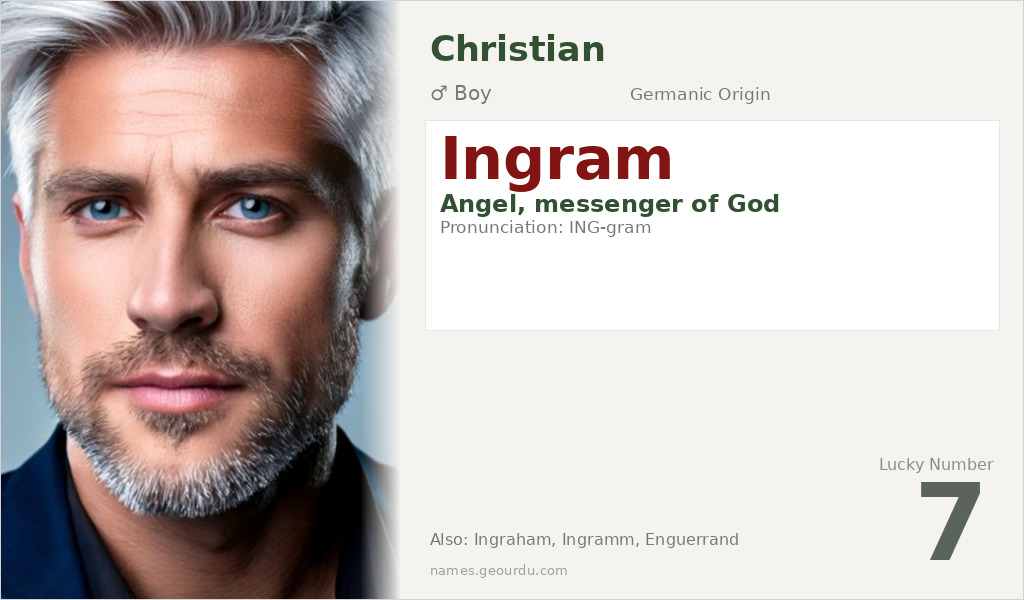
| 📛 Name | Ingram |
| 💎 Meaning | Angel, messenger of God |
| 👤 Gender | Boy |
| 🕌 Religion | Christian |
| 🌍 Origin | Germanic |
| 🗣 Pronunciation | ING-gram |
| ✍️ Urdu | انگرام |
| ✍️ Arabic | إنغرام |
| 🔢 Numerology | 7 |
| ✨ Spellings | Ingraham, Ingramm, Enguerrand, Ingeram |
Origin & Cultural Significance
Ingram has its origins in medieval Germanic Europe, particularly among Frankish and Norman nobility. The name entered England with the Norman Conquest in 1066, where it was initially used as ‘Enguerrand’ before gradually Anglicizing to Ingram. Historical records show the name appearing in Domesday Book entries and medieval charters, indicating its establishment among the Anglo-Norman aristocracy. Throughout the Middle Ages, Ingram remained primarily an aristocratic surname before transitioning to a given name. The name’s persistence across centuries demonstrates its enduring appeal and the cultural exchange between Germanic, Norman, and English traditions.
Personality Traits
Those named Ingram often exhibit characteristics reflecting their name’s dual heritage of Germanic strength and spiritual symbolism. They typically combine practical intelligence with intuitive insight, making them effective problem-solvers who consider both logical and emotional dimensions. The name’s association with messengers and communication suggests individuals who value meaningful dialogue and have a natural ability to bridge different perspectives or cultures.
Similar Names
If you like Ingram, consider: Ingmar, Ingvar, Ingolf, Ragnar, Wolfram
Famous People Named Ingram
- Ingram Bergman — Swedish film director known for 'The Seventh Seal' and 'Wild Strawberries'
- Ingram Frizer — English businessman historically known as the killer of playwright Christopher Marlowe in 1593
Frequently Asked Questions About Ingram
What does Ingram mean?
Ingram means 'angel' or 'messenger of God.' It originates from Old High German elements 'Ing' (referring to the Germanic god Ing/Yngvi) and 'hramn' (raven), with the raven symbolizing a messenger in Germanic mythology.
Is Ingram a boy or girl name?
Ingram is traditionally and almost exclusively a masculine name with centuries of documented use for boys and men across Germanic and English-speaking cultures.
What is the origin of Ingram?
Ingram has Germanic origins, specifically from Old High German. It was brought to England by Normans after the 1066 conquest and evolved from the Norman French 'Enguerrand' to the Anglicized 'Ingram.'





