Table of Contents
Inka is a beautiful and historically significant name with deep roots in Andean culture. Far from being a Hindu name as sometimes misrepresented, Inka originates from the Quechua language of South America and carries powerful maternal connotations. This name connects directly to the Inca civilization, where it denoted royal feminine authority and ancestral lineage. Today, it remains a meaningful choice that honors indigenous heritage and feminine strength.
Meaning of Inka
The name Inka derives from the Quechua language, spoken by indigenous peoples in the Andean region of South America. Its primary meaning is ‘mother’ or ‘ancestral mother,’ specifically referring to the female counterpart of Inca rulers. Historically, ‘Inka’ (or ‘Inca’) meant ‘ruler’ or ‘lord,’ but when applied to females, it took on the specific meaning of ‘queen,’ ‘princess,’ or ‘royal mother.’ The name is linguistically connected to the Quechua root that denotes authority and lineage, with the feminine form emphasizing maternal and ancestral aspects. In modern contexts, it symbolizes maternal strength, heritage preservation, and connection to indigenous roots.
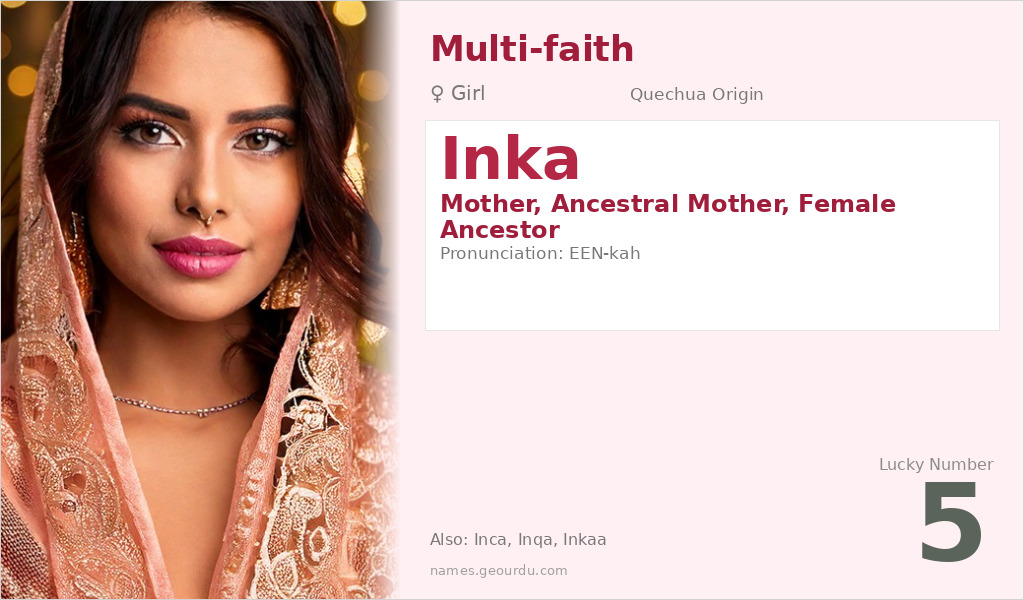
| 📛 Name | Inka |
| 💎 Meaning | Mother, Ancestral Mother, Female Ancestor |
| 👤 Gender | Girl |
| 🕌 Religion | Multi-faith |
| 🌍 Origin | Quechua |
| 🗣 Pronunciation | EEN-kah |
| ✍️ Urdu | انکا |
| ✍️ Arabic | إنكا |
| 🔢 Numerology | 5 |
| ✨ Spellings | Inca, Inqa, Inkaa |
Origin & Cultural Significance
Inka originates from the Quechua language and culture of the Andean region, specifically associated with the Inca Empire that flourished in pre-Columbian South America. The name was historically used for female members of the royal family, particularly the wives and daughters of Sapa Inca rulers. It carries significant cultural weight in countries like Peru, Bolivia, Ecuador, and Chile where Quechua is still spoken. While the Inca civilization declined after Spanish colonization, the name Inka has persisted as a symbol of indigenous identity and feminine authority. Today, it’s used both within indigenous communities and by others appreciating its historical and cultural significance.
Personality Traits
Those named Inka often embody qualities of strength, nurturing, and leadership. Drawing from the name’s meaning of ‘mother’ and ‘ancestral mother,’ they frequently exhibit protective instincts and deep care for family and community. Their connection to heritage often makes them culturally aware and tradition-honoring individuals. The royal connotations of the name can manifest as natural authority and confidence in leadership roles.
Similar Names
If you like Inka, consider: Inti, Killa, Pachamama, Mama Ocllo, Coya
Famous People Named Inka
- Inka Grings — German footballer and coach, former striker for the German national team
- Inka Bause — German television presenter and singer known for her work on German TV shows
Frequently Asked Questions About Inka
What does Inka mean?
Inka means 'mother' or 'ancestral mother' in Quechua, the language of the Andean indigenous peoples of South America. Historically, it referred to female members of the Inca royal family.
Is Inka a boy or girl name?
Inka is exclusively a girl's name. In Quechua culture, it specifically denotes feminine authority and maternal lineage, with the male equivalent being 'Inca' or 'Sapa Inca' for rulers.
What is the origin of Inka?
Inka originates from the Quechua language and culture of South America, specifically associated with the Inca civilization that existed in the Andean region before Spanish colonization.