Table of Contents
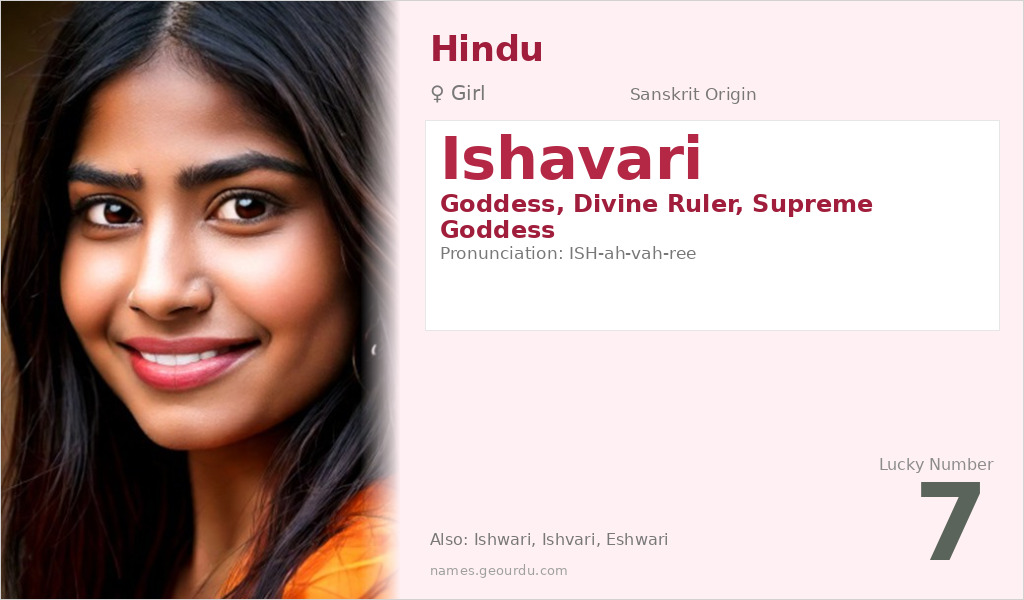
Ishavari is a beautiful and powerful Sanskrit name for girls that carries profound spiritual significance in Hindu culture. Meaning ‘Goddess’ or ‘Divine Ruler’, this name embodies feminine divinity and supreme authority. With roots in ancient Indian scriptures, Ishavari represents the highest form of feminine energy in the Hindu pantheon. Parents choosing this name often seek to bestow qualities of leadership, grace, and spiritual connection upon their daughter.
Meaning of Ishavari
Ishavari is a classical Sanskrit compound name with clear etymological roots. The first component ‘Isha’ (ईश) comes from the Sanskrit root ‘īś’ meaning ‘to own, possess, rule, command’ and appears in numerous Hindu texts referring to Shiva as ‘Ishvara’ (the Supreme Lord). The feminine suffix ‘vari’ (वरी) transforms this into a goddess title, similar to how ‘Devi’ functions. Literally, Ishavari means ‘the Goddess who is the Supreme Ruler’ or ‘Divine Female Sovereign’. This construction follows standard Sanskrit naming patterns seen in names like ‘Ishwari’ (another common variant) and ‘Ishita’ (desired, sought). The name appears in Hindu scriptures as an epithet for major goddesses, particularly in Shakta traditions where the feminine divine is worshipped as the ultimate reality.
| 📛 Name | Ishavari |
| 💎 Meaning | Goddess, Divine Ruler, Supreme Goddess |
| 👤 Gender | Girl |
| 🕌 Religion | Hindu |
| 🌍 Origin | Sanskrit |
| 🗣 Pronunciation | ISH-ah-vah-ree |
| ✍️ Urdu | ایشوری |
| ✍️ Arabic | إيشفاري |
| 🔢 Numerology | 7 |
| ✨ Spellings | Ishwari, Ishvari, Eshwari, Eshvari |
Origin & Cultural Significance
Ishavari originates from classical Sanskrit, the sacred language of Hindu scriptures including the Vedas, Puranas, and Tantric texts. The name has been used for centuries in India, particularly among Hindu communities in Maharashtra, Karnataka, Tamil Nadu, and other regions where Sanskrit names remain popular. In Hindu theology, names ending with ‘vari’ or ‘wari’ often denote feminine divinity, as seen in names like ‘Annapurnavari’ and ‘Lakshmivari’. The name reflects the Hindu concept of Shakti—the feminine creative power that governs the universe. While primarily used in India, the name has spread to Hindu diaspora communities worldwide, maintaining its religious and cultural significance across generations.
Personality Traits
Those named Ishavari often embody the qualities suggested by their name’s meaning—leadership, spiritual awareness, and compassionate authority. They tend to be natural guides who inspire confidence in others through their wisdom and calm demeanor. The name’s connection to divine femininity often manifests as strong intuition, nurturing qualities, and a deep sense of responsibility toward family and community. Many Ishavaris find themselves drawn to spiritual or creative pursuits where they can express their innate sense of harmony and balance.
Similar Names
If you like Ishavari, consider: Ishita, Ishani, Ishika, Ishara, Ishitha
Famous People Named Ishavari
- Ishwari Bose — Indian classical vocalist known for her contributions to Hindustani music
- Ishwari Patil — Marathi actress and television personality
Frequently Asked Questions About Ishavari
What does Ishavari mean?
Ishavari means 'Goddess', 'Divine Ruler', or 'Supreme Goddess' in Sanskrit. It's a compound of 'Isha' (lord/ruler) and the feminine suffix 'vari' (goddess).
Is Ishavari a boy or girl name?
Ishavari is exclusively a feminine name in Hindu tradition. The 'vari' ending specifically indicates feminine gender in Sanskrit naming conventions.
What is the origin of Ishavari?
Ishavari originates from classical Sanskrit, the ancient sacred language of Hinduism. It has been used for centuries in India as a name for girls, particularly in Hindu religious and cultural contexts.