
Table of Contents
Isolde is a name steeped in romance and legend, famously known from the medieval tale of Tristan and Isolde. With roots in both Germanic and Celtic languages, it carries meanings like ‘ice ruler’ or ‘beautiful’. This name has captivated audiences for centuries through literature, opera, and art, symbolizing passionate love and tragic destiny.
Meaning of Isolde
The meaning of Isolde is derived from Old High German elements: ‘īsarn’ (iron) or ‘īs’ (ice) combined with ‘hiltja’ (battle) or ‘waltan’ (to rule), giving interpretations such as ‘iron ruler’ or ‘ice battle’. Alternatively, in Celtic tradition, it connects to the Welsh name Esyllt, meaning ‘beautiful’ or ‘fair one’. This dual origin reflects the name’s evolution through Germanic languages and its adaptation into Celtic legends. The most common interpretation today is ‘ice ruler’, emphasizing strength and nobility, while the Celtic version highlights aesthetic qualities. The name’s etymology is well-documented in historical texts and linguistic studies, making it a rich subject for name enthusiasts.
| 📛 Name | Isolde |
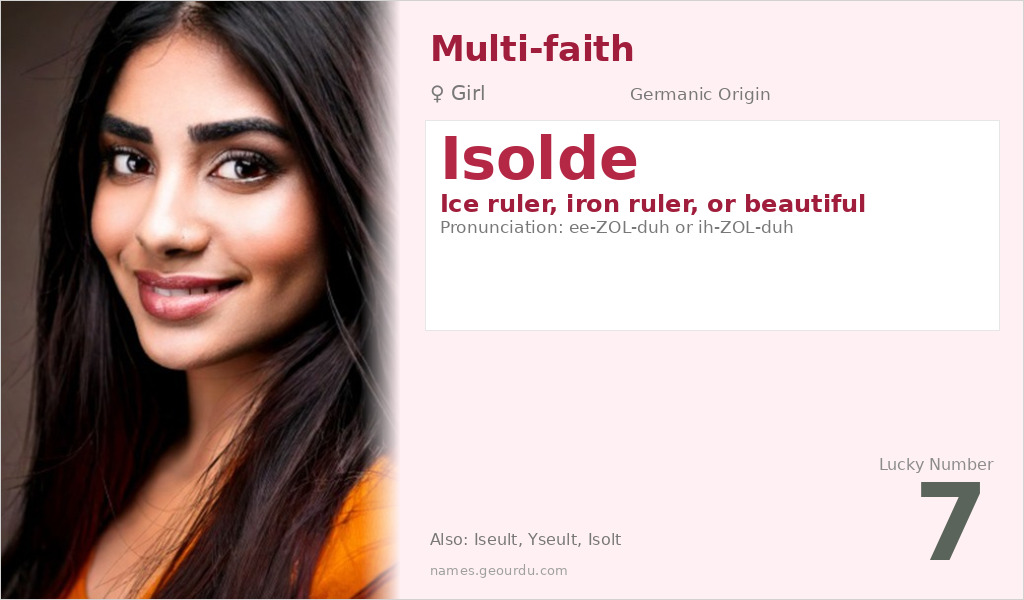
| 💎 Meaning | Ice ruler, iron ruler, or beautiful |
| 👤 Gender | Girl |
| 🕌 Religion | Multi-faith |
| 🌍 Origin | Germanic |
| 🗣 Pronunciation | ee-ZOL-duh or ih-ZOL-duh |
| ✍️ Urdu | آئسولڈ |
| ✍️ Arabic | إيزولده |
| 🔢 Numerology | 7 |
| ✨ Spellings | Iseult, Yseult, Isolt, Isolda, Esyllt |
Origin & Cultural Significance
Isolde originates from Germanic languages, specifically Old High German, and was popularized in medieval European literature. It gained fame through the Arthurian legend of Tristan and Isolde, where Isolde is an Irish princess involved in a tragic love story. This tale spread across cultures, influencing versions in French, German, and English traditions. The name also appears in Celtic contexts as Esyllt in Welsh mythology. Over time, Isolde has been used in various forms across Europe, symbolizing romantic idealism and historical depth. Its cultural significance extends beyond any single religion, making it a multi-faith name with broad appeal.
Personality Traits
Individuals named Isolde are often perceived as passionate, loyal, and strong-willed, inspired by the legendary character’s traits. The name conveys a sense of romanticism and emotional depth, associated with creativity and resilience. In modern contexts, it suggests someone who is elegant and thoughtful, with a connection to artistic or literary pursuits. These personality traits stem from the name’s historical and cultural associations, making it a choice for parents seeking a name with narrative weight.
Similar Names
If you like Isolde, consider: Tristan, Guinevere, Morgana, Elaine, Brünhilde
Famous People Named Isolde
- Isolde of Ireland — legendary Irish princess from the Tristan and Isolde romance
- Isolde Ahlgrimm — Austrian harpsichordist and fortepianist
Frequently Asked Questions About Isolde
What does Isolde mean?
Isolde means 'ice ruler', 'iron ruler', or 'beautiful', with origins in Germanic and Celtic languages.
Is Isolde a boy or girl name?
Isolde is traditionally a girl's name, used for female characters in legends and history.
What is the origin of Isolde?
Isolde originates from Germanic languages (Old High German) and Celtic traditions, popularized by the medieval Tristan and Isolde romance.





