Table of Contents
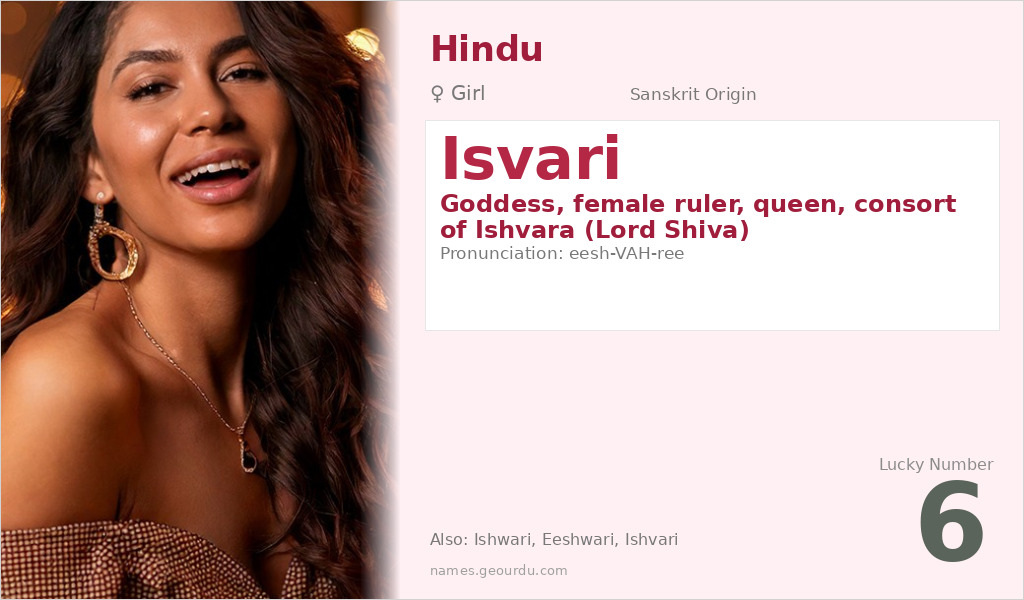
Isvari is a beautiful and powerful Sanskrit name that resonates with divine feminine energy. Rooted in ancient Hindu tradition, this name carries profound spiritual significance as it literally means ‘Goddess’ or ‘female ruler’. For parents seeking a name that embodies strength, grace, and sacred connection, Isvari offers timeless appeal. Its melodic pronunciation and rich cultural heritage make it a meaningful choice for daughters across Hindu communities.
Meaning of Isvari
The name Isvari originates from Sanskrit, combining ‘Isha’ (ईश) meaning ‘lord, ruler, or master’ with the feminine suffix ‘-vari’ (वरी) meaning ‘female possessor’. Thus, Isvari translates precisely to ‘female ruler’, ‘goddess’, or ‘consort of the lord’. In Hindu theology, Isvari specifically refers to the divine feminine counterpart of Ishvara (Lord Shiva), representing the supreme goddess principle. This name appears in ancient scriptures and is used as an honorific for various goddesses including Parvati, Lakshmi, and Durga. The etymology reflects the concept of Shakti—the creative, active feminine energy that complements masculine divinity.
| 📛 Name | Isvari |
| 💎 Meaning | Goddess, female ruler, queen, consort of Ishvara (Lord Shiva) |
| 👤 Gender | Girl |
| 🕌 Religion | Hindu |
| 🌍 Origin | Sanskrit |
| 🗣 Pronunciation | eesh-VAH-ree |
| ✍️ Urdu | ایشوری |
| ✍️ Arabic | إيشواري |
| 🔢 Numerology | 6 |
| ✨ Spellings | Ishwari, Eeshwari, Ishvari, Eeshvari |
Origin & Cultural Significance
Isvari has its roots in ancient Sanskrit language and Hindu religious tradition, dating back to Vedic and Puranic texts. The name emerged from South Asian cultural contexts where Sanskrit served as the liturgical and scholarly language. As Hinduism developed its theological framework, Isvari became established as an epithet for the divine feminine, particularly in Shaivism where it denotes Parvati as Shiva’s consort. The name spread through Hindu communities across India, Nepal, and the diaspora, maintaining its religious significance while adapting to regional linguistic variations. Today, it remains primarily used within Hindu families who value its spiritual connotations and classical heritage.
Personality Traits
Those named Isvari often embody qualities associated with divine femininity—strength, wisdom, and nurturing protection. They may demonstrate natural leadership abilities combined with deep empathy and intuition. The name suggests someone who balances traditional values with personal authority, potentially showing interest in spiritual matters or community guidance. While personality varies individually, the name’s meaning can inspire confidence, grace, and a sense of sacred responsibility in its bearer.
Similar Names
If you like Isvari, consider: Ishani, Ishita, Ishika, Parvati, Lakshmi, Durga, Devi, Shakti, Bhavani, Ambika
Famous People Named Isvari
- Ishwari P. B. — Indian actress known for Tamil and Telugu films
- Ishwari Singh — Historical Rajput ruler, though this is a masculine variant
Frequently Asked Questions About Isvari
What does Isvari mean?
Isvari means 'Goddess', 'female ruler', or 'consort of the lord' in Sanskrit, specifically referring to the divine feminine in Hindu tradition.
Is Isvari a boy or girl name?
Isvari is exclusively a feminine name in Hindu tradition, derived from Sanskrit with feminine grammatical construction and used for goddesses and female figures.
What is the origin of Isvari?
Isvari originates from Sanskrit language and Hindu religious tradition, with roots in ancient Indian scriptures where it denotes the supreme goddess or female aspect of divinity.