
Table of Contents
Iwazullah is a meaningful Pashto name with deep cultural significance in Muslim communities, particularly among Pashtun families. This compound name beautifully combines the concept of divine compensation with spiritual devotion. Traditionally given to boys born after the loss of a child, Iwazullah carries a story of hope and renewal within its syllables. Understanding this name requires exploring its linguistic roots and the cultural context that gives it special resonance.
Meaning of Iwazullah
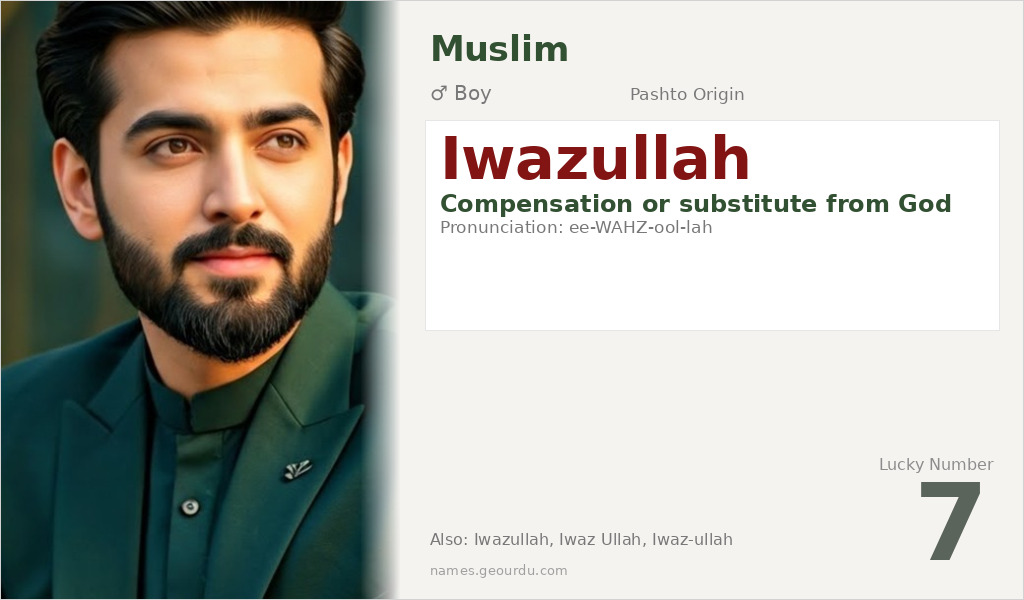
The name Iwazullah derives from Pashto, where ‘Iwaz’ (عوض) means compensation, substitute, or replacement, and ‘ullah’ comes from the Arabic ‘Allah’ (الله), meaning God. Together, they form a name that literally translates to ‘compensation from God’ or ‘God’s substitute’. This is not merely a theoretical meaning but reflects specific naming practices in Pashtun and other Muslim cultures where children are named according to family circumstances. The name is particularly given when a child is born after parents have experienced the loss of a previous child, symbolizing that God has provided this child as compensation for that loss. The linguistic construction follows a common pattern in Muslim names where attributes or concepts are combined with ‘ullah’ to create names expressing relationship with the divine.
| 📛 Name | Iwazullah |
| 💎 Meaning | Compensation or substitute from God |
| 👤 Gender | Boy |
| 🕌 Religion | Muslim |
| 🌍 Origin | Pashto |
| 🗣 Pronunciation | ee-WAHZ-ool-lah |
| ✍️ Urdu | عوض اللہ |
| ✍️ Arabic | عوض الله |
| 🔢 Numerology | 7 |
| ✨ Spellings | Iwazullah, Iwaz Ullah, Iwaz-ullah, Iwaz Allah |
Origin & Cultural Significance
Iwazullah originates from Pashto-speaking regions, primarily among Pashtun communities in Afghanistan and Pakistan, though it has spread to other Muslim communities through cultural exchange. The name reflects specific cultural naming traditions where names are chosen based on family circumstances rather than just aesthetic preference. This practice is particularly strong in Pashtun culture, where names often tell a story about the child’s birth or family situation. Historically, such names served as both personal identifiers and family narratives, preserving stories of loss, hope, and divine intervention. While the ‘ullah’ component comes from Arabic through Islamic influence, the overall construction and usage pattern are distinctly Pashtun, showing how Islamic naming traditions have been adapted within specific cultural contexts.
Personality Traits
While personality traits associated with names are cultural interpretations rather than scientific facts, names like Iwazullah often carry expectations within their communities. The meaning ‘compensation from God’ suggests someone viewed as a blessing or replacement, which may influence how the individual sees themselves and how they’re perceived by family. Such names can instill a sense of purpose and resilience, with bearers often developing strong family bonds and spiritual awareness. The name’s origin in circumstances of loss and renewal may contribute to characteristics of empathy and perseverance in those who carry it.
Similar Names
If you like Iwazullah, consider: Abdullah, Fazlullah, Habibullah, Inayatullah, Karimullah
Famous People Named Iwazullah
- Iwazullah Khan — 19th century Pashtun tribal leader from the Khyber region
- Iwazullah Niazi — Contemporary Pakistani politician and former member of the National Assembly
Frequently Asked Questions About Iwazullah
What does Iwazullah mean?
Iwazullah means 'compensation from God' or 'God's substitute'. It comes from Pashto, combining 'Iwaz' (compensation) and 'ullah' (from Allah, meaning God).
Is Iwazullah a boy or girl name?
Iwazullah is exclusively a boy's name in all cultural contexts where it is used, particularly among Pashtun and other Muslim communities.
What is the origin of Iwazullah?
Iwazullah originates from Pashto, the language of Pashtun people in Afghanistan and Pakistan. While it incorporates the Arabic element 'ullah', the name structure and cultural usage are distinctly Pashtun.





