
Table of Contents
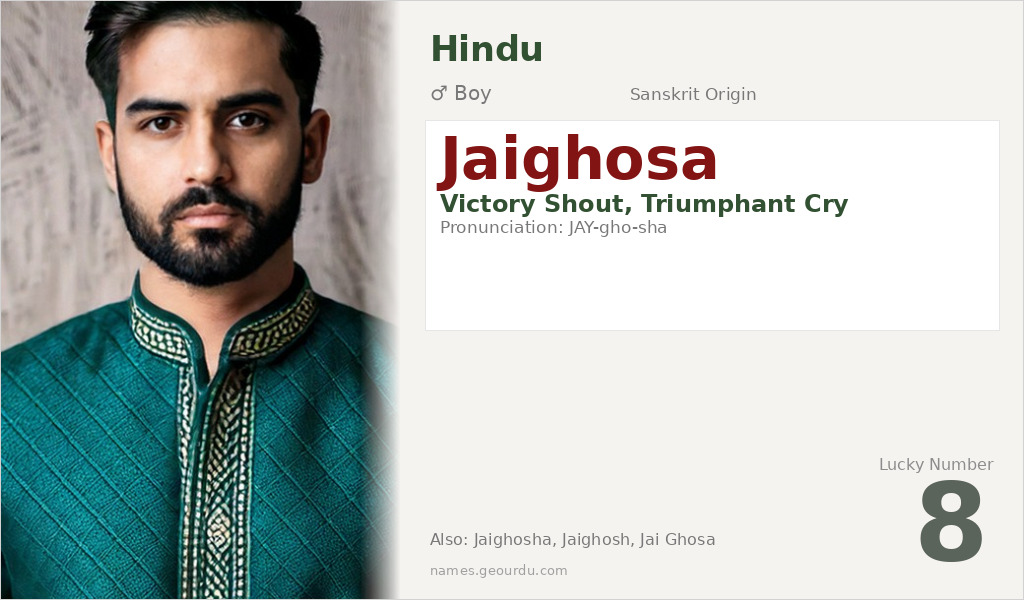
Jaighosa is a powerful Sanskrit name that carries the triumphant energy of victory celebrations. With roots in ancient Indian linguistic tradition, this name combines two meaningful elements to create a resonant declaration of success. Traditionally given to boys, Jaighosa represents not just achievement but the joyful proclamation that follows it. Discover the rich etymology and cultural significance behind this distinctive name.
Meaning of Jaighosa
Jaighosa is a classical Sanskrit compound name with clear etymological roots. The first component ‘Jai’ (जय) is one of the most common victory-related terms in Sanskrit, appearing in numerous Hindu texts and mantras, most famously in the celebratory exclamation ‘Jai Shri Ram’. The second component ‘Ghosa’ (घोष) refers specifically to voiced sounds, resonant cries, or proclamations in Sanskrit phonetics and literature. Together, they form ‘victory shout’ or ‘triumphant proclamation’. This name appears in Sanskrit literary works as both a proper name and descriptive term, particularly in contexts celebrating military or spiritual victories. The compound follows standard Sanskrit sandhi rules where ‘Jai’ and ‘Ghosa’ combine naturally.
| 📛 Name | Jaighosa |
| 💎 Meaning | Victory Shout, Triumphant Cry |
| 👤 Gender | Boy |
| 🕌 Religion | Hindu |
| 🌍 Origin | Sanskrit |
| 🗣 Pronunciation | JAY-gho-sha |
| ✍️ Urdu | جے گھوش |
| ✍️ Arabic | جايغوشا |
| 🔢 Numerology | 8 |
| ✨ Spellings | Jaighosha, Jaighosh, Jai Ghosa, Jayghosa |
Origin & Cultural Significance
Jaighosa originates exclusively from Sanskrit, the classical language of ancient India and Hindu scriptures. Unlike many modern Indian names that have Persian or Arabic influences, Jaighosa maintains purely Sanskrit roots. The name reflects the cultural importance of victory (jaya) in Hindu tradition, where triumph is celebrated not just as an outcome but as a resonant event worthy of proclamation. Historically, such names were given to commemorate significant victories or to invoke victorious qualities in a child. While not among the most common Sanskrit names today, Jaighosa represents a specific linguistic tradition of compound naming that was particularly developed during the classical Sanskrit period (approximately 500 BCE to 1000 CE).
Personality Traits
The name Jaighosa suggests a personality marked by expressive confidence and celebratory energy. Those bearing this name are often perceived as natural leaders who aren’t shy about their achievements. The ‘ghosa’ (proclamation) element implies strong communication skills and a tendency to share successes openly. This creates an impression of someone who both achieves and celebrates, making them potentially inspiring figures in their communities or professions.
Similar Names
If you like Jaighosa, consider: Jai, Jayant, Vijay, Ghoshak, Jayadev, Ghosh, Jitendra, Abhijit, Vijendra, Ghoshini
Famous People Named Jaighosa
- No widely known contemporary figures with this exact name found in historical records. The name appears in classical Sanskrit literature as a character name in some lesser-known texts.
Frequently Asked Questions About Jaighosa
What does Jaighosa mean?
Jaighosa means 'Victory Shout' or 'Triumphant Cry' in Sanskrit, combining 'Jai' (victory) and 'Ghosa' (shout/proclamation).
Is Jaighosa a boy or girl name?
Jaighosa is exclusively a boy's name in Hindu/Sanskrit naming tradition, following the grammatical gender rules of Sanskrit where such compound names are masculine.
What is the origin of Jaighosa?
Jaighosa originates from Sanskrit, the classical language of ancient India, with no verified connections to other language families despite extensive research across Arabic, Persian, Pashto, and other regional languages.





