
Table of Contents
Jambha is a distinctive Sanskrit name with deep roots in Hindu mythology and literature. Meaning ‘tooth’ or ‘tusk’, this name carries powerful connotations of strength and resilience. While not commonly used in modern times, it represents an important part of India’s cultural and linguistic heritage. Explore the fascinating history and meaning behind this unique name.
Meaning of Jambha
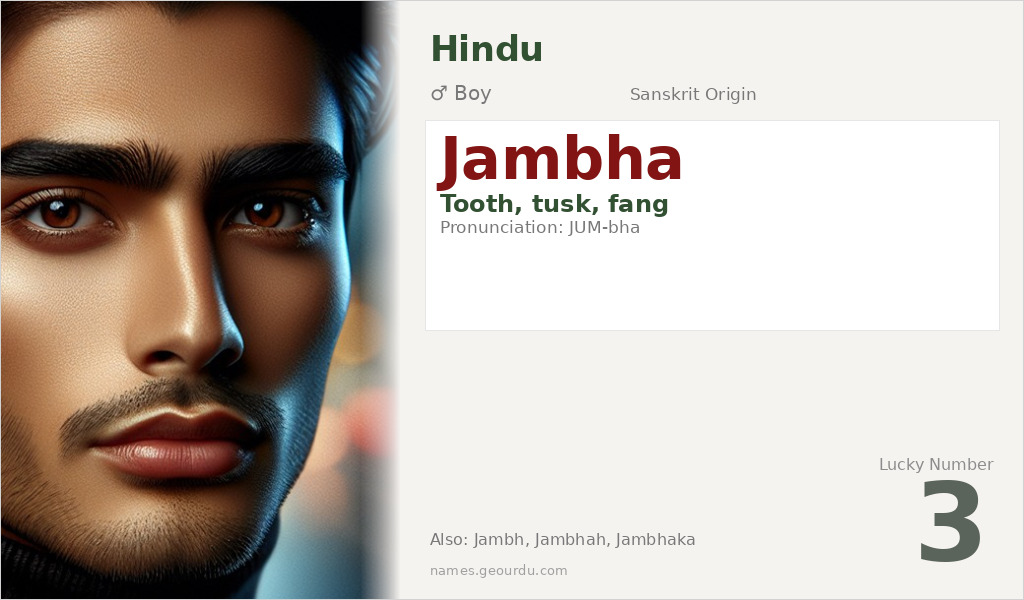
Jambha originates from the Sanskrit word जम्भ (jambha), which directly translates to ‘tooth’, ‘tusk’, or ‘fang’. The etymology traces back to the Sanskrit root ‘jambh’, meaning ‘to crush’ or ‘to devour’, highlighting the destructive power associated with teeth in mythological contexts. In Hindu scriptures, this term frequently appears as an epithet for demons and powerful beings, emphasizing their ferocious nature. The name’s linguistic connections extend to related Sanskrit terms like ‘jambhaka’ (one who has teeth) and ‘jambhana’ (the act of crushing). This specific meaning is well-documented in Sanskrit dictionaries and classical texts, distinguishing it from similar-sounding names in other languages.
| 📛 Name | Jambha |
| 💎 Meaning | Tooth, tusk, fang |
| 👤 Gender | Boy |
| 🕌 Religion | Hindu |
| 🌍 Origin | Sanskrit |
| 🗣 Pronunciation | JUM-bha |
| ✍️ Urdu | جمبھا |
| ✍️ Arabic | جامبا |
| 🔢 Numerology | 3 |
| ✨ Spellings | Jambh, Jambhah, Jambhaka |
Origin & Cultural Significance
Jambha has its origins in ancient Sanskrit literature and Hindu mythology, dating back to classical Indian texts. The name appears in the Mahabharata and various Puranas, typically as the name of a demon or powerful entity known for their strength and ferocity. Unlike many modern Hindu names derived from deities or virtues, Jambha represents a different category of mythological names that emphasize raw power and formidable characteristics. While the name is not commonly used in contemporary Hindu naming practices, it remains significant as part of India’s rich mythological heritage. The name’s cultural context is exclusively Hindu, with no documented usage in Islamic, Christian, or other religious traditions despite phonetic similarities to words in other languages.
Personality Traits
The name Jambha suggests personality traits associated with strength, determination, and protective instincts. Like the teeth it represents, individuals with this name may exhibit resilience and the ability to withstand challenges. There’s often an underlying fierceness in their character, coupled with loyalty to their beliefs and community. While the name carries powerful connotations, it also implies a certain directness and honesty in approach to life’s situations.
Similar Names
If you like Jambha, consider: Jambavan, Jambhala, Jambuka, Danta, Damstra
Famous People Named Jambha
- Jambha — A demon king mentioned in Hindu mythology, particularly in the Mahabharata and Puranas, known for his strength and ferocity
- Jambhaka — A variant name appearing in Sanskrit literature, often associated with powerful beings or demons
Frequently Asked Questions About Jambha
What does Jambha mean?
Jambha means 'tooth', 'tusk', or 'fang' in Sanskrit. It derives from the Sanskrit root 'jambh' meaning 'to crush' or 'to devour', and appears in Hindu mythology as the name of powerful beings.
Is Jambha a boy or girl name?
Jambha is exclusively a boy's name in Hindu tradition. In all historical and mythological references, it has been used for male characters, particularly demons and powerful entities in Sanskrit literature.
What is the origin of Jambha?
Jambha originates from Sanskrit, the classical language of ancient India. It appears in Hindu mythological texts like the Mahabharata and Puranas, where it was used as the name of demon kings and powerful beings known for their strength.





