
Table of Contents
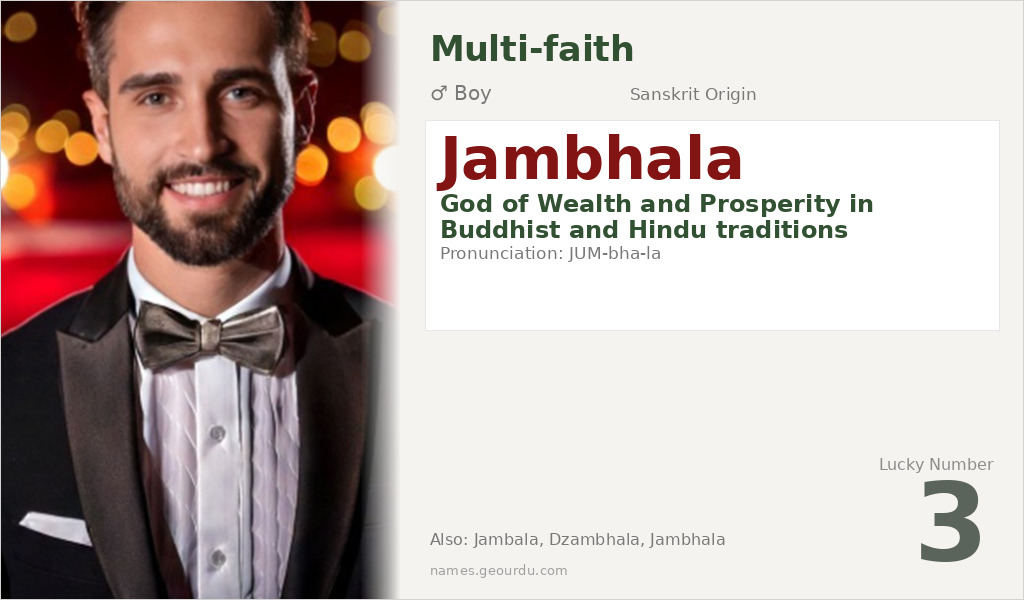
Jambhala is a powerful name with deep roots in both Hindu and Buddhist traditions, representing the deity of wealth and prosperity. This ancient Sanskrit name carries spiritual significance across South Asia and the Himalayas, where Jambhala is revered as a bringer of abundance and protection. Parents choosing this name often seek to invoke blessings of financial stability and generosity for their child.
Meaning of Jambhala
Jambhala originates from Sanskrit ‘जम्भल’ (Jambhala), meaning ‘God of Wealth and Prosperity.’ In Hindu tradition, Jambhala is considered an aspect of Kubera, the divine treasurer, while in Vajrayana Buddhism, particularly Tibetan Buddhism, Jambhala (or Dzambhala) is a central wealth deity with multiple colored forms representing different aspects of abundance. The name appears in ancient texts like the Mahabharata and Buddhist tantras, where Jambhala is depicted holding a mongoose that spews jewels, symbolizing endless prosperity. Linguistic analysis shows connections to Sanskrit roots related to treasure and nourishment.
| 📛 Name | Jambhala |
| 💎 Meaning | God of Wealth and Prosperity in Buddhist and Hindu traditions |
| 👤 Gender | Boy |
| 🕌 Religion | Multi-faith |
| 🌍 Origin | Sanskrit |
| 🗣 Pronunciation | JUM-bha-la |
| ✍️ Urdu | جمبھالا |
| ✍️ Arabic | جامبهالا |
| 🔢 Numerology | 3 |
| ✨ Spellings | Jambala, Dzambhala, Jambhala, Jambala |
Origin & Cultural Significance
The name Jambhala has its origins in ancient Indian religions, with documented usage in both Hindu scriptures and Buddhist tantric traditions dating back over a thousand years. It spread across Asia through Buddhist transmission, becoming particularly important in Tibetan, Nepalese, and Mongolian Buddhism where Jambhala rituals are performed for wealth accumulation. In Hinduism, Jambhala appears in Puranic literature as a guardian of treasures. The name’s cultural significance extends beyond India to Southeast Asia and the Himalayan regions, where it remains in religious use today.
Personality Traits
Those named Jambhala are often perceived as fortunate, generous, and protective individuals. They may demonstrate natural aptitude in financial matters and a tendency to support others, mirroring the deity’s role as a distributor of wealth. Their personality might blend spiritual depth with practical abundance, making them both grounded and benevolent in their interactions.
Similar Names
If you like Jambhala, consider: Kubera, Lakshmi, Ganesha, Vasudhara, Manibhadra
Famous People Named Jambhala
- Jambhala (deity) — Buddhist and Hindu deity of wealth worshipped across Asia
- Jambhala statues — Numerous ancient statues found in Tibetan, Nepalese, and Indian temples
Frequently Asked Questions About Jambhala
What does Jambhala mean?
Jambhala means 'God of Wealth and Prosperity' in Sanskrit, referring to a deity worshipped in both Hindu and Buddhist traditions.
Is Jambhala a boy or girl name?
Jambhala is traditionally a masculine name, as it refers to a male deity in religious contexts, though modern usage might vary.
What is the origin of Jambhala?
Jambhala originates from Sanskrit and is deeply rooted in both Hindu mythology and Vajrayana Buddhism, particularly in Tibetan and Nepalese traditions.





