
Table of Contents
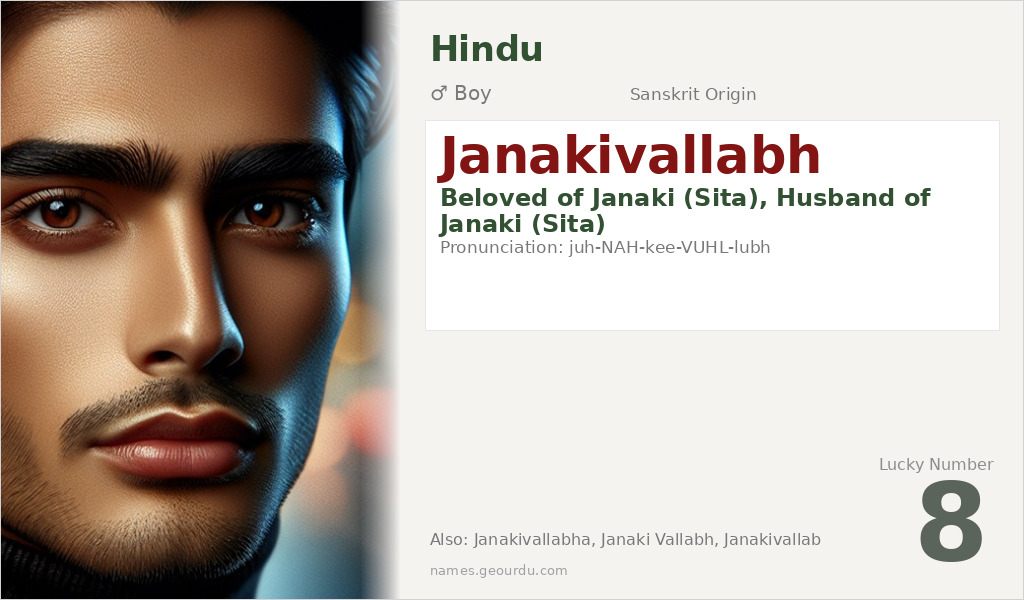
Janakivallabh is a profound Sanskrit name rich with mythological significance in Hinduism. Directly translating to ‘Beloved of Janaki’ or ‘Husband of Janaki’, this name serves as an epithet for Lord Rama, celebrating his divine relationship with Sita. While uncommon as a contemporary first name, it carries deep religious and cultural weight for those seeking a name with spiritual resonance. Explore the etymology, usage, and symbolic meaning of this classical compound name.
Meaning of Janakivallabh
Janakivallabh is a compound Sanskrit name derived from two elements: ‘Janaki’ and ‘Vallabh’. Janaki (जानकी) refers to Sita, the daughter of King Janaka and wife of Lord Rama in the Hindu epic Ramayana. Vallabh (वल्लभ) means ‘beloved, dear one, husband, or favorite’. Thus, Janakivallabh literally means ‘beloved of Janaki’ or ‘husband of Janaki’, explicitly identifying the bearer as Rama. This name is not merely a synonym for Rama but a specific title highlighting his marital bond with Sita. It appears in Sanskrit hymns, devotional poetry, and classical texts as a reverential epithet. The name embodies ideals of devotion, partnership, and dharma (righteous duty) central to Hindu mythology.
| 📛 Name | Janakivallabh |
| 💎 Meaning | Beloved of Janaki (Sita), Husband of Janaki (Sita) |
| 👤 Gender | Boy |
| 🕌 Religion | Hindu |
| 🌍 Origin | Sanskrit |
| 🗣 Pronunciation | juh-NAH-kee-VUHL-lubh |
| ✍️ Urdu | جنکی ولابھ |
| ✍️ Arabic | جاناكيفالابه |
| 🔢 Numerology | 8 |
| ✨ Spellings | Janakivallabha, Janaki Vallabh, Janakivallab |
Origin & Cultural Significance
Janakivallabh originates from classical Sanskrit, the ancient liturgical language of Hinduism. It emerged as a devotional epithet within Hindu religious and literary traditions, particularly in contexts praising Lord Rama. The name is deeply rooted in the Ramayana, where Rama’s relationship with Sita (Janaki) is a central theme. Culturally, it is used primarily in Hindu communities in India and the diaspora, though it is rare as a given name compared to more common names like Ram or Sitaram. Historically, such compound names were popular in Sanskrit poetry and prayers to denote specific attributes of deities. Its usage reflects the importance of epithets (nama) in Hindu worship, where multiple names celebrate different aspects of the divine.
Personality Traits
Inspired by Lord Rama, Janakivallabh suggests a personality marked by integrity, loyalty, and protective instincts. Those named Janakivallabh may be seen as devoted partners and responsible leaders, embodying traditional values. The name implies a strong connection to family and cultural heritage, with an inherent sense of duty and moral fortitude. While personality traits are not deterministic, the name’s mythological roots often inspire expectations of righteousness and compassion.
Similar Names
If you like Janakivallabh, consider: Ram, Rama, Sitaram, Janakinath, Vallabh, Janak, Sita, Lakshman, Bharat, Hanuman
Famous People Named Janakivallabh
- No widely known contemporary figures with this first name found — primarily used as a religious/epithet name in Hindu contexts
- In Hindu mythology: Lord Rama is referred to as Janakivallabh in scriptures and devotional literature
Frequently Asked Questions About Janakivallabh
What does Janakivallabh mean?
Janakivallabh means 'Beloved of Janaki (Sita)' or 'Husband of Janaki' in Sanskrit. It is an epithet for Lord Rama, referring to his relationship with his wife Sita.
Is Janakivallabh a boy or girl name?
Janakivallabh is exclusively a boy name in Hindu tradition, as it refers to Lord Rama, a male deity. There is no feminine usage documented.
What is the origin of Janakivallabh?
Janakivallabh originates from Sanskrit, the classical language of Hinduism. It is a compound name used as a religious epithet in Hindu mythology and devotional literature.





