
Table of Contents
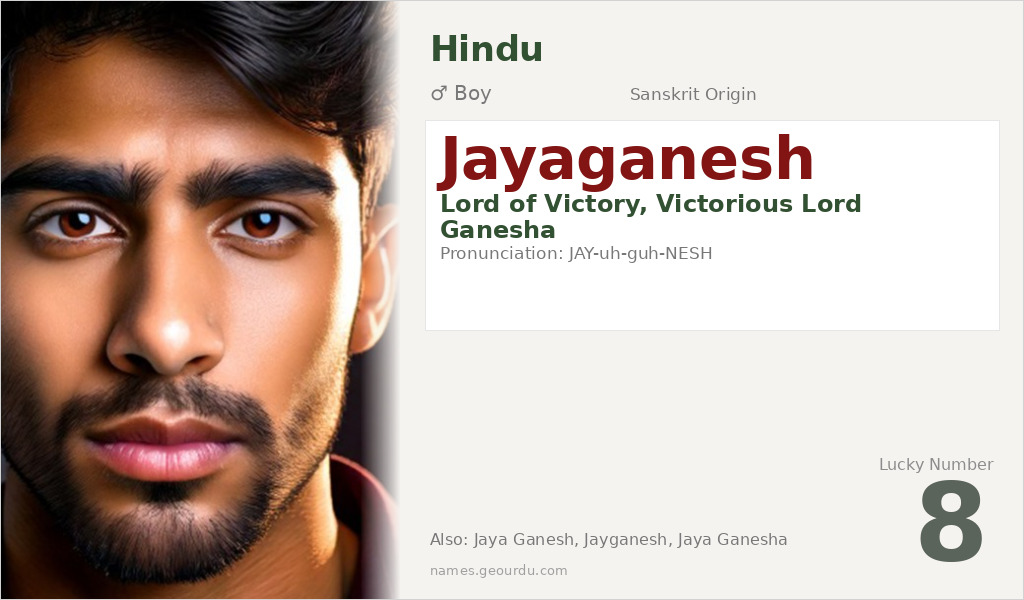
Jayaganesh is a powerful and meaningful Hindu boy name that combines two significant Sanskrit elements: victory and divine protection. This name carries deep cultural and religious significance, invoking both triumph and the blessings of Lord Ganesha. Parents choosing this name often seek to imbue their child with qualities of success, wisdom, and obstacle-removing capabilities. As a compound name, it represents a beautiful fusion of aspiration and devotion in Hindu naming traditions.
Meaning of Jayaganesh
Jayaganesh derives from classical Sanskrit, one of the oldest Indo-European languages with extensive literary and religious texts. The first component ‘Jaya’ (जय) comes from the Sanskrit root ‘ji’ meaning ‘to conquer’ or ‘to win’, appearing in numerous Hindu scriptures including the Mahabharata where ‘Jaya’ is an alternative name for the epic itself. The second component ‘Ganesh’ (गणेश) breaks down to ‘Gana’ (multitudes, categories) + ‘Isha’ (lord, ruler), referring specifically to the elephant-headed deity who is worshipped as the remover of obstacles and patron of arts and sciences. This compound structure follows traditional Sanskrit naming conventions where divine names are combined with auspicious attributes. The complete name thus signifies ‘Victorious Lord Ganesha’ or ‘Lord of Victory’, emphasizing triumph under divine guidance.
| 📛 Name | Jayaganesh |
| 💎 Meaning | Lord of Victory, Victorious Lord Ganesha |
| 👤 Gender | Boy |
| 🕌 Religion | Hindu |
| 🌍 Origin | Sanskrit |
| 🗣 Pronunciation | JAY-uh-guh-NESH |
| ✍️ Urdu | جیا گنیش |
| ✍️ Arabic | جايا غانيش |
| 🔢 Numerology | 8 |
| ✨ Spellings | Jaya Ganesh, Jayganesh, Jaya Ganesha |
Origin & Cultural Significance
Jayaganesh originates from Hindu naming traditions in India, particularly within Sanskrit-speaking communities and regions influenced by Hindu culture. The name reflects the common practice of combining the name of a deity with positive attributes, creating names that serve as both identifiers and blessings. Historically, such compound names gained popularity during the medieval period when devotional (bhakti) movements emphasized personal relationships with deities. While primarily used in Hindu communities across India, the name’s Sanskrit roots give it pan-Indian recognition. The worship of Ganesha as a primary deity in many Hindu traditions makes names containing ‘Ganesh’ particularly popular in Maharashtra, Tamil Nadu, Karnataka, and other regions with strong Ganesha worship traditions.
Personality Traits
Those named Jayaganesh are often perceived as having a balanced personality combining strategic intelligence with compassionate leadership. They typically exhibit the problem-solving abilities associated with Ganesha while maintaining the determined spirit suggested by ‘Jaya’. This combination often results in individuals who approach challenges methodically, remove obstacles creatively, and achieve success through both wisdom and perseverance. Their personality tends to reflect the dual nature of their name: both spiritual and achievement-oriented.
Similar Names
If you like Jayaganesh, consider: Jayant, Ganesh, Jayadev, Vijay, Ganapati, Jagannath, Jayesh, Vinayak
Famous People Named Jayaganesh
- Jayaganesh Narayanan — Indian film director and screenwriter known for Tamil cinema
- Jayaganesh — Character in Hindu mythological stories representing victorious aspects of Ganesha
Frequently Asked Questions About Jayaganesh
What does Jayaganesh mean?
Jayaganesh means 'Lord of Victory' or 'Victorious Lord Ganesha' in Sanskrit. It combines 'Jaya' (victory) with 'Ganesh' (the elephant-headed Hindu deity).
Is Jayaganesh a boy or girl name?
Jayaganesh is exclusively a boy name in Hindu naming traditions. The '-esh' ending and association with Lord Ganesha make it masculine in Sanskrit grammar and cultural usage.
What is the origin of Jayaganesh?
Jayaganesh originates from Sanskrit, the classical language of ancient India, and is specifically from Hindu religious and cultural traditions. It follows compound naming patterns common in Sanskrit literature.





