Table of Contents
Jayalakshmee is a beautiful and meaningful Sanskrit name that combines two powerful concepts in Hindu tradition: victory and divine prosperity. As a compound name, it brings together ‘Jaya’ (victory) and ‘Lakshmee’ (the goddess of wealth), creating a name that signifies ‘Goddess of Victory’ or ‘Victory of Lakshmi.’ This name has been cherished in Hindu communities for generations, particularly in South India where it remains popular today. The name carries both spiritual significance and aspirational qualities for parents seeking a name with deep cultural roots.
Meaning of Jayalakshmee
Jayalakshmee derives from classical Sanskrit, with ‘Jaya’ (जय) meaning victory, triumph, or success—a common element in many Indian names. ‘Lakshmee’ (लक्ष्मी) refers to the Hindu goddess of wealth, fortune, and beauty, one of the principal deities in Hinduism. When combined, the name literally means ‘Victory of Lakshmi’ or ‘Goddess of Victory,’ representing the auspicious union of success and divine blessing. In Hindu mythology, Lakshmi has multiple forms, and Jayalakshmee specifically refers to her victorious aspect. The name appears in various Hindu texts and traditions as an epithet for the goddess, particularly in contexts celebrating triumph and prosperity. This compound construction follows the common Sanskrit practice of creating meaningful names through word combination.
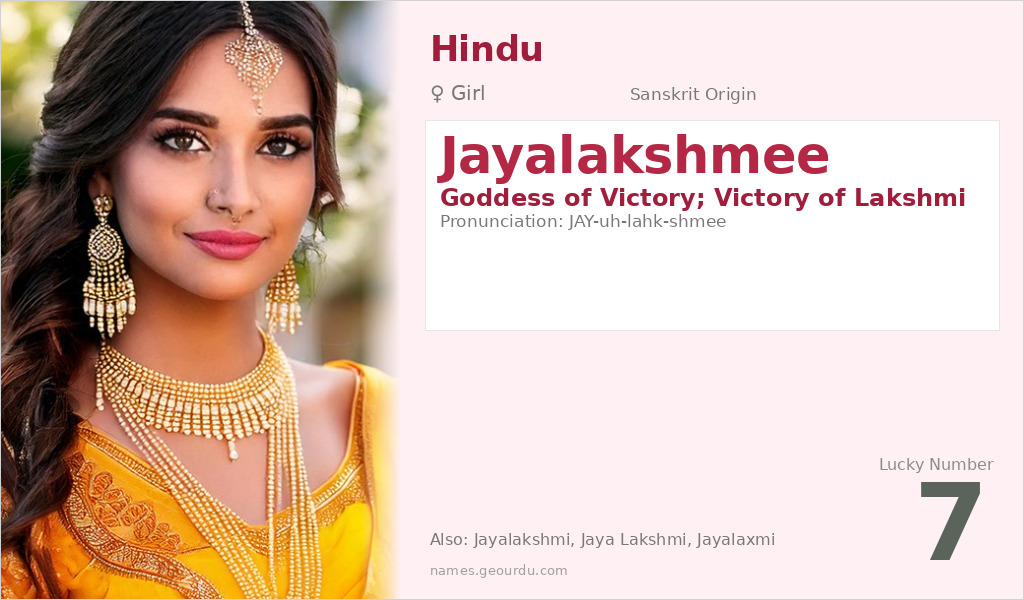
| 📛 Name | Jayalakshmee |
| 💎 Meaning | Goddess of Victory; Victory of Lakshmi |
| 👤 Gender | Girl |
| 🕌 Religion | Hindu |
| 🌍 Origin | Sanskrit |
| 🗣 Pronunciation | JAY-uh-lahk-shmee |
| ✍️ Urdu | جے لکشمی |
| ✍️ Arabic | جايا لاكشمي |
| 🔢 Numerology | 7 |
| ✨ Spellings | Jayalakshmi, Jaya Lakshmi, Jayalaxmi, Jeyalakshmi |
Origin & Cultural Significance
Jayalakshmee originates from Sanskrit, the classical language of ancient India and the primary liturgical language of Hinduism. The name has been used for centuries in Hindu communities, particularly in South India where Sanskrit-derived names remain prevalent. It belongs to the tradition of compound names that combine divine attributes or references, a common practice in Hindu naming conventions. While the name is pan-Indian, it sees particular popularity in Tamil, Telugu, Kannada, and Malayalam speaking regions. The name reflects the cultural importance of both victory (jaya) and the goddess Lakshmi in Hindu philosophy and daily life. Historically, such names were often given to express parental hopes for their child’s prosperous and successful life under divine protection.
Personality Traits
Those named Jayalakshmee are often associated with qualities of determination, grace, and prosperity. The name suggests someone who approaches challenges with a winning attitude while maintaining spiritual grounding. They may be perceived as natural leaders who bring success to their endeavors while caring for others’ wellbeing. The combination of victory and divine blessing in the name’s meaning often translates to expectations of both material success and spiritual depth in the bearer’s personality.
Similar Names
If you like Jayalakshmee, consider: Lakshmi, Jaya, Vijayalakshmi, Mahalakshmi, Kamalakshi
Famous People Named Jayalakshmee
- Jayalakshmi (Indian playback singer) — Renowned South Indian playback singer active in Tamil and Telugu cinema during the 1970s-80s
- Jayalakshmi (actress) — Indian actress who appeared in Malayalam and Tamil films in the 1970s
Frequently Asked Questions About Jayalakshmee
What does Jayalakshmee mean?
Jayalakshmee means 'Goddess of Victory' or 'Victory of Lakshmi' in Sanskrit. It combines 'Jaya' (victory) and 'Lakshmee' (the Hindu goddess of wealth and prosperity).
Is Jayalakshmee a boy or girl name?
Jayalakshmee is exclusively a girl's name in Hindu tradition. The feminine ending '-ee' and reference to the goddess Lakshmi make it distinctly feminine in all cultural contexts where it's used.
What is the origin of Jayalakshmee?
Jayalakshmee originates from Sanskrit, the classical language of ancient India. It's a compound Hindu name that has been used for centuries, particularly in South Indian communities where Sanskrit-derived names are common.