
Table of Contents
Jayanta is a powerful Sanskrit name with deep roots in Hindu mythology and culture. Meaning ‘victorious’ or ‘conqueror’, this name carries centuries of tradition and heroic associations. From ancient epics to modern usage, Jayanta represents triumph and success. Discover the rich history and meaning behind this distinguished name.
Meaning of Jayanta
Jayanta derives from the Sanskrit language, specifically from the root ‘jaya’ meaning victory, triumph, or conquest. The suffix ‘-anta’ transforms it to mean ‘one who is victorious’ or ‘related to victory’. In Hindu scriptures, Jayanta appears as the son of Indra, the king of gods, and is often portrayed as a heroic warrior who achieves victory in divine battles. The name’s linguistic construction follows classical Sanskrit patterns for creating agent nouns, indicating someone who accomplishes or possesses the quality of the root word. This etymological structure gives Jayanta its enduring meaning of success and achievement across Hindu cultures.
| 📛 Name | Jayanta |
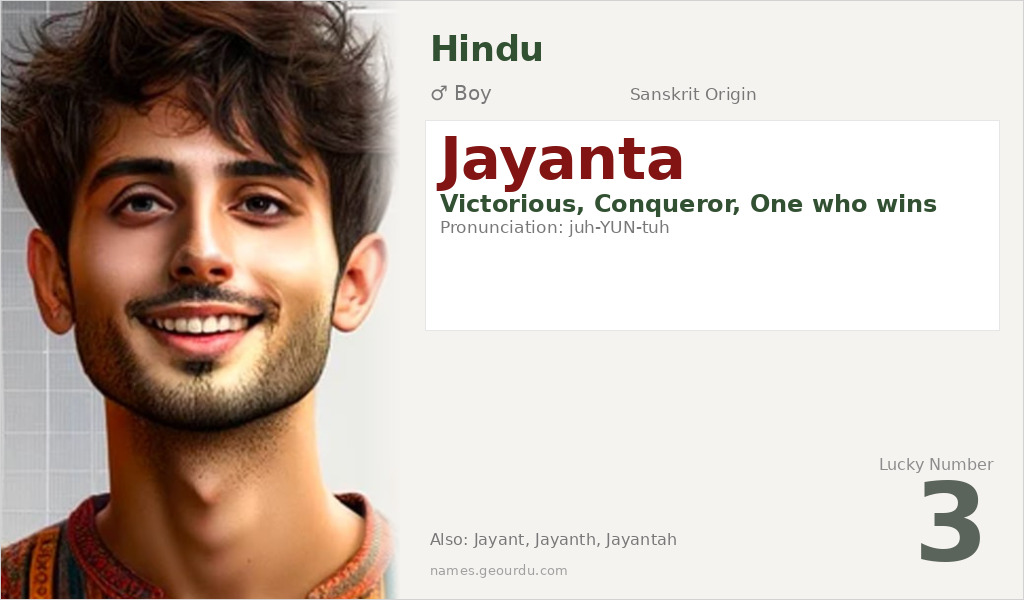
| 💎 Meaning | Victorious, Conqueror, One who wins |
| 👤 Gender | Boy |
| 🕌 Religion | Hindu |
| 🌍 Origin | Sanskrit |
| 🗣 Pronunciation | juh-YUN-tuh |
| ✍️ Urdu | جیانت |
| ✍️ Arabic | جايانتا |
| 🔢 Numerology | 3 |
| ✨ Spellings | Jayant, Jayanth, Jayantah, Jaiyanta |
Origin & Cultural Significance
Jayanta originates from ancient Sanskrit texts, most notably appearing in the Mahabharata and various Puranas as the name of Indra’s son. The name has been used in Hindu communities for centuries, particularly in India and Nepal, where Sanskrit-derived names hold cultural and religious significance. While primarily associated with Hindu tradition, the name’s meaning of victory has made it appealing beyond strictly religious contexts. In contemporary usage, Jayanta remains popular in South Asian communities and among those appreciating Sanskrit names with strong, positive meanings. The name’s mythological connections to divine victory contribute to its enduring appeal across generations.
Personality Traits
Those named Jayanta often embody the victorious spirit of their namesake. They typically display determination, leadership qualities, and a competitive edge that helps them overcome obstacles. The name’s association with triumph in Hindu mythology may inspire confidence and resilience in facing life’s challenges. Many Jayantas are perceived as ambitious individuals who strive for success in their personal and professional pursuits.
Similar Names
If you like Jayanta, consider: Jay, Jaya, Jayantika, Jayendra, Vijay, Ajay, Sanjay, Jayadev, Jayaram, Jayesh
Famous People Named Jayanta
- Jayanta Mahapatra — Indian poet and author, considered one of the pioneers of modern Indian English poetry
- Jayanta Talukdar — Indian archer who represented India in multiple Olympic Games and won medals at Commonwealth Games
Frequently Asked Questions About Jayanta
What does Jayanta mean?
Jayanta means 'victorious', 'conqueror', or 'one who wins' in Sanskrit, the classical language of Hindu scriptures.
Is Jayanta a boy or girl name?
Jayanta is traditionally a masculine name in Hindu culture, derived from the name of Indra's son in mythology.
What is the origin of Jayanta?
Jayanta originates from Sanskrit, appearing in ancient Hindu texts like the Mahabharata as the name of Indra's son, a victorious warrior in Hindu mythology.





