Table of Contents
Jayasri is a beautiful and meaningful Sanskrit name that has been cherished in Hindu culture for centuries. Combining the powerful elements of victory and prosperity, this name carries deep spiritual and cultural significance. Often chosen for girls, Jayasri embodies the qualities of triumph, auspiciousness, and divine grace. Its melodic sound and profound meaning make it a timeless choice for parents seeking a name with both elegance and strength.
Meaning of Jayasri
Jayasri is a classical Sanskrit compound name with two distinct components that together create a rich, layered meaning. The first element ‘Jaya’ (जय) comes from the Sanskrit root ‘ji’ meaning ‘to conquer’ or ‘to win’, representing victory, success, and triumph in both spiritual and worldly contexts. The second element ‘Sri’ (श्री) is one of the most significant terms in Sanskrit, denoting prosperity, beauty, radiance, auspiciousness, and divine grace. In Hindu tradition, Sri is particularly associated with Goddess Lakshmi, the deity of wealth and fortune. When combined, Jayasri literally means ‘victorious splendor’ or ‘triumphant prosperity’, suggesting not just victory but a blessed, auspicious victory that brings beauty and abundance. The name is sometimes interpreted as ‘Goddess of Victory’, connecting it to divine feminine power.
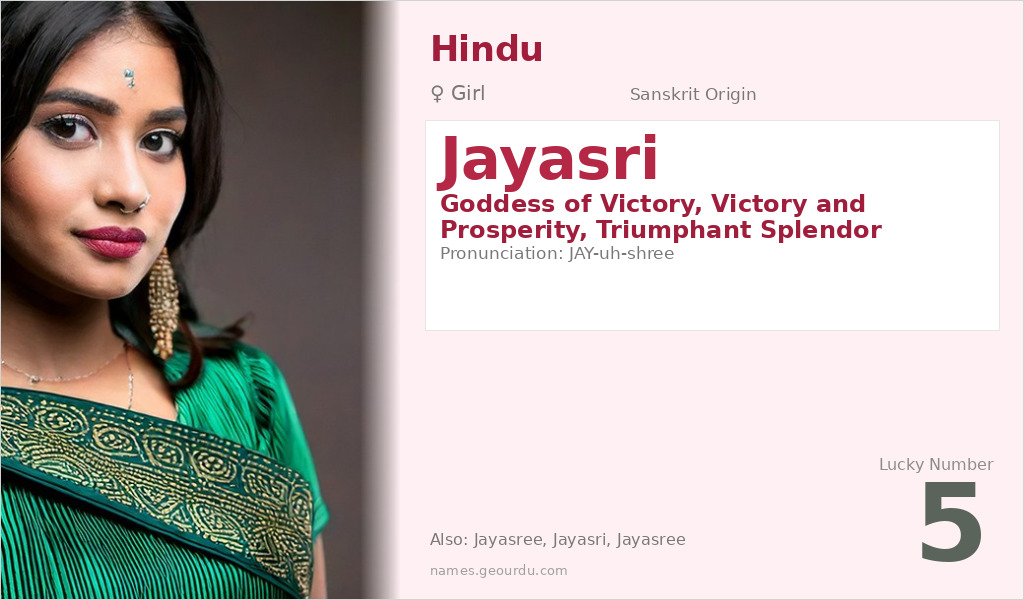
| 📛 Name | Jayasri |
| 💎 Meaning | Goddess of Victory, Victory and Prosperity, Triumphant Splendor |
| 👤 Gender | Girl |
| 🕌 Religion | Hindu |
| 🌍 Origin | Sanskrit |
| 🗣 Pronunciation | JAY-uh-shree |
| ✍️ Urdu | جیاشری |
| ✍️ Arabic | جاياشري |
| 🔢 Numerology | 5 |
| ✨ Spellings | Jayasree, Jayasri, Jayasree, Jayasri, Jayasri |
Origin & Cultural Significance
Jayasri originates from classical Sanskrit, the ancient liturgical language of Hinduism, Buddhism, and Jainism. As a compound name, it follows the traditional Sanskrit naming convention of combining meaningful elements to create auspicious names. The name appears in various Hindu texts and traditions, particularly in South India where Sanskrit names remain popular. While primarily Hindu in usage, the name has also been adopted in some Buddhist communities due to Sanskrit’s influence across South and Southeast Asia. The name’s components—Jaya and Sri—are deeply embedded in Indian culture, appearing in prayers, mantras, and traditional greetings. Jayasri represents a continuation of India’s rich linguistic heritage, maintaining its relevance in modern naming practices while preserving ancient meanings.
Personality Traits
Those named Jayasri are often believed to embody the qualities suggested by their name’s meaning. They typically exhibit a winning personality—charismatic, determined, and naturally inclined toward success. The ‘Sri’ element suggests they carry an aura of grace and prosperity, often attracting good fortune and positive opportunities. These individuals usually balance strength with elegance, approaching challenges with both determination and poise. Their name’s victorious connotations may inspire them to be natural leaders who pursue their goals with optimism and resilience.
Similar Names
If you like Jayasri, consider: Jayashree, Jaya, Shri, Lakshmi, Vijaya
Famous People Named Jayasri
- Jayasri Burman — Indian contemporary painter known for her mythological and feminine themes
- Jayasree — Indian playback singer in Malayalam and Tamil cinema
Frequently Asked Questions About Jayasri
What does Jayasri mean?
Jayasri means 'Goddess of Victory', 'Victorious Splendor', or 'Triumphant Prosperity'. It is a Sanskrit compound name combining 'Jaya' (victory) and 'Sri' (prosperity, auspiciousness).
Is Jayasri a boy or girl name?
Jayasri is primarily a girl's name in Hindu tradition, though the components Jaya and Sri can appear in names for both genders. The feminine association comes from Sri's connection to goddesses like Lakshmi.
What is the origin of Jayasri?
Jayasri originates from Sanskrit, the ancient classical language of India. It is a traditional Hindu name with roots in India's cultural and religious heritage, particularly associated with Hindu naming traditions.