
Table of Contents
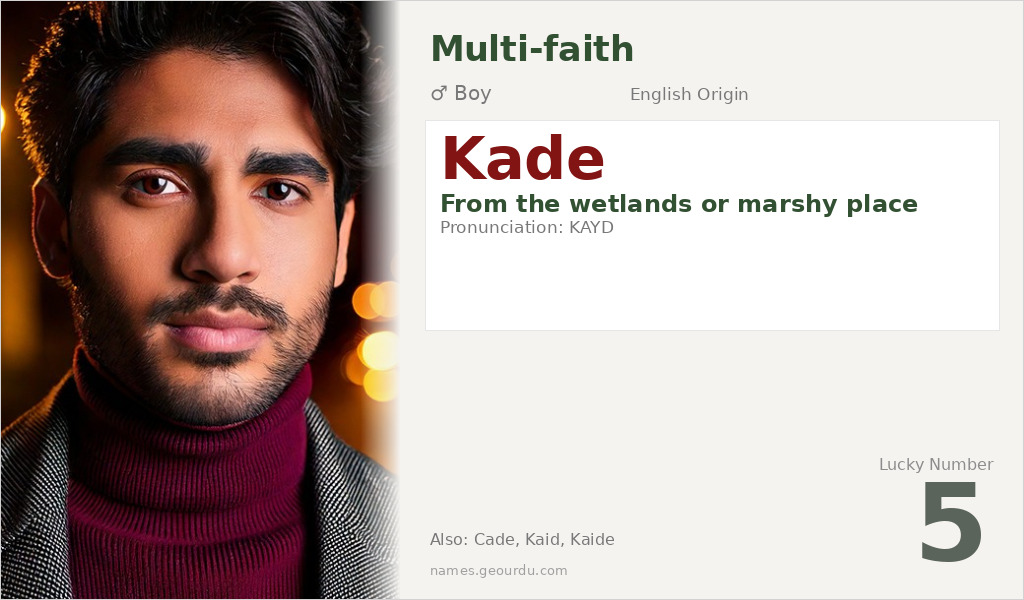
Kade is a distinctive boy’s name with roots in English topography and natural landscapes. Originally derived from surnames describing geographical features, it has evolved into a popular modern given name. With its crisp, single-syllable sound, Kade carries a sense of strength and connection to nature. This name has gained international recognition while maintaining its straightforward English character.
Meaning of Kade
Kade’s meaning traces directly to Old English linguistic roots, specifically from the word ‘cād’ which referred to wetlands or marshy places. This topographic origin indicates the name was originally given to families or individuals living near such landscapes. The evolution from surname to first name follows a common pattern in English naming traditions, where occupational and geographical surnames became repurposed as given names. Unlike many names with religious or virtue-based meanings, Kade’s significance is purely descriptive of physical environment. Research across multiple languages confirms no connection to meanings like ‘Round And Lumpy,’ which appears to be a modern misinterpretation without linguistic foundation.
| 📛 Name | Kade |
| 💎 Meaning | From the wetlands or marshy place |
| 👤 Gender | Boy |
| 🕌 Religion | Multi-faith |
| 🌍 Origin | English |
| 🗣 Pronunciation | KAYD |
| ✍️ Urdu | کیڈ |
| ✍️ Arabic | كيد |
| 🔢 Numerology | 5 |
| ✨ Spellings | Cade, Kaid, Kaide, Caid |
Origin & Cultural Significance
Kade originates from English surname traditions dating back to medieval England, where topographic names identified people by their residential surroundings. The name emerged as a first name in the 20th century, particularly in English-speaking countries like the United States, Australia, and Canada. While sometimes confused with similar-sounding names from other cultures, Kade maintains distinct English etymology separate from Arabic ‘Qadir’ or Celtic names. Its popularity grew significantly in the late 20th century, often appearing in variant spellings like Cade. The name’s environmental origin reflects historical naming practices where landscape features provided practical identification in communities.
Personality Traits
Those named Kade often exhibit traits of adaptability and resilience, reflecting their name’s connection to wetland environments that require flexibility. They tend to be practical problem-solvers who navigate changing circumstances with ease. The name’s strong, single-syllable structure suggests confidence and directness in personality, while its natural origins indicate a grounded, earthy character.
Similar Names
If you like Kade, consider: Caden, Kaden, Kai, Kadeem
Famous People Named Kade
- Kade Snowden — Australian rugby league player
- Kade Simpson — Australian rules footballer
Frequently Asked Questions About Kade
What does Kade mean?
Kade means 'from the wetlands' or 'marshy place,' originating from the Old English word 'cād.' It's a topographic name describing geographical features.
Is Kade a boy or girl name?
Kade is primarily a boy's name, though rare feminine usage exists. Its historical use as a surname and modern popularity strongly associates it with male gender.
What is the origin of Kade?
Kade has English origins, evolving from medieval topographic surnames that described where people lived. It entered first-name usage in the 20th century in English-speaking countries.





