
Table of Contents
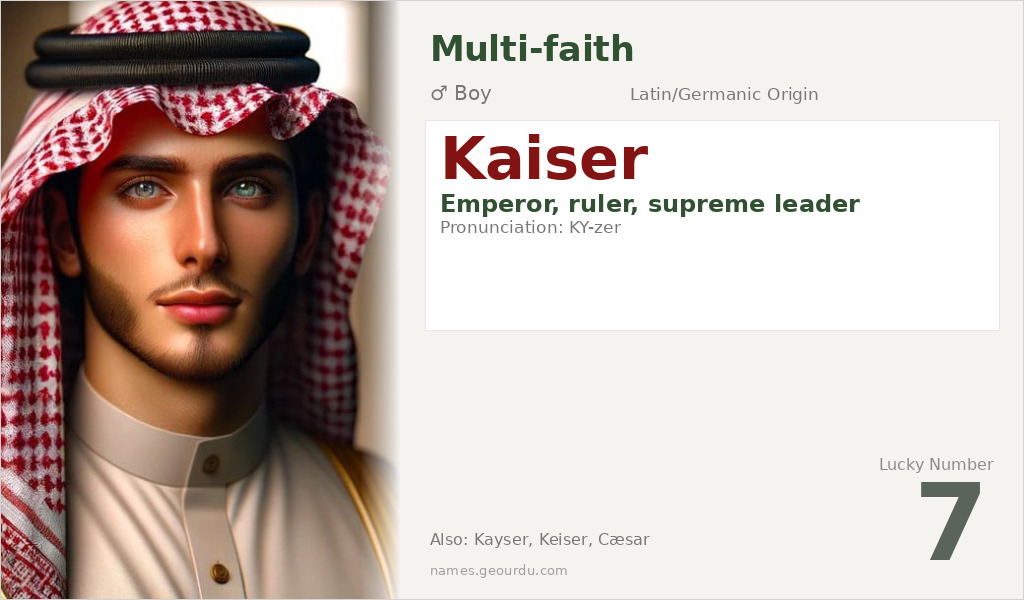
Kaiser is a powerful boy’s name with imperial roots stretching back to ancient Rome. Derived from the Latin title ‘Caesar’, this name carries centuries of royal and imperial history. While commonly associated with German emperors, Kaiser has been adopted across various cultures as a strong, commanding name. Its meaning of ’emperor’ or ‘supreme ruler’ makes it a popular choice for parents seeking a name with authority and historical significance.
Meaning of Kaiser
Kaiser originates from the Latin word ‘Caesar’, which was both a family name and a title for Roman emperors. The linguistic journey began when Germanic tribes adopted the term as ‘kaisar’ in Gothic, evolving through Old High German ‘keisar’ to modern German ‘Kaiser’. The name specifically refers to an emperor, particularly the German emperor, distinguishing it from other royal titles like king. In English and other languages, Kaiser maintains this imperial connotation, though it’s sometimes used more broadly for any powerful ruler. The name has no etymological connection to Arabic or Islamic languages, though it appears in some Muslim communities through cultural borrowing.
| 📛 Name | Kaiser |
| 💎 Meaning | Emperor, ruler, supreme leader |
| 👤 Gender | Boy |
| 🕌 Religion | Multi-faith |
| 🌍 Origin | Latin/Germanic |
| 🗣 Pronunciation | KY-zer |
| ✍️ Urdu | قیصر |
| ✍️ Arabic | قيصر |
| 🔢 Numerology | 7 |
| ✨ Spellings | Kayser, Keiser, Cæsar, Cesar |
Origin & Cultural Significance
The name Kaiser has its deepest roots in ancient Rome, where ‘Caesar’ became an imperial title after Julius Caesar. Germanic tribes encountered this title during Roman expansion and incorporated it into their languages. It gained particular prominence in German-speaking regions, where ‘Kaiser’ became the official title for emperors of the Holy Roman Empire and later the German Empire. While primarily European in origin, the name has spread globally through historical connections, colonialism, and cultural exchange. In some Muslim-majority regions, particularly those with historical German or European influence, the name has been adopted without losing its original imperial meaning.
Personality Traits
Those named Kaiser often embody leadership qualities and natural authority. They tend to be strategic thinkers who approach challenges with confidence and determination. In social settings, Kaisers often command respect through their composed demeanor and decisive nature. While ambitious, they typically balance this with practical wisdom and organizational skills.
Similar Names
If you like Kaiser, consider: Caesar, Kaisar, Kais, Kaiserin, Kaisar
Famous People Named Kaiser
- Kaiser Wilhelm II — Last German Emperor and King of Prussia (1859-1941)
- Kaiser Chiefs — English indie rock band formed in Leeds
Frequently Asked Questions About Kaiser
What does Kaiser mean?
Kaiser means 'emperor' or 'supreme ruler', derived from the Latin title 'Caesar' through Germanic linguistic evolution.
Is Kaiser a boy or girl name?
Kaiser is exclusively a boy's name, reflecting its origins as a masculine imperial title meaning 'emperor'.
What is the origin of Kaiser?
Kaiser originates from Latin 'Caesar', evolving through Germanic languages (particularly German) where it became the title for emperors, especially German emperors.





