
Table of Contents
Kaivalyanath is a profound Sanskrit name that carries deep spiritual significance in Hindu tradition. Meaning ‘Lord of Absolute Liberation’, this name is traditionally given to boys and is closely associated with Lord Shiva. It represents the ultimate goal of spiritual practice—complete freedom from the cycle of rebirth. Parents choosing this name often seek to imbue their child with qualities of spiritual leadership and divine protection.
Meaning of Kaivalyanath
Kaivalyanath derives from two Sanskrit words: ‘Kaivalya’ and ‘Nath’. Kaivalya (कैवल्य) is a central concept in Hindu philosophy, particularly in Yoga and Vedanta traditions, referring to the state of absolute liberation where the individual soul realizes its oneness with the supreme consciousness. Nath (नाथ) means ‘lord’, ‘master’, or ‘protector’. Combined, Kaivalyanath literally translates to ‘Lord of Kaivalya’ or ‘Master of Liberation’. In Shaivism, this is one of the many epithets of Lord Shiva, who is believed to grant this ultimate spiritual freedom to devotees. The name appears in various Hindu texts and mantras dedicated to Shiva.
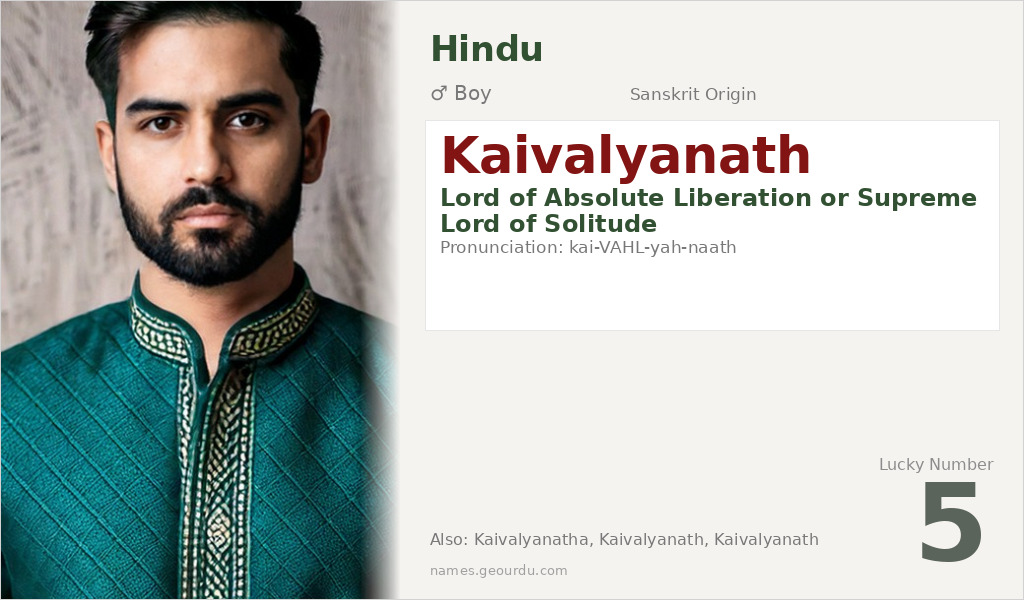
| 📛 Name | Kaivalyanath |
| 💎 Meaning | Lord of Absolute Liberation or Supreme Lord of Solitude |
| 👤 Gender | Boy |
| 🕌 Religion | Hindu |
| 🌍 Origin | Sanskrit |
| 🗣 Pronunciation | kai-VAHL-yah-naath |
| ✍️ Urdu | کیولیناتھ |
| ✍️ Arabic | كيفالياناث |
| 🔢 Numerology | 5 |
| ✨ Spellings | Kaivalyanatha, Kaivalyanath, Kaivalyanath |
Origin & Cultural Significance
Kaivalyanath originates from classical Sanskrit, the ancient liturgical language of Hinduism. The name has its roots in Hindu philosophical texts where ‘Kaivalya’ is described as the highest state of spiritual attainment. Historically, the name has been used both as an epithet for Lord Shiva and as a given name for boys in Hindu families, particularly among Shaivite communities in India. It reflects the deep spiritual aspirations embedded in Hindu naming traditions, where names often carry philosophical or theological significance. The name is most prevalent in regions with strong Shaivite traditions, including parts of Maharashtra, Tamil Nadu, and Karnataka.
Personality Traits
Those named Kaivalyanath are often seen as spiritually mature individuals with a natural inclination toward philosophical inquiry. They may possess leadership qualities tempered with wisdom and compassion, reflecting the protective aspect of ‘Nath’. Their personality typically combines introspection with action, mirroring the balance between spiritual solitude (Kaivalya) and worldly responsibility. Many with this name develop a deep interest in spiritual practices, meditation, or religious studies as they mature.
Similar Names
If you like Kaivalyanath, consider: Mokshanath, Nirvananath, Shivanath, Brahmanath, Paramatmanath
Famous People Named Kaivalyanath
- Kaivalyanath Maharaj — A revered Hindu saint and spiritual teacher from Maharashtra known for his teachings on Advaita Vedanta
- Kaivalyanath Swami — A 19th-century ascetic and scholar who wrote commentaries on Shaiva philosophy
Frequently Asked Questions About Kaivalyanath
What does Kaivalyanath mean?
Kaivalyanath means 'Lord of Absolute Liberation' in Sanskrit. It combines 'Kaivalya' (absolute spiritual freedom) and 'Nath' (lord/master), referring to Lord Shiva who grants liberation.
Is Kaivalyanath a boy or girl name?
Kaivalyanath is exclusively a boy's name in Hindu tradition. It is a masculine name derived from Sanskrit grammatical structures and is used for male children.
What is the origin of Kaivalyanath?
Kaivalyanath originates from Sanskrit, the ancient language of Hindu scriptures. It comes from Hindu philosophical concepts and is primarily associated with Shaivite traditions in India.





