
Table of Contents
Kalanit is a beautiful Hebrew name that brings to mind the vibrant red blooms of spring. Derived directly from the Hebrew word for the crown anemone flower, this name carries natural elegance and botanical significance. Popular in Israel and among Jewish communities worldwide, Kalanit represents both natural beauty and cultural heritage. Its connection to one of Israel’s most beloved wildflowers makes it a meaningful choice for parents seeking a nature-inspired name.
Meaning of Kalanit
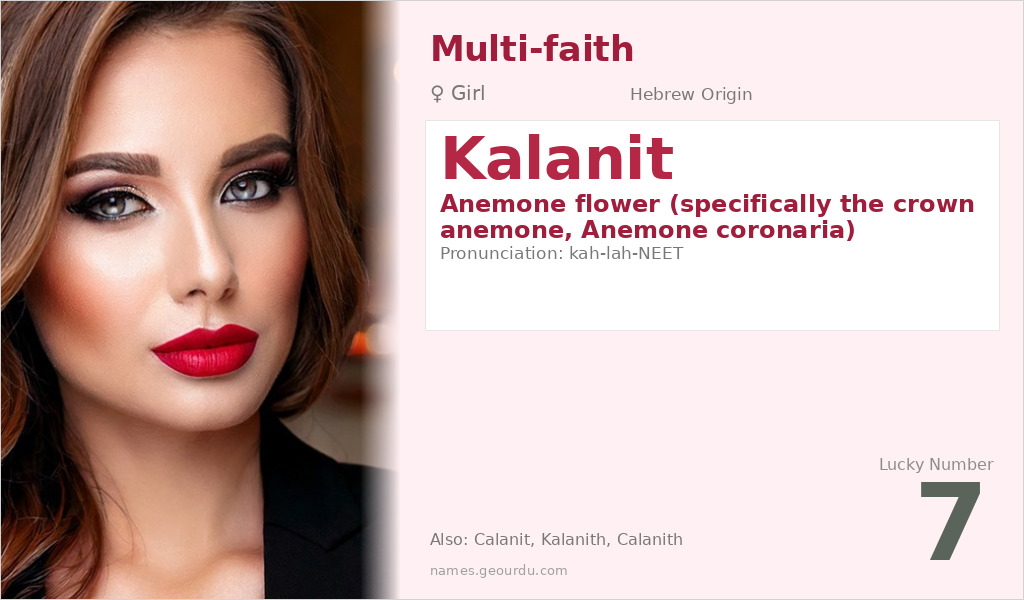
Kalanit has a precise and well-documented meaning: it is the Hebrew word for the crown anemone flower (Anemone coronaria). This beautiful red wildflower blooms across the Mediterranean region each spring, particularly in Israel where it’s considered a national symbol of natural beauty. The name comes from the Hebrew root ‘kala’ (כלה), which means ‘bride’ or ‘to complete,’ possibly reflecting the flower’s perfection and beauty. Unlike many flower names that have been adapted from other languages, Kalanit is the actual Hebrew term for this specific flower, making it authentically connected to its meaning. The anemone’s vibrant red petals and black center create a striking appearance that has inspired artists and poets throughout history.
| 📛 Name | Kalanit |
| 💎 Meaning | Anemone flower (specifically the crown anemone, Anemone coronaria) |
| 👤 Gender | Girl |
| 🕌 Religion | Multi-faith |
| 🌍 Origin | Hebrew |
| 🗣 Pronunciation | kah-lah-NEET |
| ✍️ Urdu | کلانیت |
| ✍️ Arabic | كلانيت |
| 🔢 Numerology | 7 |
| ✨ Spellings | Calanit, Kalanith, Calanith |
Origin & Cultural Significance
Kalanit originates from modern Hebrew and is deeply connected to Israeli culture and landscape. The name gained popularity in the 20th century as part of the Hebrew language revival movement in Israel, where many nature-inspired names were created or adopted. While the flower itself has been known since ancient times (the anemone appears in Greek mythology), the specific Hebrew name ‘kalanit’ developed as part of modern Hebrew botanical terminology. Today, the name is used primarily in Israel and among Jewish communities worldwide, though its beauty has made it appealing to parents of various backgrounds who appreciate nature names. The crown anemone is so beloved in Israel that it has become an unofficial national flower, appearing in art, literature, and even on postage stamps.
Personality Traits
Those named Kalanit are often seen as vibrant, resilient, and naturally beautiful individuals. Like the anemone flower that pushes through rocky soil to bloom brilliantly each spring, Kalanits tend to demonstrate strength and perseverance in challenging situations. Their connection to nature often manifests as creativity, sensitivity to beauty, and an appreciation for the natural world. Many Kalanits are drawn to artistic pursuits or environmental causes, reflecting their namesake’s visual appeal and natural origins.
Similar Names
If you like Kalanit, consider: Shoshana, Vered, Nurit, Dalia, Irit
Famous People Named Kalanit
- Kalanit Zaken — Israeli actress and singer known for her roles in Israeli theater and television
- Kalanit Goren — Israeli artist and illustrator specializing in botanical and nature-themed works
Frequently Asked Questions About Kalanit
What does Kalanit mean?
Kalanit means 'anemone flower' specifically the crown anemone (Anemone coronaria) in Hebrew. It's a direct reference to the beautiful red wildflower native to the Mediterranean region.
Is Kalanit a boy or girl name?
Kalanit is exclusively a girl's name in Hebrew and Israeli naming traditions. It follows the feminine grammatical structure of Hebrew and is used only for females.
What is the origin of Kalanit?
Kalanit originates from modern Hebrew and is deeply connected to Israeli culture. The name comes from the Hebrew word for the crown anemone flower and gained popularity during the Hebrew language revival in Israel.





