Table of Contents
Kamalapriya is an elegant Sanskrit name that beautifully combines two poetic elements: ‘Kamala’ meaning lotus and ‘Priya’ meaning beloved. This melodic name evokes images of spiritual purity and natural beauty, reflecting the profound symbolism of the lotus in Indian culture. As a traditional Hindu name, it carries centuries of linguistic heritage while remaining timeless in its appeal. Parents choosing this name often seek to imbue their daughter with qualities of grace, purity, and spiritual connection.
Meaning of Kamalapriya
Kamalapriya derives from classical Sanskrit, where ‘Kamala’ (कमल) specifically refers to the sacred lotus flower (Nelumbo nucifera), a plant deeply embedded in Indian spiritual and cultural symbolism. The second component ‘Priya’ (प्रिय) means ‘dear, beloved, or lover’, creating the compound meaning ‘one who loves the lotus’ or ‘beloved of the lotus’. In Hindu tradition, the lotus represents purity, beauty, spiritual enlightenment, and divine birth—growing from murky waters yet remaining unstained. The name appears in Sanskrit literature and poetry, often describing someone with lotus-like qualities or devotion to lotus symbolism. Unlike simpler names, Kamalapriya’s compound structure gives it layered meaning, suggesting both appreciation for beauty and spiritual aspiration.
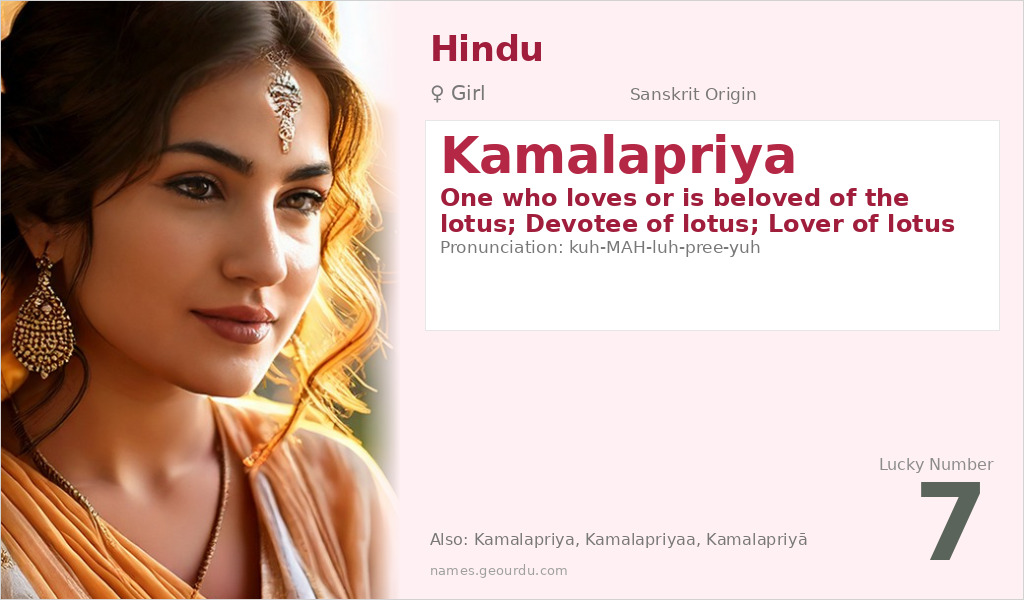
| 📛 Name | Kamalapriya |
| 💎 Meaning | One who loves or is beloved of the lotus; Devotee of lotus; Lover of lotus |
| 👤 Gender | Girl |
| 🕌 Religion | Hindu |
| 🌍 Origin | Sanskrit |
| 🗣 Pronunciation | kuh-MAH-luh-pree-yuh |
| ✍️ Urdu | کمل پریا |
| ✍️ Arabic | كامالابريا |
| 🔢 Numerology | 7 |
| ✨ Spellings | Kamalapriya, Kamalapriyaa, Kamalapriyā |
Origin & Cultural Significance
Kamalapriya originates from Sanskrit, the ancient liturgical language of Hinduism, Buddhism, and Jainism that has influenced numerous South Asian languages. As a compound name, it follows traditional Sanskrit naming patterns where meaningful elements are combined to create poetic and auspicious names. The lotus (Kamala) holds particular significance in Indian culture—it’s the national flower of India and appears in ancient texts like the Vedas and Puranas, often associated with deities like Lakshmi (goddess of wealth) and Vishnu (preserver god). While primarily used in Hindu communities, the name’s botanical and aesthetic appeal has made it recognizable across Indian linguistic regions. Its usage reflects the enduring importance of Sanskrit-derived names in Indian naming traditions, where natural elements and spiritual concepts frequently inspire personal names.
Personality Traits
Those named Kamalapriya are often associated with the symbolic qualities of the lotus: resilience, purity, and serene beauty. They may exhibit artistic sensibilities, spiritual depth, and an appreciation for harmony in their surroundings. Like the lotus that rises above muddy waters, Kamalapriyas might demonstrate an ability to maintain grace and clarity amid life’s challenges. Their connection to this symbolic flower suggests a personality that values inner growth, aesthetic refinement, and spiritual awareness.
Similar Names
If you like Kamalapriya, consider: Kamala, Priya, Kamalini, Padmini, Padmapriya
Famous People Named Kamalapriya
- Kamalapriya (Indian classical dancer) — Renowned Bharatanatyam dancer and choreographer from Chennai
- Kamalapriya (Carnatic musician) — Noted vocalist in the South Indian classical tradition
Frequently Asked Questions About Kamalapriya
What does Kamalapriya mean?
Kamalapriya means 'lover of lotus' or 'beloved of the lotus' in Sanskrit, combining 'Kamala' (lotus) and 'Priya' (beloved).
Is Kamalapriya a boy or girl name?
Kamalapriya is exclusively a feminine name in Hindu naming tradition, though the components Kamala and Priya can appear in both genders separately.
What is the origin of Kamalapriya?
Kamalapriya originates from Sanskrit, the classical language of ancient India, and is deeply rooted in Hindu culture and symbolism surrounding the lotus flower.