Table of Contents
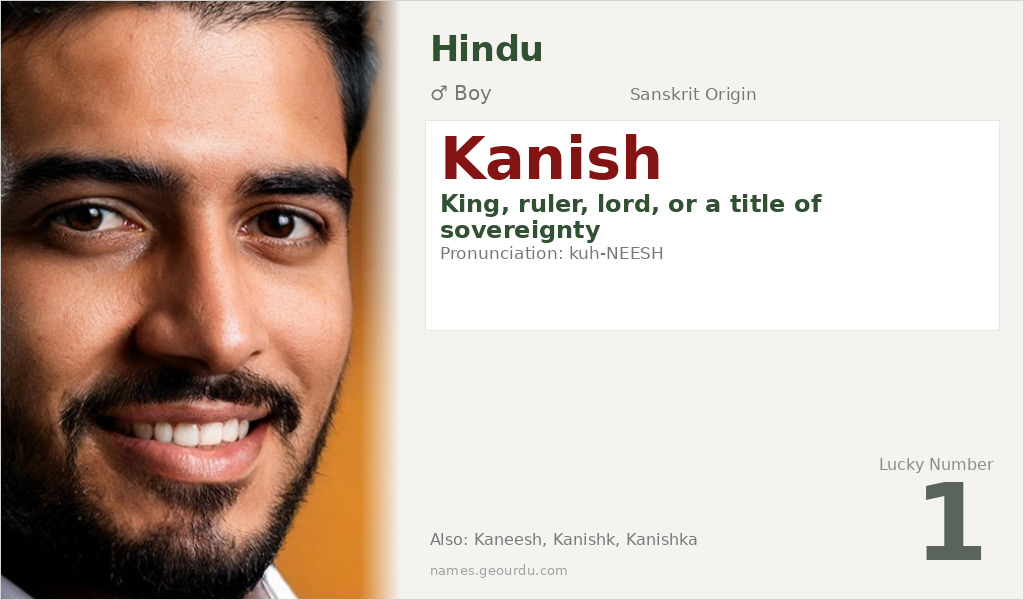
Kanish is a distinguished name with deep historical roots and royal connotations. Derived from the Sanskrit name of the famous Kushan emperor Kanishka, this name carries the weight of leadership and sovereignty. Popular in Hindu communities, Kanish represents strength, authority, and noble heritage. Its connection to one of history’s most influential Buddhist patrons adds layers of cultural and spiritual significance.
Meaning of Kanish
Kanish originates from the Sanskrit name Kanishka (कनिष्क), which was borne by the powerful Kushan emperor who ruled from approximately 127-150 CE. The name derives from the Sanskrit root ‘kaniṣṭha’, meaning ‘youngest’ or ‘smallest’, but in the context of royalty, it evolved to signify ‘king’, ‘ruler’, or ‘lord’. Historically, Emperor Kanishka was known for his vast empire stretching from Central Asia to northern India and his patronage of Buddhism, particularly convening the Fourth Buddhist Council. The name has been preserved in various Indo-Aryan languages and continues to symbolize leadership and authority in Hindu naming traditions.
| 📛 Name | Kanish |
| 💎 Meaning | King, ruler, lord, or a title of sovereignty |
| 👤 Gender | Boy |
| 🕌 Religion | Hindu |
| 🌍 Origin | Sanskrit |
| 🗣 Pronunciation | kuh-NEESH |
| ✍️ Urdu | کنیش |
| ✍️ Arabic | كانيش |
| 🔢 Numerology | 1 |
| ✨ Spellings | Kaneesh, Kanishk, Kanishka, Kaneeshk |
Origin & Cultural Significance
Kanish has its origins in ancient Sanskrit and the historical Kushan Empire, which was a syncretic empire that blended Indian, Persian, and Central Asian cultures. The name gained prominence through Emperor Kanishka I, whose reign marked a golden age of cultural exchange along the Silk Road. In Hindu tradition, the name is associated with the Kshatriya (warrior) caste and symbolizes royal lineage and protective authority. While primarily used in Hindu communities, the name’s historical significance extends across Buddhist and secular contexts due to Emperor Kanishka’s role in spreading Buddhism throughout Asia.
Personality Traits
Those named Kanish often embody the regal qualities suggested by their name’s meaning. They tend to be natural leaders with strong decision-making abilities and a protective instinct toward their loved ones. With an inherent sense of responsibility and ambition, they frequently take charge in group situations and inspire confidence in others. Their personality often combines traditional values with modern adaptability, making them respected figures in both personal and professional spheres.
Similar Names
If you like Kanish, consider: Kanishka, Karan, Kartik, Kunal, Krishna
Famous People Named Kanish
- Kanishka I — Famous Kushan emperor who ruled a vast empire stretching from Central Asia to northern India, known for convening the Fourth Buddhist Council
- Kanishka Soni — Indian television actor known for roles in Hindi TV series
Frequently Asked Questions About Kanish
What does Kanish mean?
Kanish means 'king', 'ruler', or 'lord'. It is derived from the Sanskrit name Kanishka, which was borne by a famous Kushan emperor.
Is Kanish a boy or girl name?
Kanish is exclusively a boy's name in Hindu naming tradition, reflecting its origins as a royal masculine title.
What is the origin of Kanish?
Kanish originates from Sanskrit and the historical Kushan Empire, specifically from the name of Emperor Kanishka I who ruled in the 2nd century CE.