Table of Contents
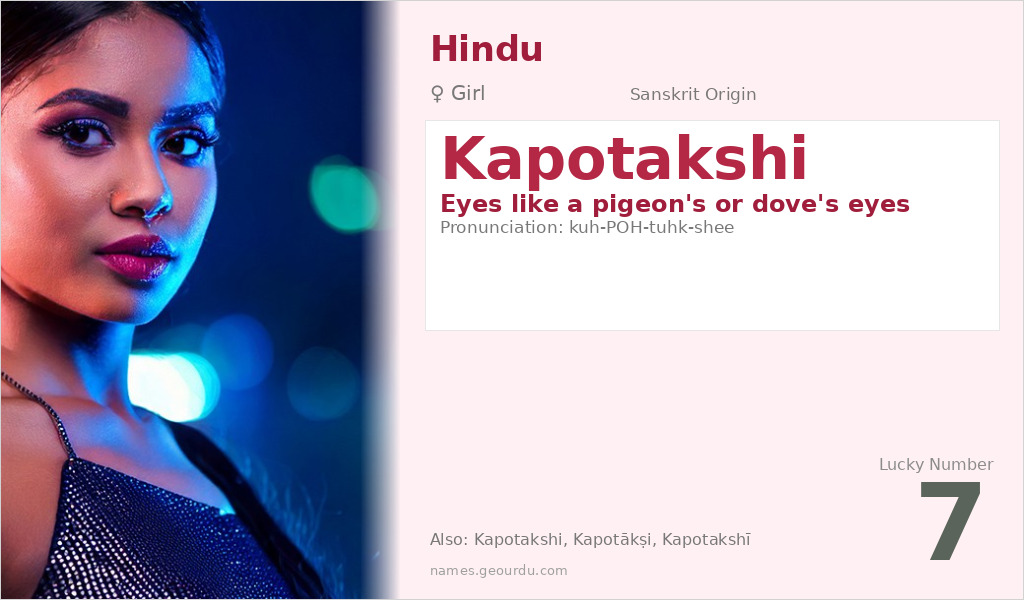
Kapotakshi is a beautiful and poetic Sanskrit name for girls that evokes imagery of gentle beauty and peace. Meaning ‘eyes like a pigeon’s’ or ‘dove-eyed’, this name carries centuries of cultural significance in Hindu tradition. With its lyrical quality and meaningful etymology, Kapotakshi represents both physical beauty and spiritual grace. Discover the rich history and symbolism behind this unique name.
Meaning of Kapotakshi
Kapotakshi is a compound Sanskrit name with clear etymological roots. The first component ‘kapota’ (कपोत) refers to pigeons or doves, birds that have been symbols of peace, love, and devotion in Indian culture for millennia. The second component ‘akshi’ (अक्षि) means ‘eye’ in Sanskrit. Together, they create a poetic metaphor describing someone with beautiful, gentle eyes resembling those of a dove. This type of descriptive naming is common in Sanskrit literature, where physical attributes are often used metaphorically to convey inner qualities. The name appears in classical texts where divine beings or exceptionally beautiful women are described with such imagery.
| 📛 Name | Kapotakshi |
| 💎 Meaning | Eyes like a pigeon's or dove's eyes |
| 👤 Gender | Girl |
| 🕌 Religion | Hindu |
| 🌍 Origin | Sanskrit |
| 🗣 Pronunciation | kuh-POH-tuhk-shee |
| ✍️ Urdu | کپوتاکشی |
| ✍️ Arabic | كابوتاكشي |
| 🔢 Numerology | 7 |
| ✨ Spellings | Kapotakshi, Kapotākṣi, Kapotakshī |
Origin & Cultural Significance
Kapotakshi originates from classical Sanskrit, the ancient liturgical language of Hinduism, Buddhism, and Jainism. Sanskrit names often use natural imagery and metaphors, with animal comparisons being particularly common for describing beauty or character traits. The dove or pigeon (kapota) holds significant symbolic value in Hindu mythology, often associated with messengers of love and peace. While not among the most common contemporary names, Kapotakshi represents a traditional naming pattern that values poetic description and natural symbolism. The name reflects the rich literary tradition of Sanskrit where beauty was often expressed through comparison to elements of nature.
Personality Traits
Those named Kapotakshi are often associated with qualities of peace, gentleness, and observation. The dove imagery suggests a calm, harmonious personality that avoids conflict and seeks to create peaceful environments. They may possess keen perception and intuition, seeing beauty in subtle details that others might overlook. The name implies a nurturing, compassionate nature that comforts and supports others through quiet presence rather than dramatic action.
Similar Names
If you like Kapotakshi, consider: Kapotini, Kapotamukhi, Shukakshi, Mayurakshi, Mrignayani
Famous People Named Kapotakshi
- No widely known contemporary public figures with this exact name found in records
- The name appears in classical Sanskrit literature and Hindu mythological references to describe beautiful-eyed characters
Frequently Asked Questions About Kapotakshi
What does Kapotakshi mean?
Kapotakshi means 'eyes like a pigeon's' or 'dove-eyed' in Sanskrit, combining 'kapota' (pigeon/dove) and 'akshi' (eye).
Is Kapotakshi a boy or girl name?
Kapotakshi is traditionally a feminine name in Hindu naming conventions, though Sanskrit compound names can sometimes be adapted across genders in modern usage.
What is the origin of Kapotakshi?
Kapotakshi originates from Sanskrit, the classical language of ancient India, and is rooted in Hindu cultural and literary traditions.