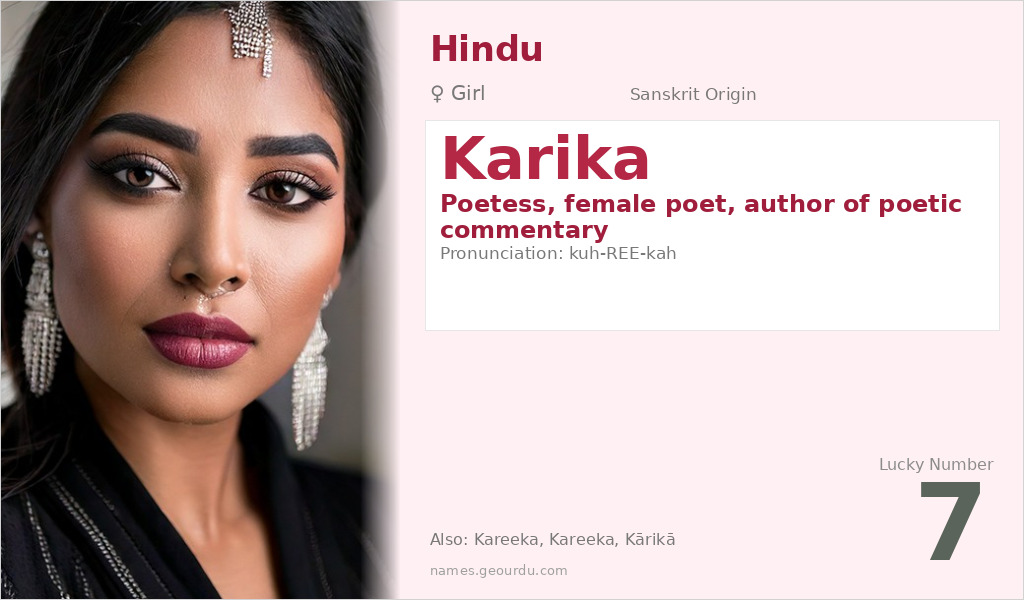
Table of Contents
Karika is a beautiful Sanskrit name with deep roots in India’s literary and philosophical traditions. Unlike modern invented names, Karika carries centuries of cultural heritage, specifically referring to female poets and scholars who composed explanatory verses. This name connects its bearer to a tradition of wisdom, creativity, and intellectual contribution. For parents seeking a name with classical elegance and meaningful substance, Karika offers both historical depth and contemporary appeal.
Meaning of Karika
The name Karika derives directly from Sanskrit, where ‘kārikā’ (कारिका) is a feminine noun meaning ‘female poet’ or ‘composer of verses’. Specifically, it refers to women who wrote kārikās—concise, memorable verses that explained complex philosophical, grammatical, or scientific concepts. These verses were designed to be easily memorized and transmitted orally. The word comes from the Sanskrit root ‘kṛ’ (to do, make, compose) with the feminine suffix ‘-ikā’, literally meaning ‘she who composes’. In classical Indian tradition, notable women scholars were often called Karika for their contributions to literature and philosophy through poetic commentary.
| 📛 Name | Karika |
| 💎 Meaning | Poetess, female poet, author of poetic commentary |
| 👤 Gender | Girl |
| 🕌 Religion | Hindu |
| 🌍 Origin | Sanskrit |
| 🗣 Pronunciation | kuh-REE-kah |
| ✍️ Urdu | کاریکا |
| ✍️ Arabic | كاريكا |
| 🔢 Numerology | 7 |
| ✨ Spellings | Kareeka, Kareeka, Kārikā, कारिका |
Origin & Cultural Significance
Karika originates from ancient Sanskrit literature and Indian scholarly traditions. It was particularly used for women who composed explanatory verses (kārikās) on subjects like grammar, philosophy, mathematics, and law. The tradition of kārikā composition dates back to early centuries CE, with both male and female contributors, though the feminine form ‘Karika’ specifically honors women’s intellectual contributions. This name reflects India’s rich history of female scholarship and literary achievement, predating many modern naming conventions. While primarily associated with Hindu culture due to its Sanskrit origins, the name represents a pan-Indian intellectual tradition rather than strictly religious significance.
Personality Traits
Those named Karika are often perceived as thoughtful, articulate, and intellectually curious individuals. The name’s association with poetic commentary suggests someone who can distill complex ideas into understandable forms—a natural teacher or communicator. They may possess a quiet confidence and appreciation for tradition while maintaining creative expression. The literary heritage of the name implies a person who values knowledge, beauty in language, and meaningful contribution to conversations or communities.
Similar Names
If you like Karika, consider: Kavita, Shloka, Vani, Saraswati, Vidya
Famous People Named Karika
- Karika — Ancient Indian female poet mentioned in Sanskrit literature who composed philosophical verses
- Various historical women scholars in India who were called 'Karika' for their poetic commentaries on scriptures
Frequently Asked Questions About Karika
What does Karika mean?
Karika means 'poetess', 'female poet', or specifically 'composer of explanatory verses' in Sanskrit. It refers to women who wrote kārikās—memorable poetic commentaries on philosophical or technical subjects.
Is Karika a boy or girl name?
Karika is exclusively a feminine name. In Sanskrit grammar, the '-ikā' suffix makes it specifically feminine, and historical usage only references female poets and scholars.
What is the origin of Karika?
Karika originates from classical Sanskrit language and Indian literary tradition. It comes from the Sanskrit root 'kṛ' (to compose) with feminine suffix '-ikā', specifically referring to women who composed explanatory verses in ancient India.