
Table of Contents
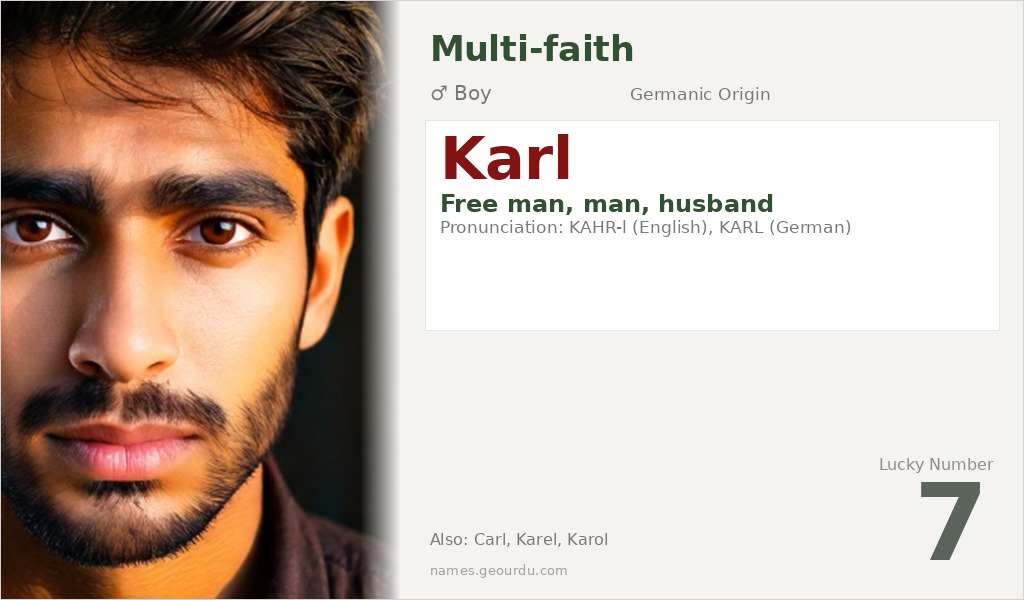
Karl is a classic masculine name with deep historical roots stretching back to ancient Germanic tribes. Meaning ‘free man’, it carries connotations of independence and strength that have made it enduring across centuries. From European royalty to modern celebrities, this name has been borne by influential figures worldwide. Its simplicity and powerful meaning continue to make it a popular choice for parents today.
Meaning of Karl
The name Karl originates from the Old High German word ‘karal’, which means ‘free man’ or simply ‘man’. This term evolved from the Proto-Germanic *karlaz, distinguishing free commoners from both nobles and slaves in early Germanic societies. The name gained prominence through Charlemagne (Carolus Magnus in Latin), whose legacy spread the name throughout Europe. In Scandinavian languages, Karl maintains its meaning as ‘man’ or ‘husband’, while in English it evolved into Charles through Norman French influence.
| 📛 Name | Karl |
| 💎 Meaning | Free man, man, husband |
| 👤 Gender | Boy |
| 🕌 Religion | Multi-faith |
| 🌍 Origin | Germanic |
| 🗣 Pronunciation | KAHR-l (English), KARL (German) |
| ✍️ Urdu | کارل |
| ✍️ Arabic | كارل |
| 🔢 Numerology | 7 |
| ✨ Spellings | Carl, Karel, Karol, Carlo, Charles |
Origin & Cultural Significance
Karl has its origins in ancient Germanic languages, specifically from the Old High German ‘karal’. The name became historically significant through Charlemagne (Karl der Große in German), who united much of Western Europe in the early Middle Ages. From this royal association, the name spread across Europe, adapting into various forms like Carl (Scandinavian), Karel (Czech), Carlo (Italian), and Charles (French/English). While commonly used in Christian-majority countries, the name itself predates Christianity and is used by people of various faiths worldwide.
Personality Traits
People named Karl are often associated with qualities of strength, reliability, and independence—traits that resonate with the name’s meaning of ‘free man’. They tend to be practical, grounded individuals who approach challenges with determination. The name’s Germanic heritage may suggest characteristics of straightforwardness, resilience, and a strong work ethic, though personality is ultimately shaped by individual experience.
Similar Names
If you like Karl, consider: Charles, Carl, Karsten, Karlheinz, Karol
Famous People Named Karl
- Karl Marx — German philosopher, economist, and revolutionary socialist
- Karl Lagerfeld — German fashion designer and creative director
Frequently Asked Questions About Karl
What does Karl mean?
Karl means 'free man' or 'man', originating from the Old High German word 'karal' and Proto-Germanic *karlaz.
Is Karl a boy or girl name?
Karl is exclusively a masculine name across all cultures where it's used, from Germanic to Scandinavian languages.
What is the origin of Karl?
Karl originates from Germanic languages, specifically Old High German, and became widespread through historical figures like Charlemagne.





