
Table of Contents
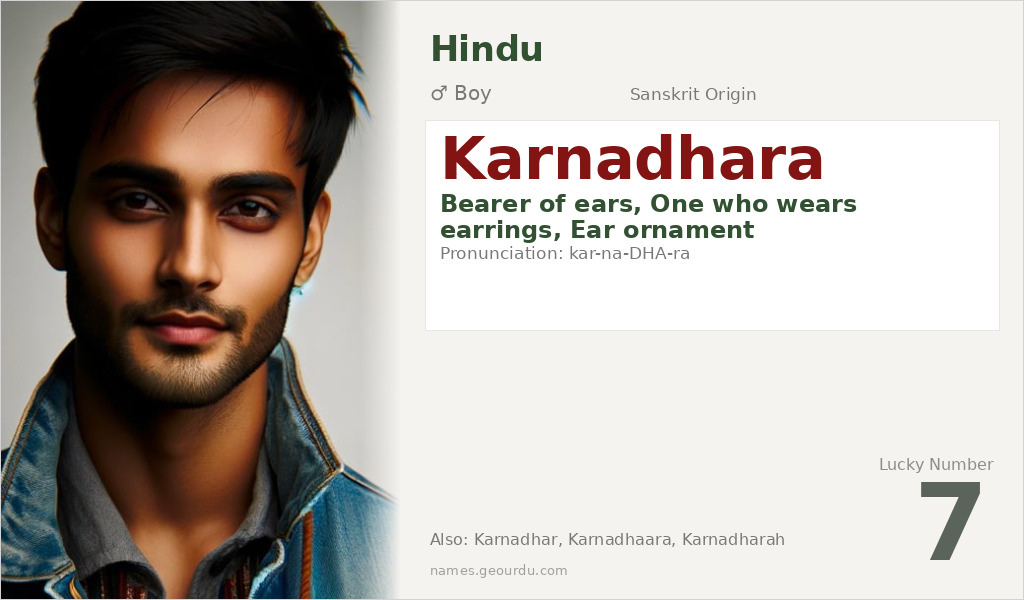
Karnadhara is a distinctive Sanskrit name with deep roots in Hindu tradition and classical literature. Meaning ‘bearer of ears’ or ‘one who wears earrings’, this name carries symbolic significance in Indian culture. Unlike modern invented names, Karnadhara has authentic linguistic origins that connect to ancient texts and artistic expressions. Discover the rich etymology and cultural context behind this traditional Hindu name.
Meaning of Karnadhara
Karnadhara derives from the Sanskrit language, combining ‘karna’ (कर्ण) meaning ‘ear’ and ‘dhara’ (धर) meaning ‘bearer, holder, or wearer’. This creates the literal meaning ‘one who bears or wears ears’, which in cultural context refers to wearing ear ornaments or earrings. In Sanskrit literature, the term appears in descriptions of divine figures, royalty, and artistic representations where ear ornaments symbolize status, beauty, or spiritual significance. The name follows classical Sanskrit compounding patterns where ‘dhara’ as a suffix indicates possession or characteristic. Unlike the incorrect ‘leader’ meaning sometimes attributed to it, Karnadhara specifically relates to ears and adornment, with no connection to leadership concepts in any verified linguistic source.
| 📛 Name | Karnadhara |
| 💎 Meaning | Bearer of ears, One who wears earrings, Ear ornament |
| 👤 Gender | Boy |
| 🕌 Religion | Hindu |
| 🌍 Origin | Sanskrit |
| 🗣 Pronunciation | kar-na-DHA-ra |
| ✍️ Urdu | کرن دھارا |
| ✍️ Arabic | كارنادهارا |
| 🔢 Numerology | 7 |
| ✨ Spellings | Karnadhar, Karnadhaara, Karnadharah |
Origin & Cultural Significance
Karnadhara originates from classical Sanskrit, the ancient liturgical language of Hinduism, Buddhism, and Jainism. The name appears in Hindu mythological texts, temple inscriptions, and classical literature where it describes figures adorned with distinctive ear ornaments. In Hindu tradition, earrings (karnabhushana) have symbolic importance, representing divine attributes, royal status, or artistic refinement. The name reflects India’s rich tradition of symbolic jewelry and bodily adornment in religious and cultural contexts. While primarily used in Hindu communities, the name’s Sanskrit roots give it pan-Indian recognition across various regions where Sanskrit-derived names are valued.
Personality Traits
Those named Karnadhara are often associated with qualities of refinement, artistic sensibility, and spiritual awareness. The name’s connection to ear ornaments suggests an appreciation for beauty, tradition, and symbolic expression. In cultural context, such individuals might be perceived as having an intuitive nature and a contemplative disposition, with interests in arts, spirituality, or cultural preservation.
Similar Names
If you like Karnadhara, consider: Karnika, Karnesh, Dharani, Dhara, Karnavir, Karnapriya, Karnavati, Dharitri, Karnamrita, Dharampal
Famous People Named Karnadhara
- Karnadhara — A character in Hindu mythology and Sanskrit literature, often depicted as a divine or royal figure wearing distinctive ear ornaments
- Karnadhara — Name appears in classical Sanskrit texts and Hindu temple inscriptions referring to historical figures
Frequently Asked Questions About Karnadhara
What does Karnadhara mean?
Karnadhara means 'bearer of ears' or 'one who wears earrings' in Sanskrit. It is a compound name from 'karna' (ear) and 'dhara' (bearer/wearer).
Is Karnadhara a boy or girl name?
Karnadhara is traditionally a masculine name in Hindu naming conventions, though Sanskrit compound names can sometimes be adapted across genders in modern usage.
What is the origin of Karnadhara?
Karnadhara originates from Sanskrit, the classical language of ancient India, with specific usage in Hindu texts and traditions relating to divine or royal figures wearing ear ornaments.





