
Table of Contents
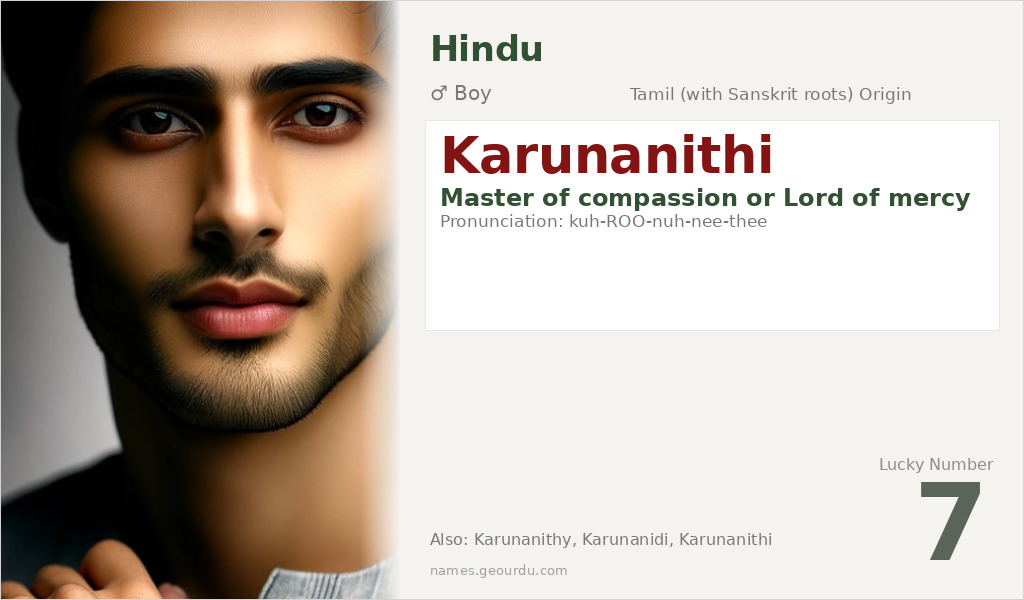
Karunanithi is a distinguished Tamil name with deep cultural and linguistic roots in South India. Meaning ‘Master of Compassion’ or ‘Lord of Mercy’, this name embodies virtues highly valued in Hindu and Tamil traditions. Historically associated with leadership and empathy, Karunanithi has been borne by prominent political and literary figures. This guide explores the name’s etymology, cultural significance, and contemporary relevance.
Meaning of Karunanithi
Karunanithi derives from two classical elements: ‘Karuna’ and ‘Nithi’. ‘Karuna’ originates from Sanskrit करुणा (karuṇā), meaning compassion, mercy, or pity, a concept central to both Hindu and Buddhist philosophies. ‘Nithi’ comes from Sanskrit निधि (nidhi), meaning treasure, repository, or master, but in Tamil usage it evolved to signify ‘lord’ or ‘possessor’. When combined, these elements create a name that literally means ‘master of compassion’—someone who embodies or possesses great mercy. This construction reflects the Dravidian linguistic practice of creating compound names that describe noble qualities, similar to names like ‘Dharmanidhi’ (treasure of righteousness) or ‘Jnananidhi’ (treasure of wisdom).
| 📛 Name | Karunanithi |
| 💎 Meaning | Master of compassion or Lord of mercy |
| 👤 Gender | Boy |
| 🕌 Religion | Hindu |
| 🌍 Origin | Tamil (with Sanskrit roots) |
| 🗣 Pronunciation | kuh-ROO-nuh-nee-thee |
| ✍️ Urdu | کرون نیتھی |
| ✍️ Arabic | كارونانيثي |
| 🔢 Numerology | 7 |
| ✨ Spellings | Karunanithy, Karunanidi, Karunanithi |
Origin & Cultural Significance
Karunanithi originates from Tamil culture in South India, with linguistic roots in both Tamil and Sanskrit. The name follows traditional Dravidian naming conventions where virtuous attributes are combined with suffixes indicating possession or mastery. Historically, such names were often given to express parental hopes for the child’s character or to honor spiritual ideals. In modern times, the name gained significant recognition through M. Karunanidhi, the influential Tamil political leader and writer who served multiple terms as Chief Minister of Tamil Nadu. The name remains primarily used within Tamil Hindu communities, though its meaningful components have broader appeal across Indian cultures.
Personality Traits
Those named Karunanithi are often associated with compassionate leadership and intellectual depth. They tend to be principled individuals who value justice and empathy, frequently taking on roles that involve caring for others or advocating for social causes. Their analytical nature combines with emotional intelligence, making them effective mediators and thoughtful decision-makers. These traits align with the name’s meaning of ‘master of compassion’, suggesting someone who naturally embodies mercy and understanding.
Similar Names
If you like Karunanithi, consider: Karunakaran, Karunamaya, Karunapriya, Nithyananda, Anandakrishnan
Famous People Named Karunanithi
- M. Karunanidhi — Former Chief Minister of Tamil Nadu, India, renowned politician and writer
- Karunanidhi Duraisamy — Indian film lyricist and poet in Tamil cinema
Frequently Asked Questions About Karunanithi
What does Karunanithi mean?
Karunanithi means 'Master of Compassion' or 'Lord of Mercy'. It's a compound Tamil name from 'Karuna' (compassion) and 'Nithi' (master/treasure).
Is Karunanithi a boy or girl name?
Karunanithi is exclusively a masculine name in Tamil culture, traditionally given to boys. There are no documented feminine variants in historical or contemporary usage.
What is the origin of Karunanithi?
Karunanithi originates from Tamil language and culture in South India, with linguistic elements derived from both Tamil and Sanskrit. It follows classical Dravidian naming patterns.





