Table of Contents
Khatun is more than just a name—it’s a title of nobility that has traveled across continents and centuries. Originally denoting queens and aristocratic women in Turkic and Mongol societies, this regal term evolved into a respected given name used by millions today. From Central Asian steppes to South Asian courts, Khatun carries a legacy of feminine power and dignity that continues to resonate in modern naming traditions.
Meaning of Khatun
The name Khatun derives from the Old Turkic word ‘katun’, which specifically meant ‘queen’ or ‘female ruler’. This term was used extensively in Turkic and Mongol empires to refer to the wives of khans and other women of royal status. As the term spread through Persian influence as ‘khātūn’, it maintained its aristocratic connotations while broadening to become a respectful term for married women in general. In contemporary usage across Turkey, Central Asia, and South Asia, Khatun functions both as an honorific and a given name, preserving its original meaning of ‘lady’ or ‘noble woman’ while adapting to modern naming conventions.
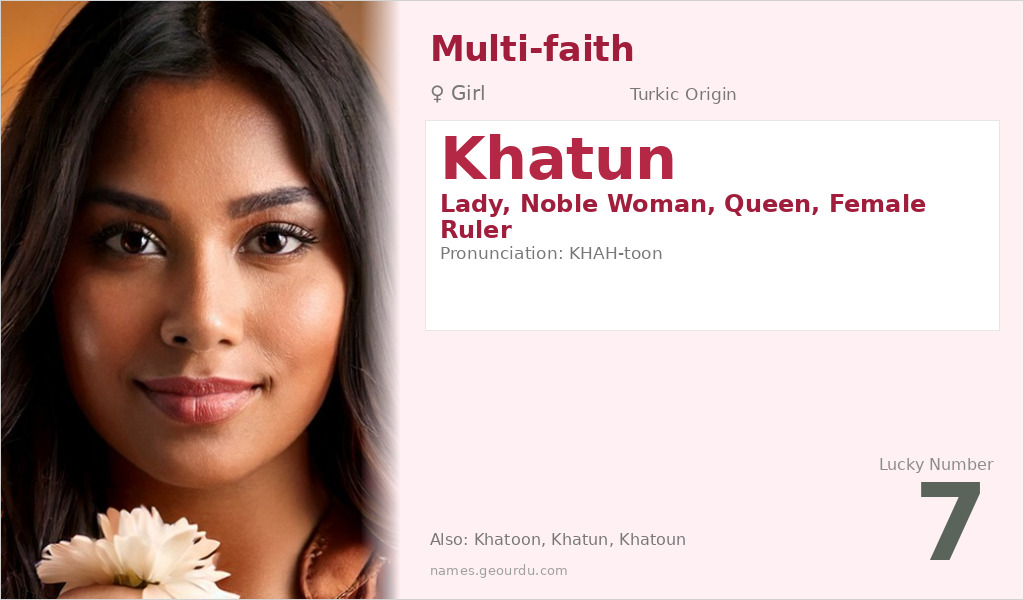
| 📛 Name | Khatun |
| 💎 Meaning | Lady, Noble Woman, Queen, Female Ruler |
| 👤 Gender | Girl |
| 🕌 Religion | Multi-faith |
| 🌍 Origin | Turkic |
| 🗣 Pronunciation | KHAH-toon |
| ✍️ Urdu | خاتون |
| ✍️ Arabic | خاتون |
| 🔢 Numerology | 7 |
| ✨ Spellings | Khatoon, Khatun, Khatoun, Khatoon, Hatun |
Origin & Cultural Significance
Khatun originated in the Turkic languages of Central Asia, where it was used as a royal title for women in the Göktürk and subsequent Turkic empires. The Mongols adopted the term during Genghis Khan’s era, using it for important women in the ruling family. Through Persian cultural influence, the title spread throughout the Islamic world, particularly in regions like Afghanistan, Pakistan, and India where it became incorporated into local languages. Today, Khatun is used by people of various faiths including Muslims, Christians, and others in Turkic and Persian-influenced cultures, reflecting its cross-cultural journey from royal courts to everyday life.
Personality Traits
Those named Khatun often embody the dignified qualities suggested by their name’s royal origins. They tend to be natural leaders who command respect through their composed demeanor and thoughtful actions. The name’s historical weight may inspire a sense of responsibility and grace in personal and professional relationships, with many Khatuns developing strong nurturing instincts alongside their authoritative presence.
Similar Names
If you like Khatun, consider: Sultana, Malika, Begum, Banu, Shahzadi
Famous People Named Khatun
- Khatun Hamida Banu Begum — Mughal Empress, mother of Emperor Akbar
- Khatun Parvin — Afghan singer and cultural icon
Frequently Asked Questions About Khatun
What does Khatun mean?
Khatun means 'lady', 'noble woman', 'queen', or 'female ruler'. It originates from the Old Turkic word 'katun' and has been used as a royal title across Turkic, Mongol, and Persianate societies.
Is Khatun a boy or girl name?
Khatun is exclusively a female name. It was historically a title for women of royal or aristocratic status and continues to be used as a feminine given name in many cultures.
What is the origin of Khatun?
Khatun originates from Turkic languages, specifically Old Turkic 'katun'. It spread through Mongol and Persian influence to become used across Central Asia, the Middle East, and South Asia as both a title and given name.