
Table of Contents
Khulaif is a distinctive Arabic name with deep roots in Islamic tradition and linguistic heritage. Meaning ‘successor’ or ‘one who takes the place of another,’ this name carries connotations of responsibility, continuity, and honor. Popular in Muslim communities worldwide, Khulaif represents the important concept of carrying forward legacy and tradition. Let’s explore the rich meaning and cultural significance of this meaningful name.
Meaning of Khulaif
Khulaif derives from the Arabic root ‘خَلَفَ’ (khalafa), which fundamentally means ‘to succeed, to follow, or to replace.’ The specific form ‘خليف’ (khalīf) translates to ‘successor,’ ‘deputy,’ or ‘representative.’ This linguistic construction is closely related to the more familiar term ‘khalīfah’ (caliph), which historically referred to the successors of Prophet Muhammad in leading the Muslim community. The name embodies the concept of continuity and responsibility, suggesting someone who follows in the footsteps of others while carrying forward their work or legacy. In various Arabic dialects and Islamic contexts, the name maintains this core meaning of succession and representation.
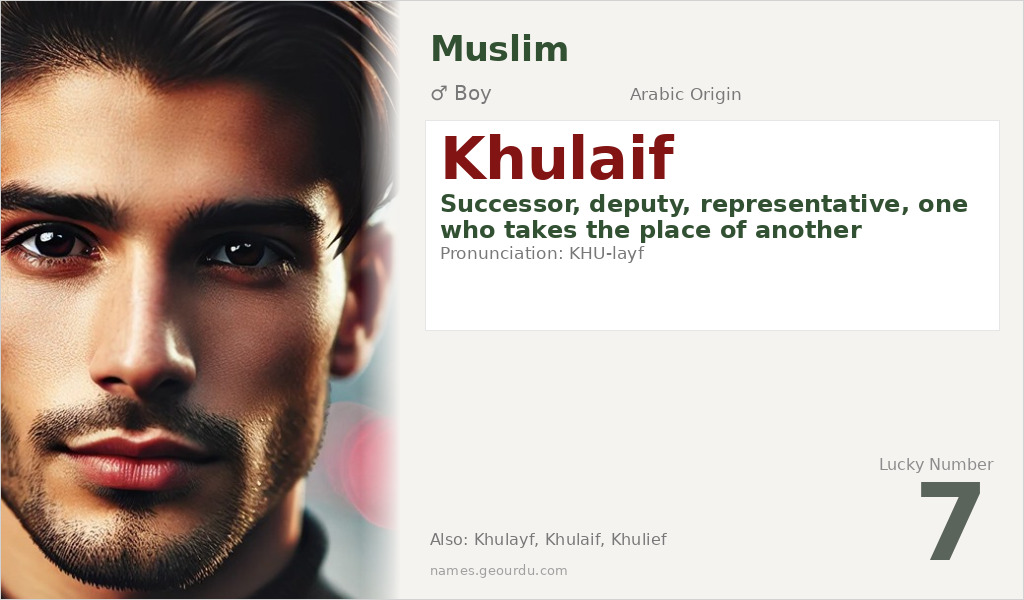
| 📛 Name | Khulaif |
| 💎 Meaning | Successor, deputy, representative, one who takes the place of another |
| 👤 Gender | Boy |
| 🕌 Religion | Muslim |
| 🌍 Origin | Arabic |
| 🗣 Pronunciation | KHU-layf |
| ✍️ Urdu | خلیف |
| ✍️ Arabic | خليف |
| 🔢 Numerology | 7 |
| ✨ Spellings | Khulayf, Khulaif, Khulief, Khalif |
Origin & Cultural Significance
Khulaif originates from classical Arabic and has been used in Muslim communities for centuries, particularly in the Arabian Peninsula and surrounding regions. The name’s significance is deeply tied to Islamic concepts of leadership and succession, as it shares linguistic roots with ‘khalīfah’ (caliphate). While primarily Arabic in origin, the name has spread to various Muslim cultures including those speaking Urdu, Persian, and other languages influenced by Arabic. In historical context, names derived from the ‘khalafa’ root were often given to express hope that the child would continue family traditions or community leadership roles. Today, Khulaif remains a meaningful choice for parents who value the concepts of legacy, responsibility, and Islamic heritage.
Personality Traits
People named Khulaif are often perceived as responsible individuals who understand the importance of continuity and tradition. They tend to be reliable successors who honor what came before them while bringing their own unique contributions. With a natural inclination toward leadership and representation, those bearing this name frequently demonstrate thoughtful consideration of their role in carrying forward family, cultural, or community legacies. Their personality often reflects the name’s meaning through a balanced approach that respects tradition while embracing necessary evolution.
Similar Names
If you like Khulaif, consider: Khalid, Khalil, Khaled, Khalifa, Khayri
Famous People Named Khulaif
- Khulaif Al-Mansouri — Emirati poet and cultural figure known for his contributions to Arabic literature
- Khulaif bin Ahmed — Historical figure from early Islamic period mentioned in regional chronicles
Frequently Asked Questions About Khulaif
What does Khulaif mean?
Khulaif means 'successor,' 'deputy,' or 'one who takes the place of another' in Arabic. It comes from the root word 'khalafa' meaning to succeed or follow.
Is Khulaif a boy or girl name?
Khulaif is exclusively a boy's name in Arabic and Islamic naming traditions. The masculine form is 'Khulaif' while related feminine forms would be different derivatives from the same root.
What is the origin of Khulaif?
Khulaif originates from classical Arabic and is deeply rooted in Islamic culture. It shares linguistic roots with 'khalīfah' (caliph) and reflects important concepts of succession and representation in Muslim tradition.





