Table of Contents
Kinari is a beautiful and mystical name with deep roots in ancient Indian mythology. Derived from Sanskrit, it evokes images of celestial beings who dance and make music in the courts of gods. This name carries an aura of grace, artistry, and divine connection that has appealed to parents across generations. Whether you’re drawn to its melodic sound or its rich cultural heritage, Kinari offers a name with both beauty and substance.
Meaning of Kinari
The name Kinari originates from the Sanskrit word ‘Kinnara’ (किन्नर), which refers to mythological celestial beings in Hindu and Buddhist traditions. These beings are described in ancient texts like the Mahabharata, Ramayana, and various Puranas as having a hybrid form — often depicted as half-human, half-bird or half-human, half-horse. Specifically, Kinari refers to the female counterpart of these beings, known for their exceptional skills in music, dance, and artistic expression. The term combines ‘kim’ (meaning ‘what?’) with ‘nara’ (meaning ‘man’), suggesting ‘what manner of man?’ — highlighting their supernatural, otherworldly nature. In cultural context, Kinnaras and Kinaris serve as celestial musicians in the courts of gods like Kubera and are symbols of artistic perfection and divine grace.
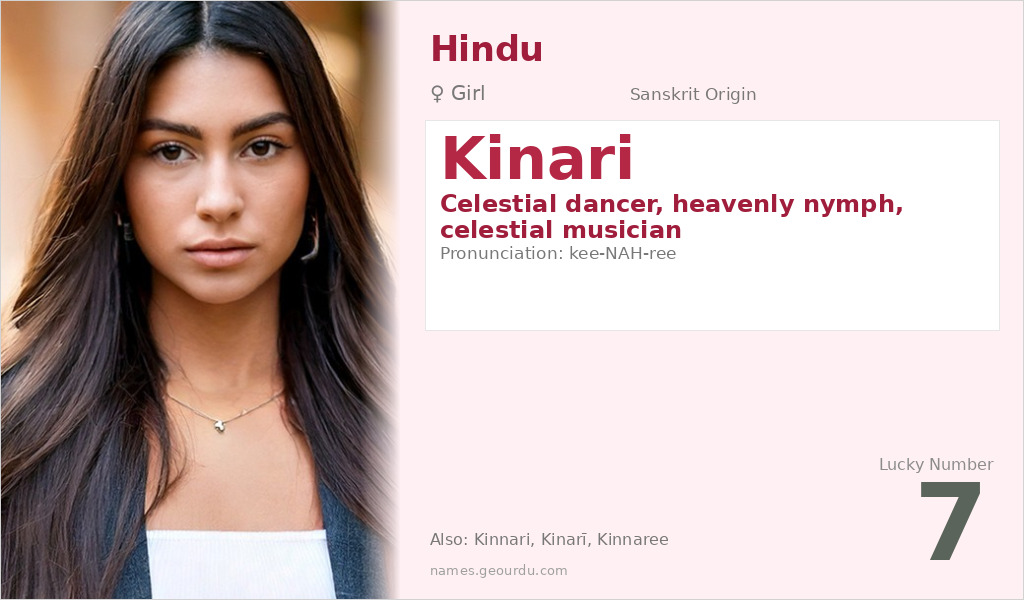
| 📛 Name | Kinari |
| 💎 Meaning | Celestial dancer, heavenly nymph, celestial musician |
| 👤 Gender | Girl |
| 🕌 Religion | Hindu |
| 🌍 Origin | Sanskrit |
| 🗣 Pronunciation | kee-NAH-ree |
| ✍️ Urdu | کناری |
| ✍️ Arabic | كيناري |
| 🔢 Numerology | 7 |
| ✨ Spellings | Kinnari, Kinarī, Kinnaree, Kinarika |
Origin & Cultural Significance
Kinari has its origins in ancient Sanskrit literature and Hindu mythology, dating back thousands of years. The concept of Kinnaras appears in foundational Hindu texts including the Mahabharata, where they are mentioned among various celestial beings inhabiting the heavenly realms. The name spread through South and Southeast Asia with Hindu and Buddhist cultural influence, appearing in Javanese, Balinese, and Thai traditions as well. While primarily used in Hindu communities, the name has cross-cultural appeal due to its beautiful sound and artistic connotations. In modern times, it remains popular in India, Nepal, and among diaspora communities, valued for its connection to classical culture and artistic heritage.
Personality Traits
Those named Kinari often embody the artistic and graceful qualities of their mythological namesakes. They tend to be creative, sensitive individuals with a strong appreciation for beauty in all its forms — whether in art, music, nature, or human expression. Their personality often includes a spiritual or philosophical dimension, reflecting the celestial inspiration behind their name. While individual personalities vary, the name suggests someone who moves through life with elegance and expresses themselves through creative channels.
Similar Names
If you like Kinari, consider: Apsara, Gandharva, Urvashi, Menaka, Rambha
Famous People Named Kinari
- Kinari — Indonesian singer known for traditional Javanese music
- Kinari Webb — American physician and environmental activist working in Borneo
Frequently Asked Questions About Kinari
What does Kinari mean?
Kinari means 'celestial dancer,' 'heavenly nymph,' or 'celestial musician.' It comes from the Sanskrit word 'Kinnara,' referring to mythological beings in Hindu tradition known for their artistic talents.
Is Kinari a boy or girl name?
Kinari is primarily a feminine name, referring specifically to the female celestial beings (Kinaris) in Hindu mythology. The male counterpart is called Kinnara.
What is the origin of Kinari?
Kinari originates from Sanskrit and Hindu mythology, with references in ancient texts like the Mahabharata and Puranas. It describes celestial beings who are musicians and dancers in heavenly courts.