
Table of Contents
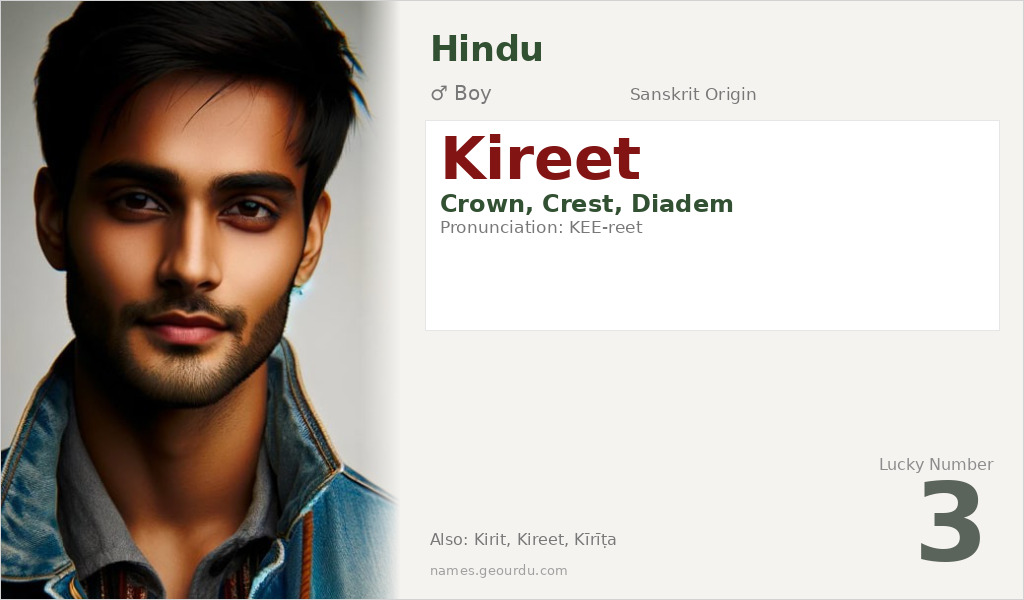
Kireet is a distinctive and meaningful name of Sanskrit origin, primarily used for boys in Hindu communities. Derived from the word ‘Kīrīṭa,’ it translates to ‘Crown’ or ‘Diadem,’ symbolizing leadership, honor, and divine grace. This name carries a rich cultural heritage, often associated with royalty and spiritual significance in Indian traditions. Explore the fascinating details behind Kireet, from its linguistic roots to its modern-day usage.
Meaning of Kireet
Kireet originates from the Sanskrit term ‘Kīrīṭa’ (किरीट), which unequivocally means ‘crown,’ ‘crest,’ or ‘diadem.’ In Sanskrit, this word is deeply embedded in classical literature and Hindu mythology, frequently describing the ornate headpieces worn by gods, kings, and heroes to denote sovereignty and elevated status. For instance, in texts like the Mahabharata, ‘Kīrīṭa’ is used to refer to the crown of Lord Krishna or other divine figures, emphasizing its connotation of authority and splendor. Linguistically, it is a noun derived from ancient Indo-Aryan roots, with no direct cognates in languages like Arabic or Persian, though it may be transliterated in regional scripts. The meaning is well-documented in Sanskrit dictionaries and etymological sources, making it a name with a clear and historically verified significance.
| 📛 Name | Kireet |
| 💎 Meaning | Crown, Crest, Diadem |
| 👤 Gender | Boy |
| 🕌 Religion | Hindu |
| 🌍 Origin | Sanskrit |
| 🗣 Pronunciation | KEE-reet |
| ✍️ Urdu | کریت |
| ✍️ Arabic | كيريت |
| 🔢 Numerology | 3 |
| ✨ Spellings | Kirit, Kireet, Kīrīṭa, Kireeta |
Origin & Cultural Significance
Kireet has its origins in Sanskrit, the classical language of ancient India, and is predominantly used within Hindu culture. It emerged from Vedic and post-Vedic traditions, where names derived from words for royal insignia were common to bestow qualities of leadership and dignity. Historically, it appears in Hindu epics and religious texts, reinforcing its association with divinity and kingship. Over time, the name has been adopted in various Indian communities, particularly among Hindus, and remains popular in regions like North India. While it is not widely found in other linguistic families such as Arabic, Persian, or African languages, its usage is firmly rooted in South Asian naming practices, reflecting a deep cultural heritage.
Personality Traits
People named Kireet are often seen as charismatic and authoritative, embodying the regal essence of their name’s meaning. They may exhibit traits of confidence, ambition, and a natural inclination toward leadership roles, much like a crown symbolizes rule and prestige. Their personality can be inspiring and respected, with a tendency to uphold traditions and values, making them influential figures in their circles.
Similar Names
If you like Kireet, consider: Kirit, Kiran, Keshav, Krishna, Kartik
Famous People Named Kireet
- Kireet Khurana — Indian film director and animator known for works in children's cinema
- Kirit Parikh — Indian economist and former member of the Planning Commission of India
Frequently Asked Questions About Kireet
What does Kireet mean?
Kireet means 'Crown,' 'Crest,' or 'Diadem,' derived from the Sanskrit word 'Kīrīṭa.'
Is Kireet a boy or girl name?
Kireet is traditionally a boy's name, especially in Hindu culture, though it is rarely used for girls.
What is the origin of Kireet?
Kireet originates from Sanskrit, an ancient Indian language, and is primarily associated with Hindu traditions and mythology.





