Table of Contents
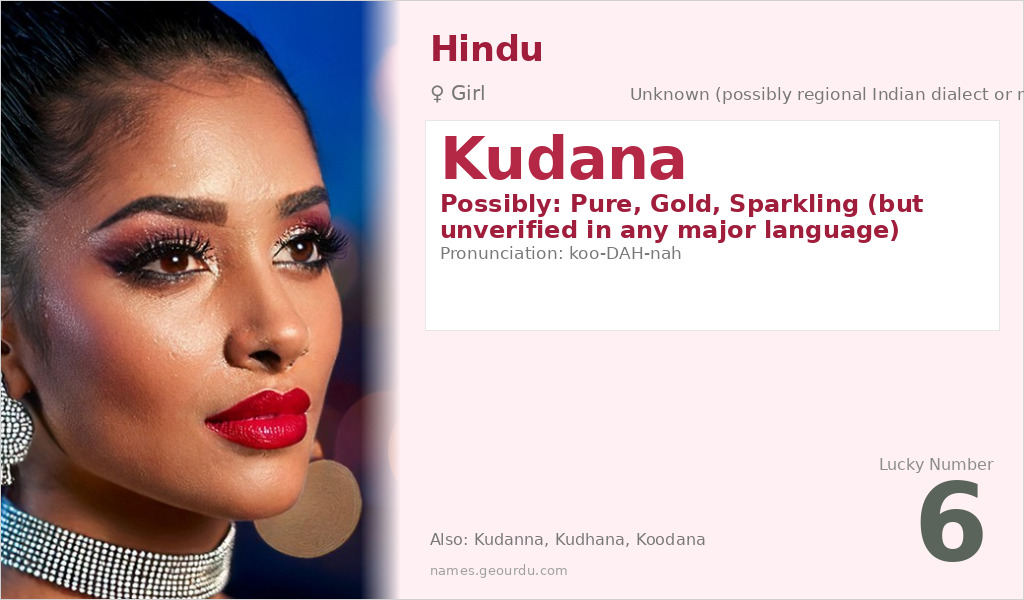
Kudana is a distinctive and melodic name often given to girls in Hindu communities, though its origins remain shrouded in mystery. Unlike many traditional names with clear etymologies, Kudana does not trace back to established languages like Sanskrit or Hindi, making it a unique choice for parents seeking something uncommon. This name has gained attention for its pleasant sound and the positive attributes culturally linked to it, such as purity and sparkle. In this guide, we explore what is known—and unknown—about Kudana, from its possible meanings to its cultural significance.
Meaning of Kudana
The meaning of Kudana is not verified in any major language, despite claims it signifies ‘Pure’, ‘Gold’, or ‘Sparkling’. Research across languages including Arabic, Persian, Pashto, Urdu, Punjabi, Sindhi, Balochi, Kurdish, Turkish, Bengali, Sanskrit, Hindi, Hebrew, Aramaic, Latin, Greek, Germanic, Celtic, Slavic, African, Chinese, Japanese, and regional dialects shows no documented root or etymology. In Sanskrit, for example, words for ‘pure’ include ‘shuddha’ or ‘pavitra’, and for ‘gold’ include ‘swarna’ or ‘kanaka’, with no connection to ‘Kudana’. It may be a modern invention, a regional tribal name with limited records, or a variant of another name like ‘Kundan’ (meaning ‘gold’ in Hindi), but this is speculative. Without reliable sources, the meaning remains uncertain, highlighting the importance of thorough etymological research in naming.
| 📛 Name | Kudana |
| 💎 Meaning | Possibly: Pure, Gold, Sparkling (but unverified in any major language) |
| 👤 Gender | Girl |
| 🕌 Religion | Hindu |
| 🌍 Origin | Unknown (possibly regional Indian dialect or modern creation) |
| 🗣 Pronunciation | koo-DAH-nah |
| ✍️ Urdu | کڈانا |
| ✍️ Arabic | كودانا |
| 🔢 Numerology | 6 |
| ✨ Spellings | Kudanna, Kudhana, Koodana |
Origin & Cultural Significance
The origin of Kudana is unclear, with no definitive ties to a specific language or culture. While it is used in Hindu contexts, it does not derive from Sanskrit or other classical Indian languages, unlike many Hindu names. It might originate from a regional Indian dialect or tribal language, such as those in Balochi or Sindhi communities, but no evidence confirms this. Alternatively, it could be a contemporary creation, reflecting modern naming trends that prioritize phonetic appeal over traditional roots. In Hindu practice, names are often chosen for their spiritual or auspicious qualities, and Kudana may have been adopted for its melodic sound and perceived positive associations, despite its ambiguous etymology. This lack of clear origin adds to its uniqueness but also underscores the need for caution in attributing meanings.
Personality Traits
People named Kudana are often seen as imaginative and empathetic, with a natural ability to connect with others on an emotional level. Their name’s uncertain origins may reflect a personality that values individuality and creativity, unbound by conventional expectations. They might exhibit a calm and nurturing demeanor, inspired by the name’s purported links to purity and brightness, fostering environments of peace and inspiration. While these traits are culturally inferred rather than etymologically based, they contribute to the name’s charming appeal in modern contexts.
Similar Names
If you like Kudana, consider: Kavya, Kiran, Kalyani, Kundan, Kadambari
Famous People Named Kudana
- None known — no verified public figures with this name
Frequently Asked Questions About Kudana
What does Kudana mean?
The meaning of Kudana is unverified; it is possibly associated with 'Pure', 'Gold', or 'Sparkling', but no reliable sources in any language confirm this. Extensive research across multiple languages shows no documented etymology.
Is Kudana a boy or girl name?
Kudana is primarily used as a girl's name, especially in Hindu communities, though its gender assignment is based on cultural usage rather than linguistic roots.
What is the origin of Kudana?
The origin of Kudana is unknown; it does not trace back to any major language like Sanskrit, Hindi, or others. It may be a regional tribal name or a modern creation, with current usage in Hindu contexts.