
Table of Contents
Kulik is a distinctive masculine name with deep roots in Slavic culture, carrying the beautiful meaning of “bird” — specifically referring to elegant wading birds like curlews and sandpipers. Unlike many names with human-centric meanings, Kulik connects its bearer directly to the natural world through avian symbolism. This name has been used across Eastern Europe for centuries, appearing in both given names and surnames. Its unique origin and meaningful connection to nature make it an intriguing choice for parents seeking a name with cultural depth.
Meaning of Kulik
The name Kulik derives directly from the Slavic word for certain types of wading birds, particularly those in the sandpiper family (Scolopacidae). In Russian, “кулик” (kulik) specifically refers to curlews, snipes, and similar long-billed shorebirds. This etymology traces back to Proto-Slavic *kulikъ, which described birds characterized by their distinctive long, curved beaks used for probing in mud and sand. The name’s connection to birds is consistent across Slavic languages — in Ukrainian it’s “кулик” (kulyk), in Polish “kulik” refers to the Eurasian curlew. Unlike names with abstract meanings, Kulik offers a direct, tangible connection to the natural world, reflecting Slavic cultures’ close relationship with their environment.
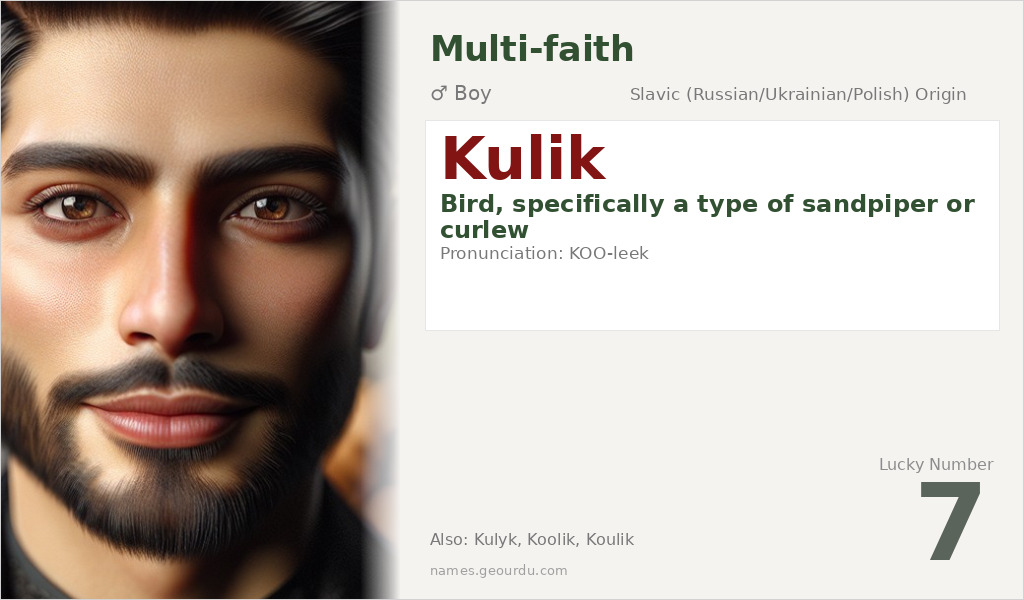
| 📛 Name | Kulik |
| 💎 Meaning | Bird, specifically a type of sandpiper or curlew |
| 👤 Gender | Boy |
| 🕌 Religion | Multi-faith |
| 🌍 Origin | Slavic (Russian/Ukrainian/Polish) |
| 🗣 Pronunciation | KOO-leek |
| ✍️ Urdu | کولیک |
| ✍️ Arabic | كوليك |
| 🔢 Numerology | 7 |
| ✨ Spellings | Kulyk, Koolik, Koulik |
Origin & Cultural Significance
Kulik originates from Slavic languages and cultures, particularly Russian, Ukrainian, and Polish traditions. The name emerged as both a descriptive surname (for someone who resembled or worked with birds) and later as a given name. In Slavic folklore, birds often carried symbolic meanings — messengers, symbols of freedom, or connections between earthly and spiritual realms. The name appears in historical records across Eastern Europe, with notable bearers including poets, artists, and public figures. While not exclusively tied to any single religion, the name is most commonly found in Orthodox Christian communities in Slavic countries, though it can be used by people of various faiths today.
Personality Traits
Those named Kulik often embody characteristics associated with birds in Slavic symbolism — freedom, perspective, and adaptability. Like migratory birds, they may possess natural curiosity and a desire to explore beyond familiar horizons. The name’s connection to observant shorebirds suggests personality traits of patience, attention to detail, and the ability to navigate different environments. While personality varies by individual, the name’s avian roots provide a poetic framework for understanding potential characteristics.
Similar Names
If you like Kulik, consider: Sokol (Slavic: falcon), Orzel (Polish: eagle), Voron (Russian: raven), Jastrzęb (Polish: hawk), Ptak (Polish: bird)
Famous People Named Kulik
- Oleg Kulik — Russian performance artist known for his provocative animal-themed works
- Ivan Kulik — Soviet Ukrainian poet and literary critic (1897-1941)
Frequently Asked Questions About Kulik
What does Kulik mean?
Kulik means "bird" in Slavic languages, specifically referring to wading birds like curlews and sandpipers. The name comes from Russian/Ukrainian "кулик" and Polish "kulik."
Is Kulik a boy or girl name?
Kulik is traditionally a masculine name in Slavic cultures. While names can be adapted, historical usage and linguistic gender patterns in Slavic languages establish it as primarily a boy's name.
What is the origin of Kulik?
Kulik originates from Slavic languages, particularly Russian, Ukrainian, and Polish. It derives from the word for certain shorebirds and has been used as both a surname and given name in Eastern European cultures for centuries.





