
Table of Contents
Kumar is one of the most recognizable and beloved names across South Asia, carrying with it centuries of cultural heritage. Meaning ‘prince’ in Sanskrit, this name evokes images of royalty, youth, and leadership. From ancient epics to modern celebrities, Kumar has maintained its popularity across generations. Let’s explore the rich history and meaning behind this classic name.
Meaning of Kumar
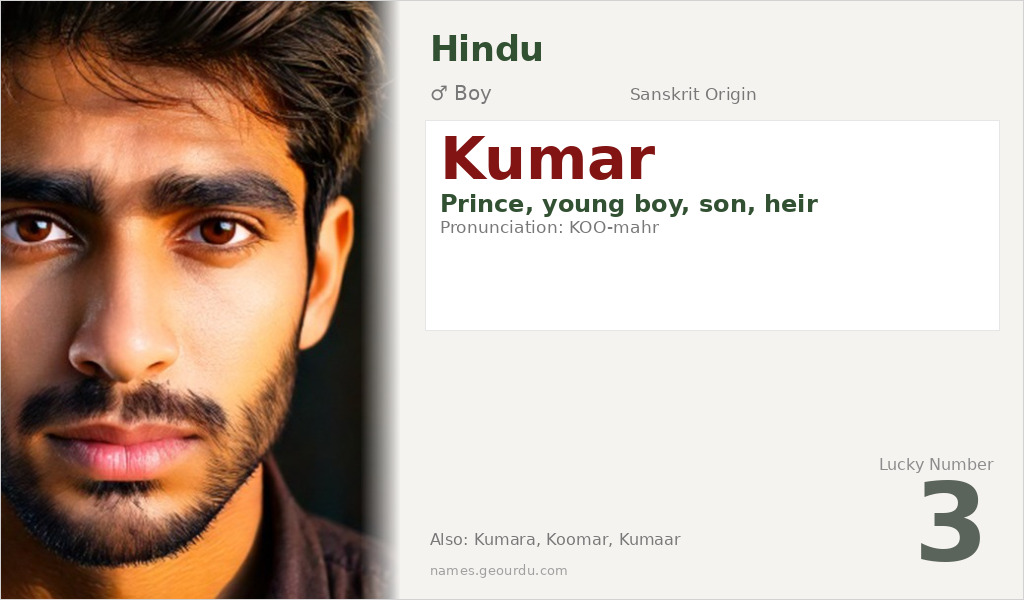
The name Kumar derives from the Sanskrit word ‘कुमार’ (kumāra), which literally translates to ‘prince’, ‘young boy’, ‘son’, or ‘heir’. In Sanskrit etymology, it’s sometimes analyzed as ‘ku’ (earth) + ‘mara’ (killer), though this interpretation is debated among scholars. More commonly, it’s understood simply as ‘youthful prince’ or ‘young lord’. The name appears extensively in Hindu scriptures and epics, including references to Kartikeya, the Hindu god of war, who is often called ‘Kumara’. This deep Sanskrit root gives the name its authentic Indian heritage and distinguishes it from names of Arabic or Persian origin.
| 📛 Name | Kumar |
| 💎 Meaning | Prince, young boy, son, heir |
| 👤 Gender | Boy |
| 🕌 Religion | Hindu |
| 🌍 Origin | Sanskrit |
| 🗣 Pronunciation | KOO-mahr |
| ✍️ Urdu | کمار |
| ✍️ Arabic | كومار |
| 🔢 Numerology | 3 |
| ✨ Spellings | Kumara, Koomar, Kumaar |
Origin & Cultural Significance
Kumar originates from ancient India and is firmly rooted in Sanskrit, the classical language of Hinduism. It has been used for millennia in Hindu communities across the Indian subcontinent. While the name has spread to various South Asian cultures and may be used by people of different religions in the region, its primary cultural and religious association remains Hindu. The name gained particular prominence through Hindu mythology and literature, where it often denotes youthful divinity or royal lineage. Today, it remains especially popular in India, Nepal, Sri Lanka, and among diaspora communities worldwide.
Personality Traits
Those named Kumar often carry an air of natural authority and youthful energy. The ‘prince’ meaning suggests someone who is confident, charismatic, and comfortable in leadership roles. They may possess creative talents and enjoy expressing themselves artistically or socially. While individual personalities vary, the name’s royal connotations often inspire high expectations and a sense of destiny.
Similar Names
If you like Kumar, consider: Rajkumar, Kumaran, Kumaraswamy, Kumaril, Kumari
Famous People Named Kumar
- Kumar Gandharva — Renowned Indian classical vocalist
- Kumar Sanu — Famous Bollywood playback singer
- Kumar Vishwas — Indian poet and politician
Frequently Asked Questions About Kumar
What does Kumar mean?
Kumar means 'prince', 'young boy', 'son', or 'heir' in Sanskrit, the classical language of ancient India.
Is Kumar a boy or girl name?
Kumar is exclusively a boy's name in all cultural contexts where it's used, reflecting its meaning of 'prince' or 'young boy'.
What is the origin of Kumar?
Kumar originates from Sanskrit, an ancient Indian language, and is fundamentally a Hindu name with thousands of years of history in South Asian culture.





