
Table of Contents
Lakshmana is a classic Hindu boy name with deep roots in Indian mythology and Sanskrit tradition. Most famously known as the devoted younger brother of Lord Rama in the epic Ramayana, this name carries connotations of loyalty, auspiciousness, and divine favor. With its rich cultural heritage spanning millennia, Lakshmana remains a meaningful choice for parents seeking a name with spiritual depth and historical significance. The name’s etymology reveals its connection to marks of destiny and fortunate characteristics.
Meaning of Lakshmana
Lakshmana originates from the Sanskrit word ‘lakṣmaṇa’ (लक्ष्मण), which literally translates to ‘having marks’ or ‘characterized by signs’. The term derives from the root ‘lakṣma’ (लक्ष्म), meaning ‘mark, sign, token, or characteristic’. In Hindu naming tradition, this specifically refers to auspicious marks—physical or symbolic signs indicating good fortune, nobility, or divine favor. The name gained particular prominence through the character Lakshmana in the Ramayana, who was born with special marks that foretold his heroic destiny. This etymological connection to visible signs of destiny makes the name particularly meaningful in Hindu culture where physical marks are sometimes considered indicators of character or fate.
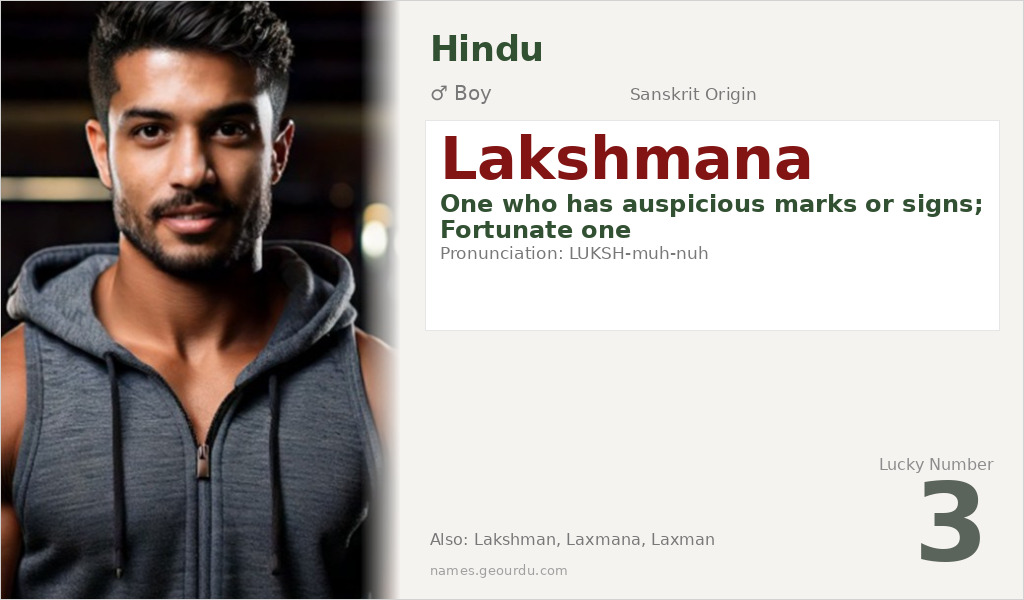
| 📛 Name | Lakshmana |
| 💎 Meaning | One who has auspicious marks or signs; Fortunate one |
| 👤 Gender | Boy |
| 🕌 Religion | Hindu |
| 🌍 Origin | Sanskrit |
| 🗣 Pronunciation | LUKSH-muh-nuh |
| ✍️ Urdu | لکشمن |
| ✍️ Arabic | لاكشمانا |
| 🔢 Numerology | 3 |
| ✨ Spellings | Lakshman, Laxmana, Laxman, Lakṣmaṇa |
Origin & Cultural Significance
Lakshmana has its origins in ancient Sanskrit literature and Hindu mythology, dating back over two millennia. The name first appears prominently in Valmiki’s Ramayana (circa 5th century BCE to 2nd century CE), where Lakshmana is one of the four sons of King Dasharatha of Ayodhya. As the twin brother of Shatrughna and devoted companion to Lord Rama, Lakshmana’s character embodies loyalty, courage, and self-sacrifice. The name spread throughout the Indian subcontinent with the dissemination of the Ramayana and remains popular in Hindu communities across India, Nepal, and the diaspora. While primarily a Hindu name, its usage has occasionally crossed into other Indian religious communities familiar with the epic.
Personality Traits
Those named Lakshmana are often associated with qualities of steadfast loyalty, protective nature, and principled character. Drawing from the mythological Lakshmana’s attributes, they may exhibit strong family bonds, willingness to sacrifice for loved ones, and unwavering commitment to their duties. The name suggests someone who is reliable in adversity and maintains strong moral convictions. These personality associations stem from centuries of cultural storytelling that has shaped the name’s symbolic meaning beyond its literal etymology.
Similar Names
If you like Lakshmana, consider: Rama, Bharata, Shatrughna, Hanuman, Arjuna
Famous People Named Lakshmana
- Lakshmana — Younger brother of Lord Rama in the Hindu epic Ramayana, known for his unwavering loyalty and devotion
- Lakshmana Sena — 12th century ruler of the Sena dynasty in Bengal
Frequently Asked Questions About Lakshmana
What does Lakshmana mean?
Lakshmana means 'one who has auspicious marks or signs' in Sanskrit. It refers to someone bearing fortunate characteristics or divine indications of a noble destiny.
Is Lakshmana a boy or girl name?
Lakshmana is exclusively a boy's name in Hindu tradition, named after the male character from the Ramayana epic. There are no recorded traditional uses as a girl's name.
What is the origin of Lakshmana?
Lakshmana originates from Sanskrit and Hindu mythology, specifically from the ancient Indian epic Ramayana where Lakshmana is the loyal younger brother of Lord Rama.





