Table of Contents
Lalithambigai is a beautiful and spiritually significant name deeply rooted in South Indian Hindu tradition. This melodic name carries the weight of divine femininity and artistic grace, representing one of the most revered forms of Goddess Parvati. Parents choosing this name often seek to bestow upon their daughter the qualities of beauty, strength, and spiritual connection. With its rich cultural heritage, Lalithambigai remains a cherished choice in Tamil-speaking communities worldwide.
Meaning of Lalithambigai
Lalithambigai is a compound name with profound religious meaning in Hindu tradition. The first component ‘Lalitha’ originates from Sanskrit ‘ललिता’ (lalitā), meaning ‘beautiful’, ‘charming’, ‘playful’, or ‘elegant’. This term appears in classical Sanskrit literature describing feminine grace. The second component ‘Ambikai’ comes from Sanskrit ‘अम्बिका’ (ambikā), meaning ‘mother’ or ‘goddess’, specifically referring to Parvati as the divine mother. Together, Lalithambigai translates to ‘the beautiful goddess’ or ‘Goddess Parvati in her charming form’. This name is particularly significant in Tamil Saiva tradition, where Lalithambigai is worshipped as a specific manifestation of Parvati, often associated with the Lalithambikai temple in Tamil Nadu.
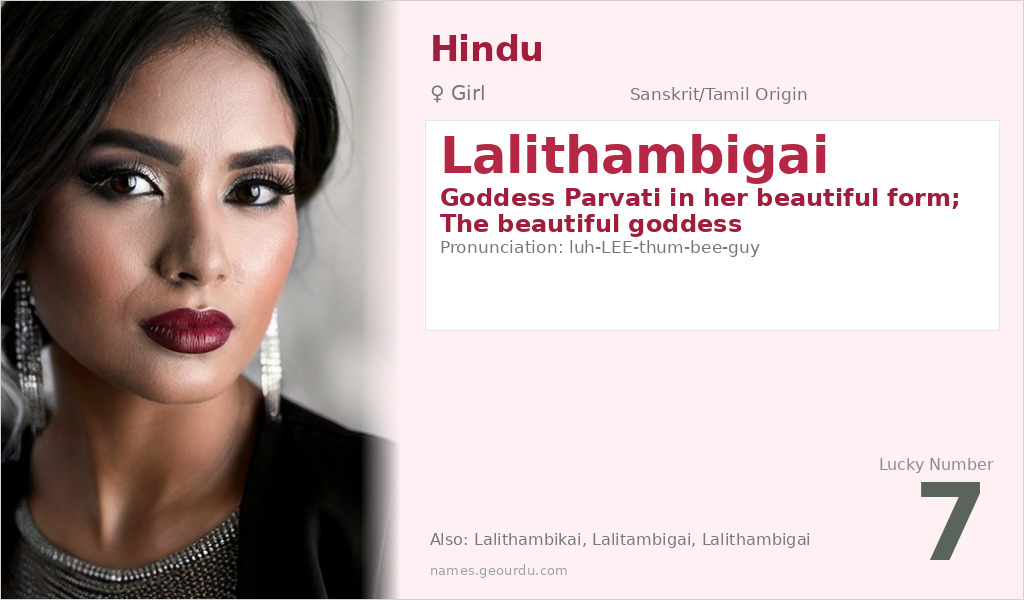
| 📛 Name | Lalithambigai |
| 💎 Meaning | Goddess Parvati in her beautiful form; The beautiful goddess |
| 👤 Gender | Girl |
| 🕌 Religion | Hindu |
| 🌍 Origin | Sanskrit/Tamil |
| 🗣 Pronunciation | luh-LEE-thum-bee-guy |
| ✍️ Urdu | لالیتھمبیگائی |
| ✍️ Arabic | لاليثامبيغاي |
| 🔢 Numerology | 7 |
| ✨ Spellings | Lalithambikai, Lalitambigai, Lalithambigai |
Origin & Cultural Significance
Lalithambigai originates from the synthesis of Sanskrit and Tamil linguistic traditions in South India. The name gained prominence through Tamil devotional literature and temple worship, particularly in the context of Saiva Siddhanta philosophy. Historical records show the name’s association with the Lalithambikai temple in Tirumeyachur, Tamil Nadu, which dates back several centuries. This name reflects the syncretic cultural heritage of Tamil Nadu, where Sanskrit divine epithets were adapted into Tamil naming conventions. Today, Lalithambigai remains primarily used in Tamil Hindu communities in India, Sri Lanka, and the diaspora, preserving its religious and cultural significance across generations.
Personality Traits
Those named Lalithambigai are often perceived as embodying the grace and strength associated with their divine namesake. They typically exhibit artistic sensibilities, emotional depth, and a natural elegance in their demeanor. Their connection to the name’s spiritual roots may manifest as cultural awareness, traditional values, and a nurturing disposition. These individuals often balance creative expression with practical wisdom, making them respected members of their communities.
Similar Names
If you like Lalithambigai, consider: Lalitha, Ambika, Parvati, Uma, Gauri
Famous People Named Lalithambigai
- Lalithambigai — Character in Tamil devotional literature and temple traditions
- Various South Indian women named Lalithambigai in Tamil Nadu and Sri Lanka
Frequently Asked Questions About Lalithambigai
What does Lalithambigai mean?
Lalithambigai means 'beautiful goddess' or specifically refers to Goddess Parvati in her charming form. It combines Sanskrit words 'Lalitha' (beautiful) and 'Ambikai' (goddess/mother).
Is Lalithambigai a boy or girl name?
Lalithambigai is exclusively a feminine name given to girls in Hindu tradition, as it refers to the goddess Parvati, a female deity.
What is the origin of Lalithambigai?
Lalithambigai originates from Sanskrit and Tamil linguistic traditions in South India, specifically within Tamil Hindu culture where it refers to a form of Goddess Parvati worshipped in Tamil Nadu temples.