
Table of Contents
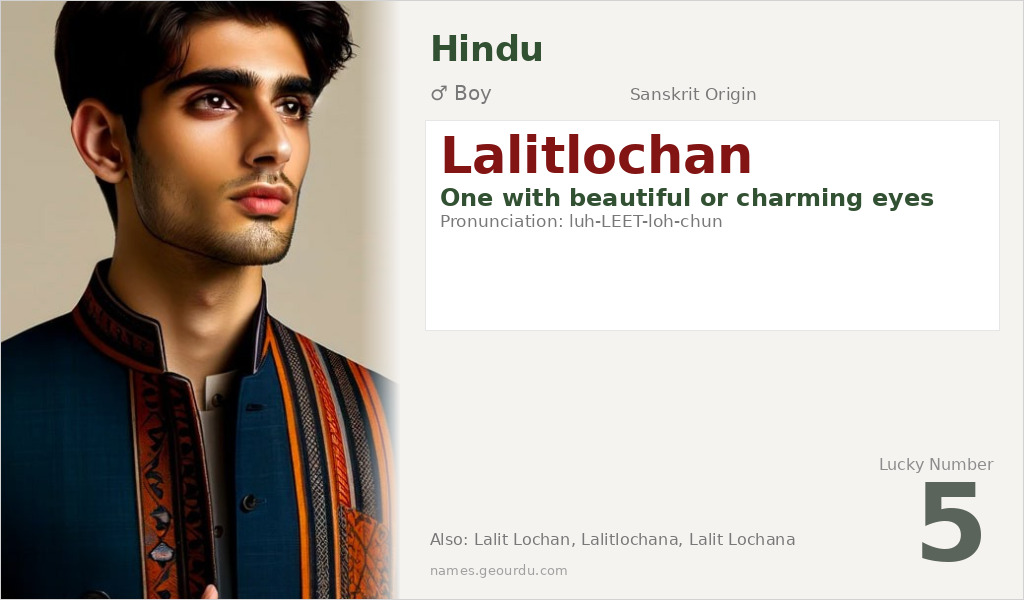
Lalitlochan is a classical Sanskrit name that carries centuries of cultural heritage within its syllables. Meaning ‘one with beautiful or charming eyes’, this name evokes imagery of divine perception and aesthetic grace. Primarily used in Hindu communities across India and Nepal, it represents more than just physical beauty—it symbolizes insight and spiritual vision. As a compound name from ancient Sanskrit literature, Lalitlochan continues to be chosen by parents seeking a name with deep linguistic roots and poetic resonance.
Meaning of Lalitlochan
Lalitlochan derives from two Sanskrit words: ‘Lalit’ (ललित) meaning ‘charming, beautiful, graceful, or playful’ and ‘Lochan’ (लोचन) meaning ‘eye, sight, or vision’. When combined, they create a descriptive compound meaning ‘one with beautiful eyes’ or ‘possessing charming vision’. This construction follows the Sanskrit tatpuruṣa compound pattern, where the first element (‘Lalit’) qualifies the second (‘Lochan’). In Hindu tradition, eyes are considered windows to the soul, making this name particularly significant. The term appears in classical texts like the Puranas and poetic works, often as an epithet for deities who possess divine sight and beauty. Linguistically, it demonstrates the richness of Sanskrit’s compounding system for creating evocative personal names.
| 📛 Name | Lalitlochan |
| 💎 Meaning | One with beautiful or charming eyes |
| 👤 Gender | Boy |
| 🕌 Religion | Hindu |
| 🌍 Origin | Sanskrit |
| 🗣 Pronunciation | luh-LEET-loh-chun |
| ✍️ Urdu | للِت لوچن |
| ✍️ Arabic | لاليت لوتشان |
| 🔢 Numerology | 5 |
| ✨ Spellings | Lalit Lochan, Lalitlochana, Lalit Lochana |
Origin & Cultural Significance
Lalitlochan originates from classical Sanskrit, the ancient liturgical language of Hinduism, Buddhism, and Jainism. As a compound name, it reflects the sophisticated naming traditions of Sanskrit literature, where descriptive epithets were commonly used for both deities and humans. The name appears in Hindu mythological contexts, particularly as an attribute of gods like Krishna and Vishnu, emphasizing their all-seeing, beautiful nature. While primarily used in Hindu communities, the name’s Sanskrit roots give it pan-Indian appeal across various regions. In modern times, it remains most prevalent in India and Nepal, though its classical origins connect it to a broader South Asian cultural heritage. The name’s preservation demonstrates the enduring influence of Sanskrit on contemporary naming practices.
Personality Traits
In cultural interpretation, names like Lalitlochan often carry implied personality characteristics. The emphasis on ‘beautiful eyes’ suggests someone perceived as observant, perceptive, and aesthetically sensitive. Such individuals might be seen as having good judgment, an appreciation for beauty in various forms, and possibly artistic inclinations. The ‘charming’ aspect of ‘Lalit’ adds connotations of gracefulness and pleasant demeanor. While these are cultural associations rather than deterministic traits, they reflect how the name’s meaning shapes social perceptions in communities where Sanskrit names carry traditional significance.
Similar Names
If you like Lalitlochan, consider: Lalit, Lochan, Lalitmohan, Lalitkumar, Lalitaditya
Famous People Named Lalitlochan
- Lalitlochan — Character in Hindu mythology and literature, often as an epithet for deities
- Lalit Lochan — Modern individuals in India and Nepal bearing this traditional name
Frequently Asked Questions About Lalitlochan
What does Lalitlochan mean?
Lalitlochan means 'one with beautiful or charming eyes' in Sanskrit. It's a compound of 'Lalit' (charming/beautiful) and 'Lochan' (eye/vision).
Is Lalitlochan a boy or girl name?
Lalitlochan is traditionally a masculine name in Hindu naming conventions. Sanskrit compound names ending in 'lochan' are typically masculine, though modern usage might vary.
What is the origin of Lalitlochan?
Lalitlochan originates from classical Sanskrit, the ancient language of Hindu scriptures. It's a compound name found in Hindu literature and mythology, primarily used in Indian and Nepali Hindu communities.





