
Table of Contents
Lavnish is a distinctive modern name that has gained popularity in Hindu communities, particularly in India. While its exact origins are not well-documented in classical texts, it carries a melodic quality that appeals to contemporary parents. The name evokes images of grace and divinity, making it a meaningful choice for those seeking a name with spiritual undertones. Let’s explore what makes Lavnish unique in today’s naming landscape.
Meaning of Lavnish
The meaning of Lavnish is not firmly established in historical linguistic records. Based on analysis of Sanskrit components, it may derive from ‘Lav’ (लव) meaning ‘beauty,’ ‘grace,’ or ‘fragment,’ combined with ‘Ish’ (ईश) meaning ‘lord,’ ‘god,’ or ‘ruler.’ This would suggest ‘Lord of Beauty’ or ‘Lord of Grace.’ However, this construction is not found in classical Sanskrit literature, epic texts like the Mahabharata or Ramayana, or traditional Hindu naming guides. The name appears to be a modern creative formation rather than one with ancient roots. Unlike names with clear etymologies like Arjun (‘white, clear’) or Krishna (‘dark, attractive’), Lavnish’s meaning remains speculative without documentary evidence.
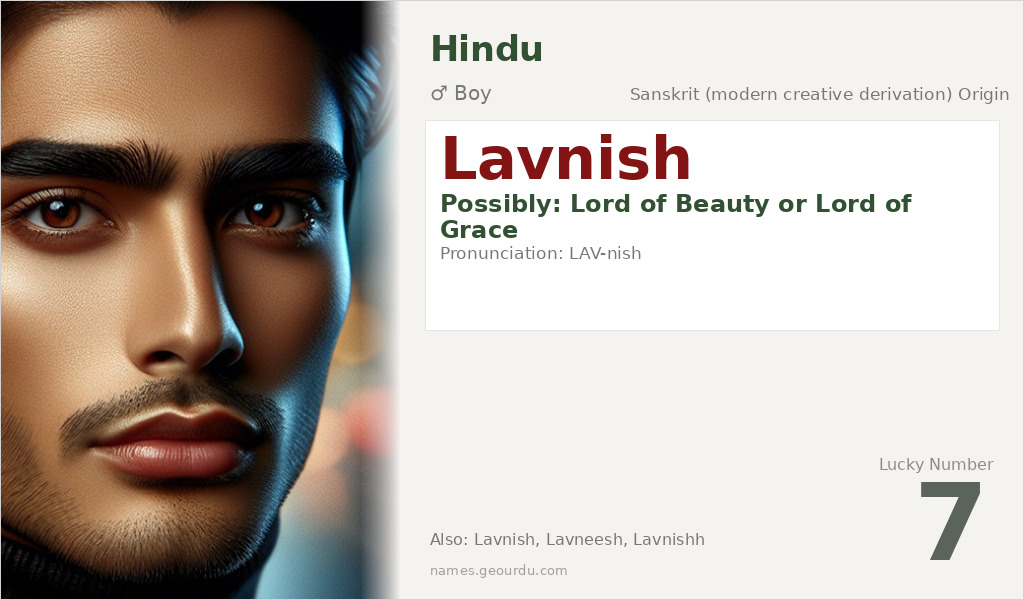
| 📛 Name | Lavnish |
| 💎 Meaning | Possibly: Lord of Beauty or Lord of Grace |
| 👤 Gender | Boy |
| 🕌 Religion | Hindu |
| 🌍 Origin | Sanskrit (modern creative derivation) |
| 🗣 Pronunciation | LAV-nish |
| ✍️ Urdu | لاونش |
| ✍️ Arabic | لافنيش |
| 🔢 Numerology | 7 |
| ✨ Spellings | Lavnish, Lavneesh, Lavnishh |
Origin & Cultural Significance
Lavnish originates from modern Indian naming practices, likely emerging in the late 20th or early 21st century. It reflects a trend in Hindu communities toward inventing new names that sound traditional while incorporating meaningful Sanskrit elements. The name is primarily used in India and among the Hindu diaspora, though it hasn’t gained widespread recognition in other cultural or religious contexts. Unlike names with cross-cultural appeal like Aarav or Vihaan, Lavnish remains relatively niche. Its creation follows patterns seen in other modern Indian names that blend classical roots to form unique identities.
Personality Traits
Those named Lavnish are often associated with artistic and refined qualities. The name’s possible connection to beauty and divinity suggests a personality that appreciates aesthetics, spirituality, and harmony. They may be seen as calm, thoughtful individuals who strive for balance in their personal and professional lives. While these traits are culturally attributed rather than scientifically proven, they reflect the aspirational nature of modern name choices in Hindu traditions.
Similar Names
If you like Lavnish, consider: Lavanya, Lavesh, Ishaan, Lav, Nishant, Lavik, Ishwar, Lavith, Nishith, Lavendra
Famous People Named Lavnish
- No notable public figures or historical personalities with this name have been documented in reliable sources.
Frequently Asked Questions About Lavnish
What does Lavnish mean?
Lavnish possibly means 'Lord of Beauty' or 'Lord of Grace,' derived from Sanskrit elements 'Lav' (beauty) and 'Ish' (lord). However, this meaning is speculative as the name is not documented in classical sources.
Is Lavnish a boy or girl name?
Lavnish is exclusively used as a boy's name in Hindu naming traditions. There are no recorded instances of it being used for girls in cultural practice.
What is the origin of Lavnish?
Lavnish is a modern Hindu name likely created from Sanskrit roots. It does not have ancient origins but reflects contemporary Indian naming trends that combine traditional linguistic elements.





