Table of Contents
Laylah is a name that whispers of moonlit nights and timeless romance. With roots stretching back to pre-Islamic Arabia, this beautiful feminine name has traveled across continents and cultures, carrying with it the poetic imagery of dark beauty and passionate love stories. Whether spelled Laylah, Laila, or Leila, this name continues to captivate parents seeking a name with deep historical resonance and lyrical quality.
Meaning of Laylah
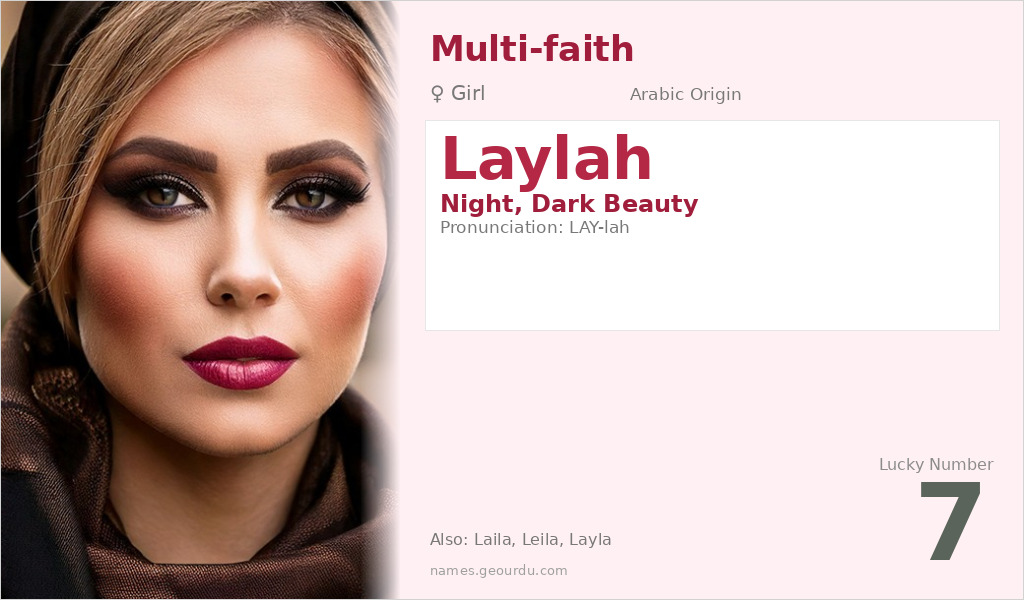
Laylah derives directly from the Arabic word ‘layl’ (ليل), meaning ‘night’. In Arabic linguistic tradition, the name carries rich poetic connotations beyond the literal meaning—it suggests beauty that shines in darkness, mystery, and romantic yearning. The name gained legendary status through the 7th-century story of poet Qays ibn al-Mulawwah’s unrequited love for Layla, which became one of the most celebrated romances in Islamic literature, comparable to Romeo and Juliet in Western tradition. This association imbued the name with layers of meaning related to passionate love, poetic inspiration, and tragic beauty that have persisted for centuries across Arabic, Persian, Turkish, and Urdu literary traditions.
| 📛 Name | Laylah |
| 💎 Meaning | Night, Dark Beauty |
| 👤 Gender | Girl |
| 🕌 Religion | Multi-faith |
| 🌍 Origin | Arabic |
| 🗣 Pronunciation | LAY-lah |
| ✍️ Urdu | لیلیٰ |
| ✍️ Arabic | ليلى |
| 🔢 Numerology | 7 |
| ✨ Spellings | Laila, Leila, Layla, Leyla, Laylah |
Origin & Cultural Significance
Laylah originated in pre-Islamic Arabia as a feminine given name, appearing in early Arabic poetry. Its cultural significance was cemented by the legendary romance of Majnun Layla (the ‘Madman of Layla’), which spread throughout the Islamic world and beyond via Persian adaptations by Nizami Ganjavi and others. The name entered South Asian cultures through Persian influence during the Mughal era, where it became popular among both Muslim and Hindu communities. In the 20th century, Western adoption began through literary references and popular culture, with Eric Clapton’s song ‘Layla’ (1970) further globalizing the name. Today, Laylah and its variants are used across religious boundaries while maintaining their Arabic linguistic roots.
Personality Traits
Those named Laylah often embody the poetic qualities associated with their name—they tend to be introspective, emotionally deep, and artistically inclined. The night symbolism suggests comfort with mystery and hidden aspects of life, while the romantic literary heritage points toward passionate, loyal natures. Many Laylahs display strong intuition and creativity, whether expressed through arts, writing, or other imaginative pursuits, carrying forward the name’s association with poetic inspiration and emotional depth.
Similar Names
If you like Laylah, consider: Layal, Layali, Layl, Layyin, Lamia
Famous People Named Laylah
- Layla Alizada — Afghan-Canadian actress known for 'The Girl King' and 'The Man in the High Castle'
- Layla El — English dancer, model, and professional wrestler of Moroccan descent
Frequently Asked Questions About Laylah
What does Laylah mean?
Laylah means 'night' in Arabic, with poetic connotations of dark beauty, mystery, and romantic longing derived from classical Arabic literature and the legendary love story of Qays and Layla.
Is Laylah a boy or girl name?
Laylah is exclusively a feminine name across all cultures where it's used, from its Arabic origins to modern global usage. There are no traditional masculine forms of this name.
What is the origin of Laylah?
Laylah originates from Arabic language and culture, specifically from pre-Islamic Arabia. It gained prominence through the 7th-century romantic story of Qays and Layla, which spread throughout Islamic and Persian-influenced regions before becoming globally popular.