
Table of Contents
Lingadevaru is a profound Hindu name steeped in Shaiva tradition and South Indian spirituality. Combining Sanskrit and Kannada linguistic elements, this name carries deep theological significance as a direct reference to Lord Shiva’s most iconic worship form. More than just a personal identifier, Lingadevaru represents a connection to ancient Hindu philosophical concepts and devotional practices. This exploration reveals the rich layers of meaning behind this distinctive name.
Meaning of Lingadevaru
Lingadevaru derives from two distinct linguistic components with deep religious significance. The first part, ‘linga,’ comes from Sanskrit (लिङ्ग) and carries multiple meanings including ‘symbol,’ ‘characteristic,’ and ‘gender,’ but in Shaiva context specifically refers to the aniconic phallic representation of Shiva that symbolizes cosmic energy and creative power. The second component, ‘devaru,’ is a Kannada honorific (ದೇವರು) meaning ‘god’ or ‘lord,’ commonly used in South Indian languages to denote divinity. Together, they form ‘Lord of the Linga’ or ‘Divine Linga Form,’ making this name essentially a theophoric name directly invoking Shiva’s most widespread worship form. This compound construction follows common South Indian naming patterns where Sanskrit roots combine with regional language elements to create devotional names.
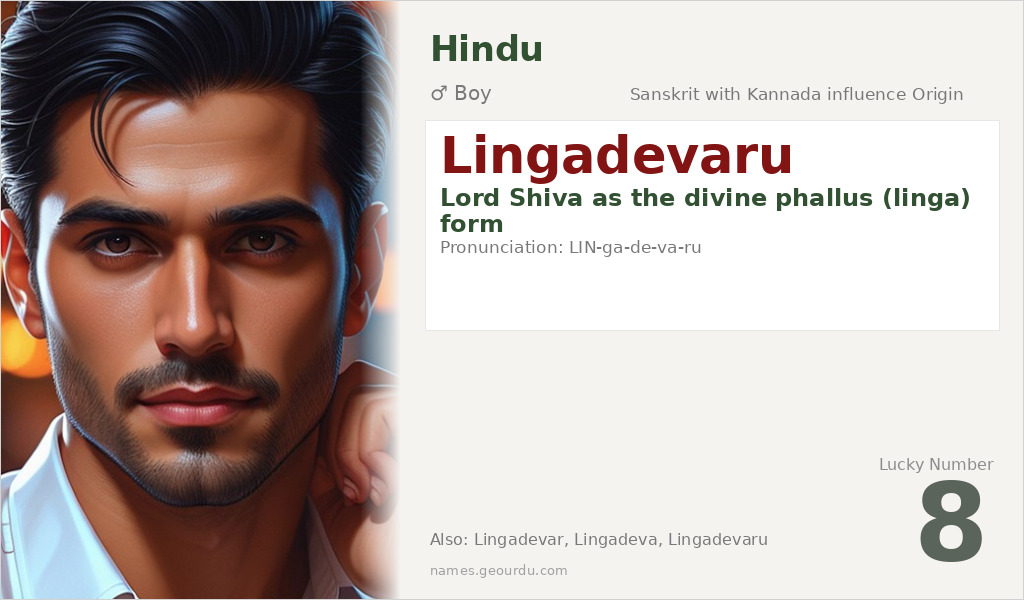
| 📛 Name | Lingadevaru |
| 💎 Meaning | Lord Shiva as the divine phallus (linga) form |
| 👤 Gender | Boy |
| 🕌 Religion | Hindu |
| 🌍 Origin | Sanskrit with Kannada influence |
| 🗣 Pronunciation | LIN-ga-de-va-ru |
| ✍️ Urdu | لنگ دیورو |
| ✍️ Arabic | لينغاديفارو |
| 🔢 Numerology | 8 |
| ✨ Spellings | Lingadevar, Lingadeva, Lingadevaru |
Origin & Cultural Significance
Lingadevaru originates from the synthesis of classical Sanskrit and Dravidian (specifically Kannada) linguistic traditions in South India. The name emerges from Shaiva devotional practices where linga worship has been central for millennia, particularly in regions like Karnataka, Andhra Pradesh, and Tamil Nadu. Historically, such names appear in temple inscriptions, religious texts, and among communities with strong Shaiva affiliations. The name reflects the cultural integration of Sanskrit liturgical language with regional vernaculars that characterized medieval Hindu traditions in peninsular India. While not among the most common contemporary names, it maintains significance in traditional Hindu families, especially those with historical connections to specific Shiva temples or lineages.
Personality Traits
The spiritual weight of Lingadevaru suggests individuals bearing this name might embody qualities associated with Shiva: transformative energy, disciplined practice, and philosophical depth. Such names often carry expectations of spiritual inclination, respect for tradition, and leadership within religious or community contexts. The connection to the linga symbol implies both creative potential and ascetic discipline, potentially influencing how name-bearers are perceived in traditional settings.
Similar Names
If you like Lingadevaru, consider: Lingaraj, Lingesh, Lingamurthy, Linganathan, Lingadhar
Famous People Named Lingadevaru
- No widely known contemporary figures with this exact name found in research. The name appears more commonly in religious contexts and historical temple inscriptions in South India.
Frequently Asked Questions About Lingadevaru
What does Lingadevaru mean?
Lingadevaru means 'Lord Shiva as the divine linga form.' It combines Sanskrit 'linga' (phallic emblem representing Shiva) with Kannada 'devaru' (god/lord).
Is Lingadevaru a boy or girl name?
Lingadevaru is exclusively a boy's name in Hindu tradition, as it directly references the masculine deity Shiva and uses masculine grammatical forms in both Sanskrit and Kannada.
What is the origin of Lingadevaru?
Lingadevaru originates from Sanskrit and Kannada linguistic traditions in South India, specifically within Shaiva Hindu communities where linga worship is central to devotional practice.





