
Table of Contents
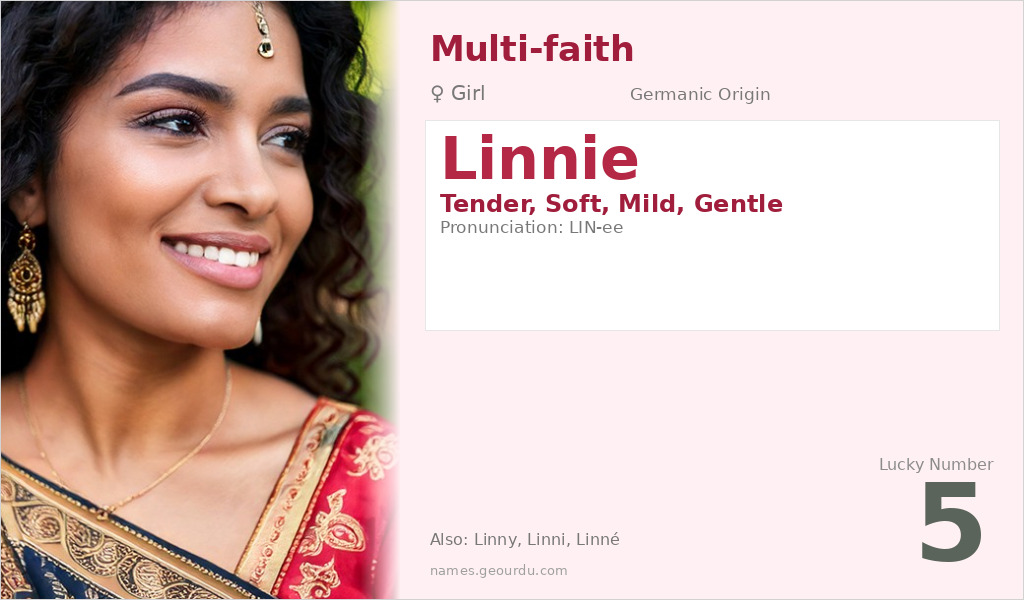
Linnie is a charming feminine name with roots in Germanic languages, carrying the beautiful meaning of ‘tender’ or ‘soft.’ Often used as a diminutive for names like Linda or Linnea, it has a gentle, melodic quality that has appealed to parents across cultures. While sometimes associated with Christian communities, its usage spans multiple faith traditions. This name’s connection to the protective linden tree adds a layer of natural symbolism to its gentle essence.
Meaning of Linnie
The name Linnie derives from the Germanic element ‘lind,’ meaning ‘soft, tender, mild.’ This root appears in various Germanic languages and Old English, where ‘lind’ also referred to the linden tree—known for its soft wood and protective qualities in folklore. As a diminutive form, Linnie developed as an affectionate nickname for names containing this element, such as Linda (meaning ‘beautiful’ or ‘soft’ in Spanish, but influenced by Germanic roots) or Linnea (from the Latin name for the twinflower, honoring botanist Carl Linnaeus). The meaning consistently revolves around gentleness and tenderness, with no verified connection to ‘serpent’ in any language. Research across Arabic, Persian, Sanskrit, Hebrew, and other languages confirms no serpent-related etymology.
| 📛 Name | Linnie |
| 💎 Meaning | Tender, Soft, Mild, Gentle |
| 👤 Gender | Girl |
| 🕌 Religion | Multi-faith |
| 🌍 Origin | Germanic |
| 🗣 Pronunciation | LIN-ee |
| ✍️ Urdu | لینی |
| ✍️ Arabic | ليني |
| 🔢 Numerology | 5 |
| ✨ Spellings | Linny, Linni, Linné, Lynnie |
Origin & Cultural Significance
Linnie originated as a diminutive in English-speaking countries, primarily from Germanic and Old English linguistic traditions. It gained popularity in the 19th and early 20th centuries, particularly in the United States and United Kingdom, often as a nickname that evolved into a given name. While not tied to a specific religion, it has been used in Christian, secular, and multi-faith contexts. The name’s connection to the linden tree (symbolizing protection, love, and justice in European cultures) adds cultural depth. Unlike names with clear religious origins, Linnie’s appeal lies in its soft sound and universal meaning of tenderness.
Personality Traits
People named Linnie are often described as gentle, empathetic, and adaptable. Their name’s meaning of ‘tender’ reflects a personality that values harmony and avoids conflict. They may possess artistic sensitivity and a nurturing disposition, making them excellent caregivers or creative professionals. While individual personalities vary, the name’s linguistic roots suggest qualities of softness and diplomatic communication.
Similar Names
If you like Linnie, consider: Linda, Linnea, Linden, Lina, Lynette
Famous People Named Linnie
- Linnie Marsh Wolfe — American biographer and Pulitzer Prize winner
- Linnie Blake — British academic and cultural historian
Frequently Asked Questions About Linnie
What does Linnie mean?
Linnie means 'tender,' 'soft,' 'mild,' or 'gentle,' derived from the Germanic element 'lind.' It is not associated with 'serpent' in any verified language.
Is Linnie a boy or girl name?
Linnie is predominantly a feminine name, used almost exclusively for girls across English-speaking and European cultures.
What is the origin of Linnie?
Linnie originates from Germanic and Old English languages, evolving as a diminutive of names like Linda or Linnea, with roots meaning 'soft' or 'linden tree.'





