
Table of Contents
Lokanath is a profound Sanskrit name that carries the weight of cosmic significance in Hindu tradition. Meaning ‘Lord of the World’ or ‘Master of the Universe,’ this name has been used for centuries as both a divine epithet and a meaningful choice for boys. With roots in ancient Vedic texts, Lokanath represents protection, sovereignty, and spiritual mastery across all realms of existence. This name continues to be cherished in Hindu families seeking a name with deep philosophical and religious resonance.
Meaning of Lokanath
Lokanath derives from classical Sanskrit, combining ‘Loka’ (world, realm, universe) and ‘Nath’ (lord, master, protector). In Hindu cosmology, ‘Loka’ refers to the fourteen worlds or planes of existence described in Puranic literature, including Bhuloka (earthly realm), Svargaloka (heavenly realms), and Patalaloka (netherworlds). The suffix ‘Nath’ appears in numerous Hindu names and titles, denoting divine authority and guardianship. As a compound, Lokanath literally means ‘Ruler of All Worlds’ and is most commonly associated with Lord Vishnu, the preserver in the Hindu trinity, who maintains cosmic order across all dimensions. The name also appears in reference to Shiva in some traditions, emphasizing the universal sovereignty of these principal deities.
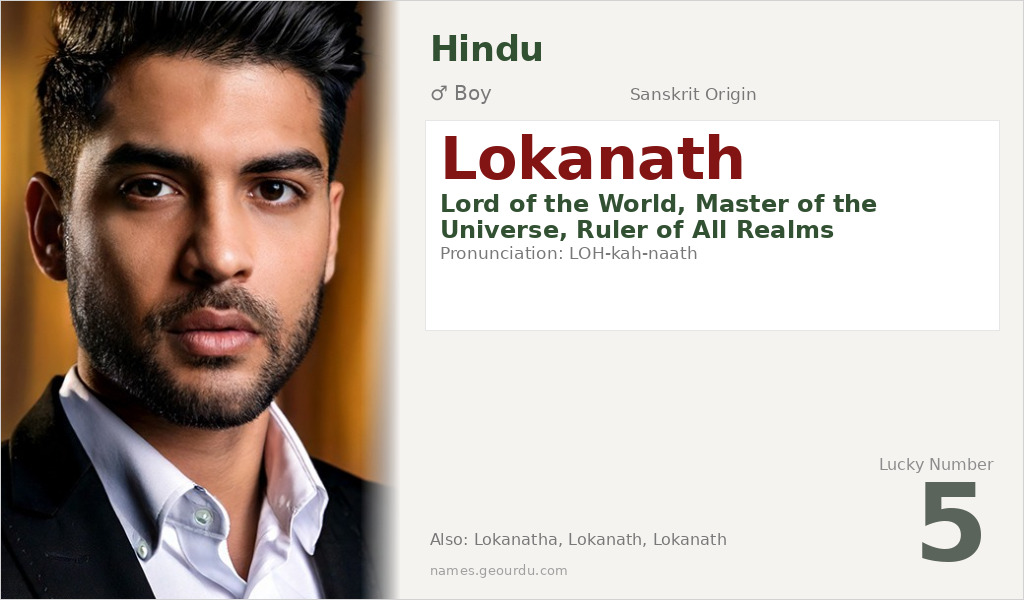
| 📛 Name | Lokanath |
| 💎 Meaning | Lord of the World, Master of the Universe, Ruler of All Realms |
| 👤 Gender | Boy |
| 🕌 Religion | Hindu |
| 🌍 Origin | Sanskrit |
| 🗣 Pronunciation | LOH-kah-naath |
| ✍️ Urdu | لوک ناتھ |
| ✍️ Arabic | لوكانات |
| 🔢 Numerology | 5 |
| ✨ Spellings | Lokanatha, Lokanath, Lokanath |
Origin & Cultural Significance
Lokanath originates from ancient Sanskrit texts and Hindu religious literature, where it appears as an epithet for supreme deities. The name’s components are deeply embedded in Vedic and Puranic traditions, with ‘Loka’ appearing in the Rigveda (one of the oldest Hindu scriptures) and ‘Nath’ being a common element in devotional names across India. Historically, the name has been used in religious contexts rather than as a common given name, though in modern times it has been adopted for boys, particularly in Hindu communities in India, Nepal, and the diaspora. The name reflects the Hindu philosophical concept of divine immanence—the belief that the divine pervades and governs all realms of existence. Regional variations exist across Indian languages, with similar constructions found in Bengali, Odia, and other languages influenced by Sanskrit.
Personality Traits
Those named Lokanath often embody qualities of leadership, protection, and spiritual awareness. The name suggests someone with a broad worldview who may naturally take on guiding roles in their community or family. They might be drawn to philosophical inquiry, religious study, or activities that involve caring for others. While personality traits vary by individual, the name’s meaning can inspire confidence, responsibility, and a sense of connection to larger cosmic principles.
Similar Names
If you like Lokanath, consider: Lokesh, Lokendra, Lokapriya, Jagannath, Vishwanath, Bhuvanath, Rajendra, Devnath, Shivanath, Gopinath
Famous People Named Lokanath
- Lokanath Swami — Contemporary Hindu spiritual leader and ISKCON guru known for his devotional work and leadership in the Hare Krishna movement
- Lokanath Misra — Indian politician who served as Governor of Assam and Meghalaya, known for his administrative career
Frequently Asked Questions About Lokanath
What does Lokanath mean?
Lokanath means 'Lord of the World' or 'Master of the Universe' in Sanskrit. It is a compound name from 'Loka' (world/realm) and 'Nath' (lord/master), primarily used as an epithet for Hindu deities like Vishnu and Shiva.
Is Lokanath a boy or girl name?
Lokanath is exclusively a boy's name in Hindu tradition. It carries masculine divine connotations and has never been used as a feminine name in historical or contemporary contexts.
What is the origin of Lokanath?
Lokanath originates from Sanskrit, the classical language of Hindu scriptures. It comes from ancient Indian religious texts where it appears as a title for supreme deities, particularly in Vaishnavism and Shaivism traditions.





