
Table of Contents
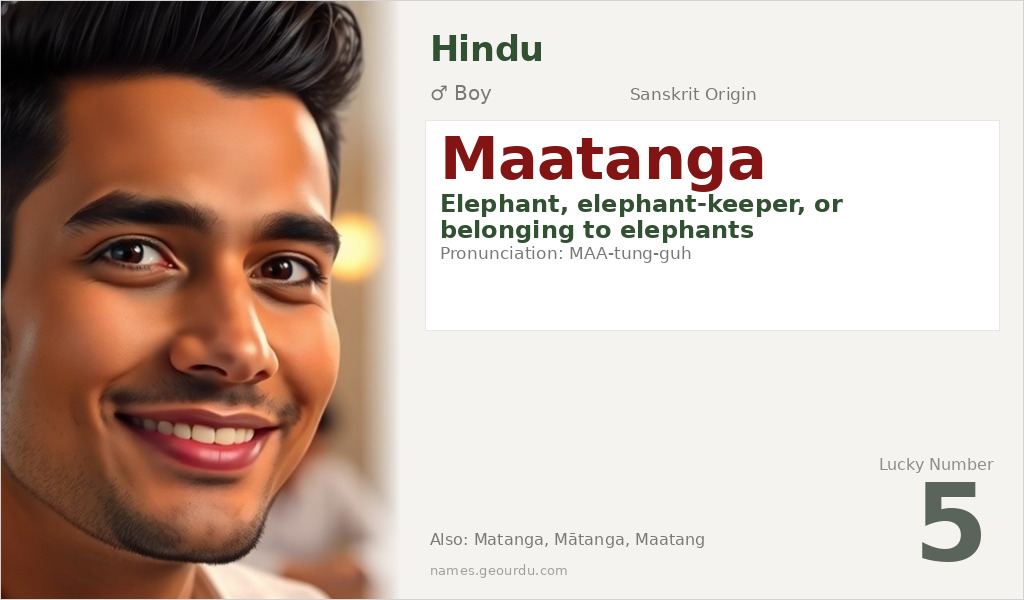
Maatanga, a name steeped in ancient Indian heritage, carries the majestic essence of the elephant—a revered symbol in Hindu culture. Derived from Sanskrit, this name evokes strength, wisdom, and a profound connection to nature. Often chosen for boys, Maatanga resonates with mythological tales and classical literature, offering a timeless choice for parents seeking a name with deep cultural roots. Explore the rich history and meaning behind this distinctive name.
Meaning of Maatanga
Maatanga, also spelled Matanga, originates from the Sanskrit word मातङ्ग (mātaṅga), which directly translates to ‘elephant’ or ‘elephant-keeper.’ The etymology breaks down into ‘mata’ (meaning thought, measure, or opinion) and ‘anga’ (meaning limb or body), possibly referring to the elephant’s deliberate, thoughtful movements. In Sanskrit texts like the Mahabharata and Ramayana, the term is used to denote elephants, highlighting their importance in ancient Indian society. Additionally, in Hindu mythology, Matanga appears as a sage in Puranic stories, adding a layer of spiritual significance. The name’s meaning is well-documented in Sanskrit lexicons and literary works, making it a clear and authentic choice.
| 📛 Name | Maatanga |
| 💎 Meaning | Elephant, elephant-keeper, or belonging to elephants |
| 👤 Gender | Boy |
| 🕌 Religion | Hindu |
| 🌍 Origin | Sanskrit |
| 🗣 Pronunciation | MAA-tung-guh |
| ✍️ Urdu | ماتنگ |
| ✍️ Arabic | ماتانغا |
| 🔢 Numerology | 5 |
| ✨ Spellings | Matanga, Mātanga, Maatang |
Origin & Cultural Significance
Maatanga has its roots in Sanskrit, the classical language of India, and is deeply embedded in Hindu culture and mythology. It appears in ancient epics and religious texts, where elephants are symbols of royalty, strength, and divine vehicles (vahanas) for gods like Indra. The name is primarily used in Hindu communities across India and Nepal, reflecting a tradition of naming children after noble animals or mythological figures. While not commonly found in other language families like Arabic or Persian, its usage remains specific to Sanskrit-derived languages and Hindu naming conventions. Historically, names like Maatanga were often given to denote characteristics such as power and stability, aligning with the elephant’s revered status.
Personality Traits
Those named Maatanga are often associated with traits of strength, wisdom, and calm authority, inspired by the elephant’s symbolism in Indian culture. They may be seen as reliable and protective, with a deep sense of loyalty and tradition. Their personality might reflect a balanced nature—powerful yet gentle, much like the elephant’s revered role in mythology and daily life.
Similar Names
If you like Maatanga, consider: Gajendra, Hasti, Naga, Varaha, Kubera
Famous People Named Maatanga
- Matanga Muni — Ancient Indian sage and author of the Brihaddeshi, a foundational text on Indian classical music
- Matanga — Elephant character in Hindu and Buddhist Jataka tales, symbolizing wisdom and strength
Frequently Asked Questions About Maatanga
What does Maatanga mean?
Maatanga means 'elephant' or 'elephant-keeper' in Sanskrit, with roots in ancient Indian texts and mythology.
Is Maatanga a boy or girl name?
Maatanga is traditionally a boy name in Hindu culture, derived from masculine Sanskrit nouns and used for males in historical and religious contexts.
What is the origin of Maatanga?
Maatanga originates from Sanskrit, an ancient Indian language, and is closely tied to Hindu traditions, appearing in epics like the Mahabharata and Puranic stories.





