
Table of Contents
Madhupuspa is a beautiful Sanskrit name that literally translates to ‘honey flower’ or ‘nectar blossom’. Rooted in India’s ancient linguistic tradition, this name evokes images of spring blooms and natural sweetness. While not extremely common as a personal name today, it carries significant cultural and literary weight in Hindu traditions. Understanding its precise meaning and origins reveals a name rich with botanical and poetic associations.
Meaning of Madhupuspa
Madhupuspa is a compound Sanskrit name with two distinct components that together create a vivid botanical image. The first part, ‘madhu’, means honey, sweetness, or nectar—a word that appears throughout Sanskrit literature from the Vedas to classical poetry. The second component, ‘puspa’ (also spelled pushpa), means flower or blossom. When combined, Madhupuspa specifically refers to flowers that produce nectar, particularly those that bloom during the spring season (Vasanta). In Sanskrit botanical classification and poetic tradition, this term distinguishes nectar-producing flowers from other types of blossoms. The name carries connotations of natural abundance, fragrance, and the cyclical beauty of seasonal flowering plants.
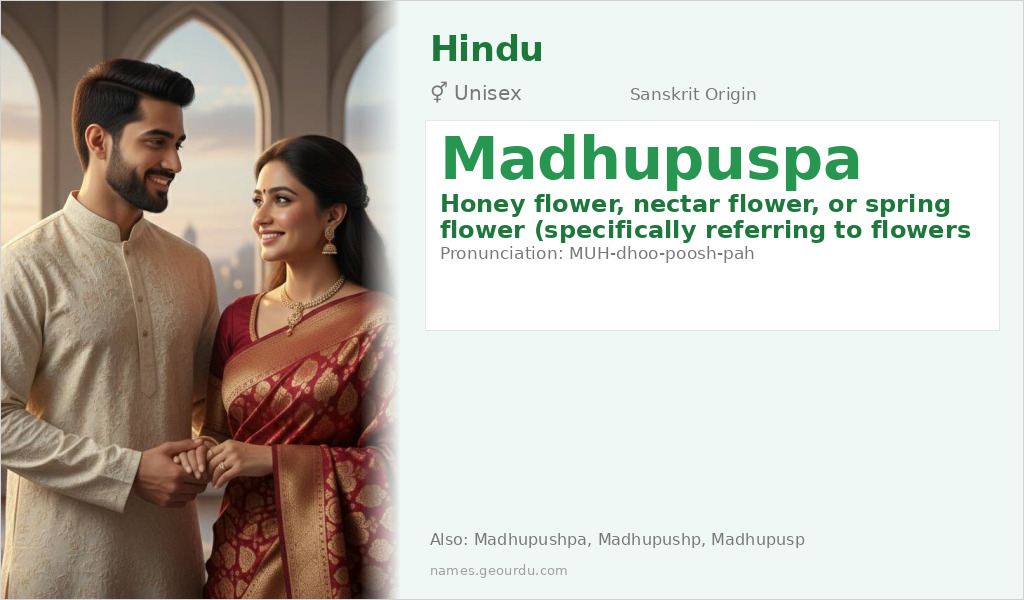
| 📛 Name | Madhupuspa |
| 💎 Meaning | Honey flower, nectar flower, or spring flower (specifically referring to flowers that bloom in spring and produce nectar) |
| 👤 Gender | Unisex |
| 🕌 Religion | Hindu |
| 🌍 Origin | Sanskrit |
| 🗣 Pronunciation | MUH-dhoo-poosh-pah |
| ✍️ Urdu | مدھوپشپ |
| ✍️ Arabic | مادهوبوشبا |
| 🔢 Numerology | |
| ✨ Spellings | Madhupushpa, Madhupushp, Madhupusp |
Origin & Cultural Significance
Madhupuspa originates from classical Sanskrit, the ancient liturgical language of Hinduism that has influenced numerous South Asian languages. As a compound word, it follows standard Sanskrit morphological rules for combining nouns. The name appears in Sanskrit literature as both a descriptive botanical term and occasionally as a personal name, particularly in historical and literary contexts. While more commonly used as a term for specific flowers in Sanskrit texts, it has been adopted as a given name within Hindu communities, reflecting the tradition of using nature-inspired and poetic names. Its usage spans various regions where Sanskrit influence has been significant, particularly in India and neighboring countries with Hindu populations.
Personality Traits
The floral imagery of Madhupuspa suggests personality traits associated with natural beauty, gentleness, and sweetness. Like the flowers it describes, someone with this name might be perceived as bringing beauty and fragrance to their environment. The ‘honey’ component adds connotations of sweetness in character and possibly artistic or creative tendencies. While personality associations with names are culturally subjective, the Sanskrit roots point toward qualities of natural grace and pleasant presence.
Similar Names
If you like Madhupuspa, consider: Madhuri, Pushpa, Madhav, Kusuma, Sumadhura
Famous People Named Madhupuspa
- No widely known contemporary public figures with this exact name found in records
- The name appears in classical Sanskrit literature and Hindu texts as a descriptive term for flowers
Frequently Asked Questions About Madhupuspa
What does Madhupuspa mean?
Madhupuspa means 'honey flower' or 'nectar flower' in Sanskrit. It's a compound name where 'madhu' means honey/sweetness and 'puspa' means flower, specifically referring to spring-blooming nectar-producing flowers.
Is Madhupuspa a boy or girl name?
Madhupuspa is traditionally a unisex name in Sanskrit and Hindu naming traditions, though it may be used more frequently for girls in contemporary practice due to its floral meaning. Sanskrit compound names often don't have inherent gender specificity.
What is the origin of Madhupuspa?
Madhupuspa originates from classical Sanskrit, the ancient language of Hindu scriptures and literature. It appears in Sanskrit texts as a descriptive term for specific flowers and has been adopted as a personal name within Hindu communities, particularly in South Asia.